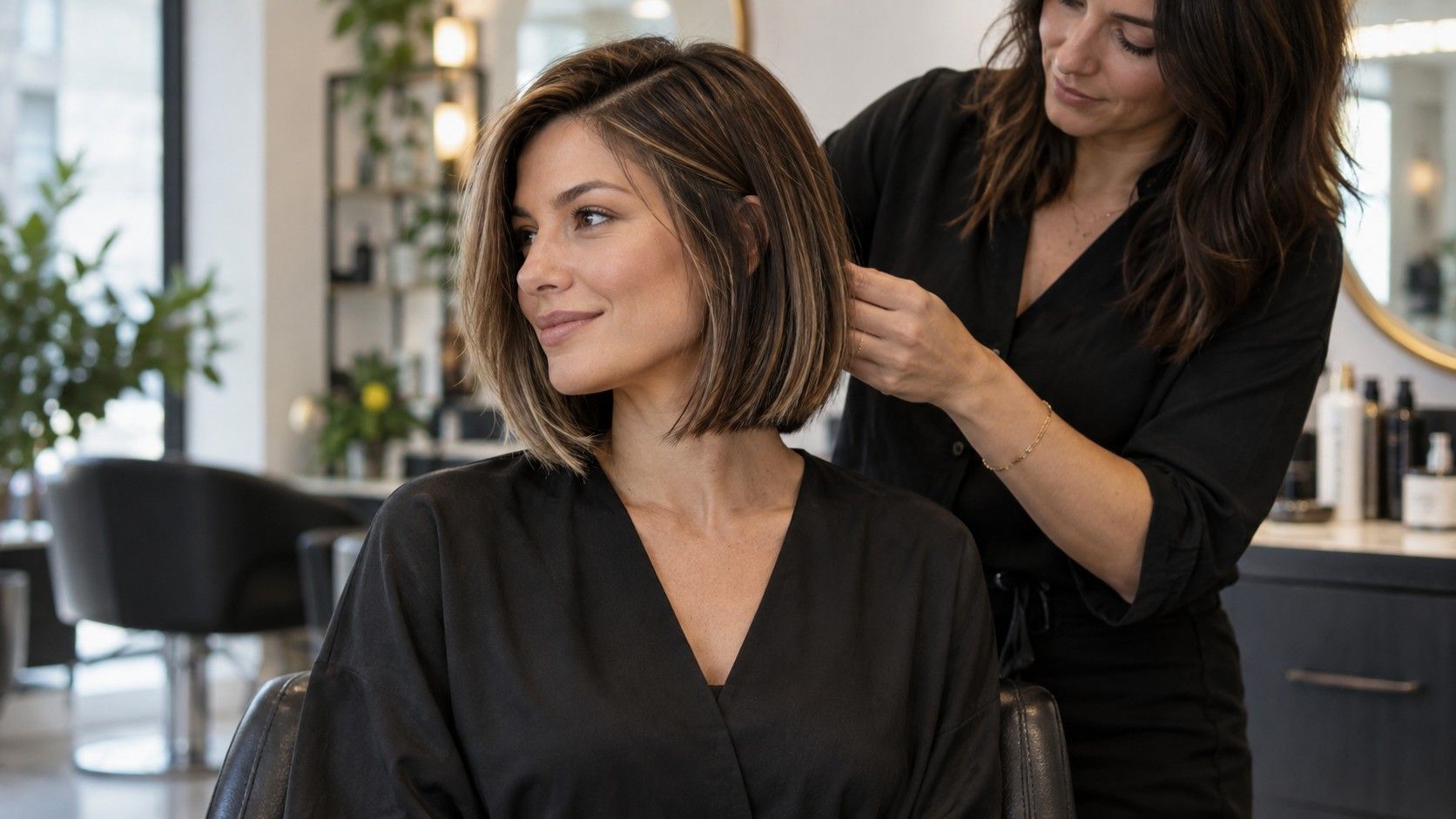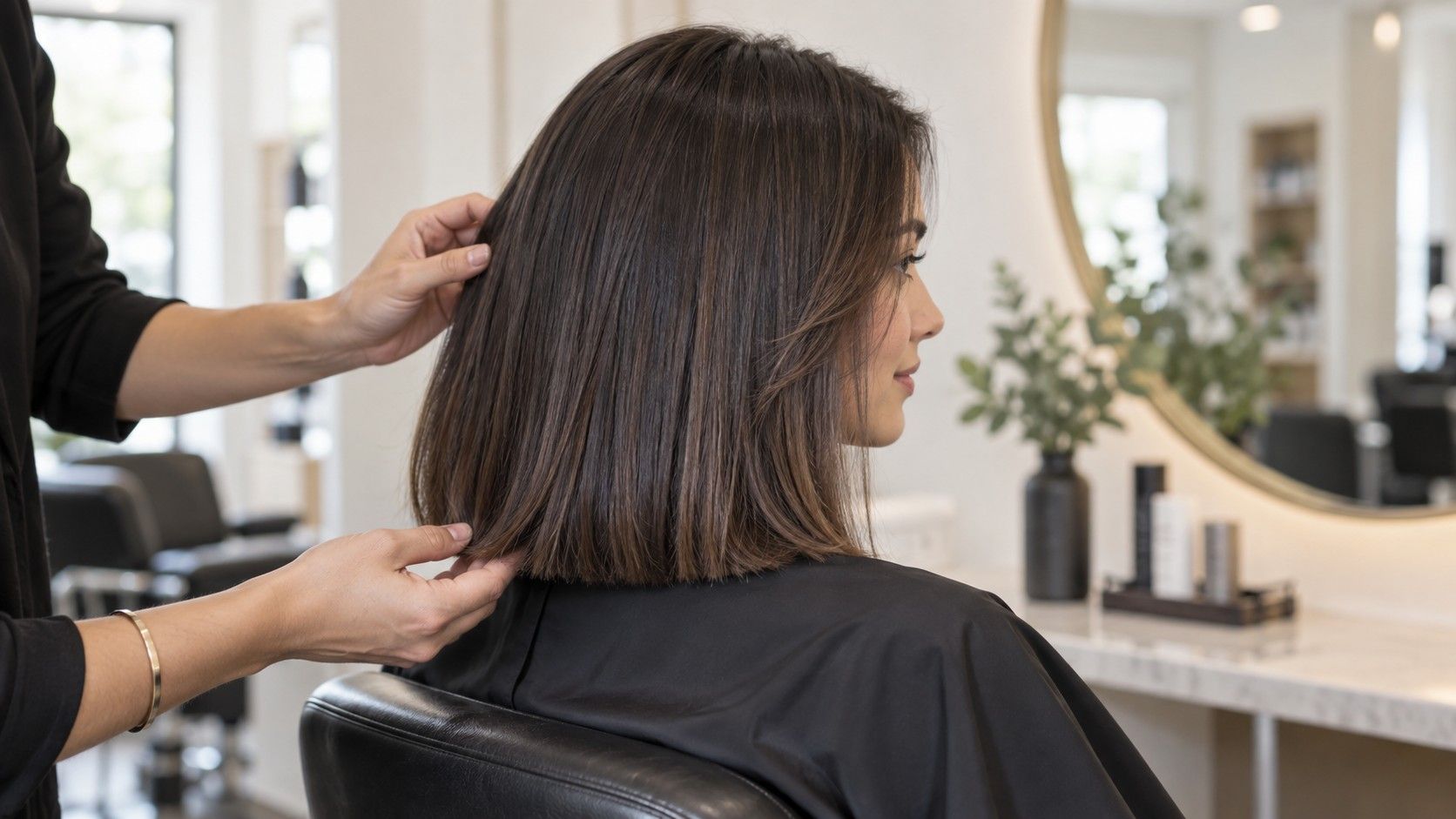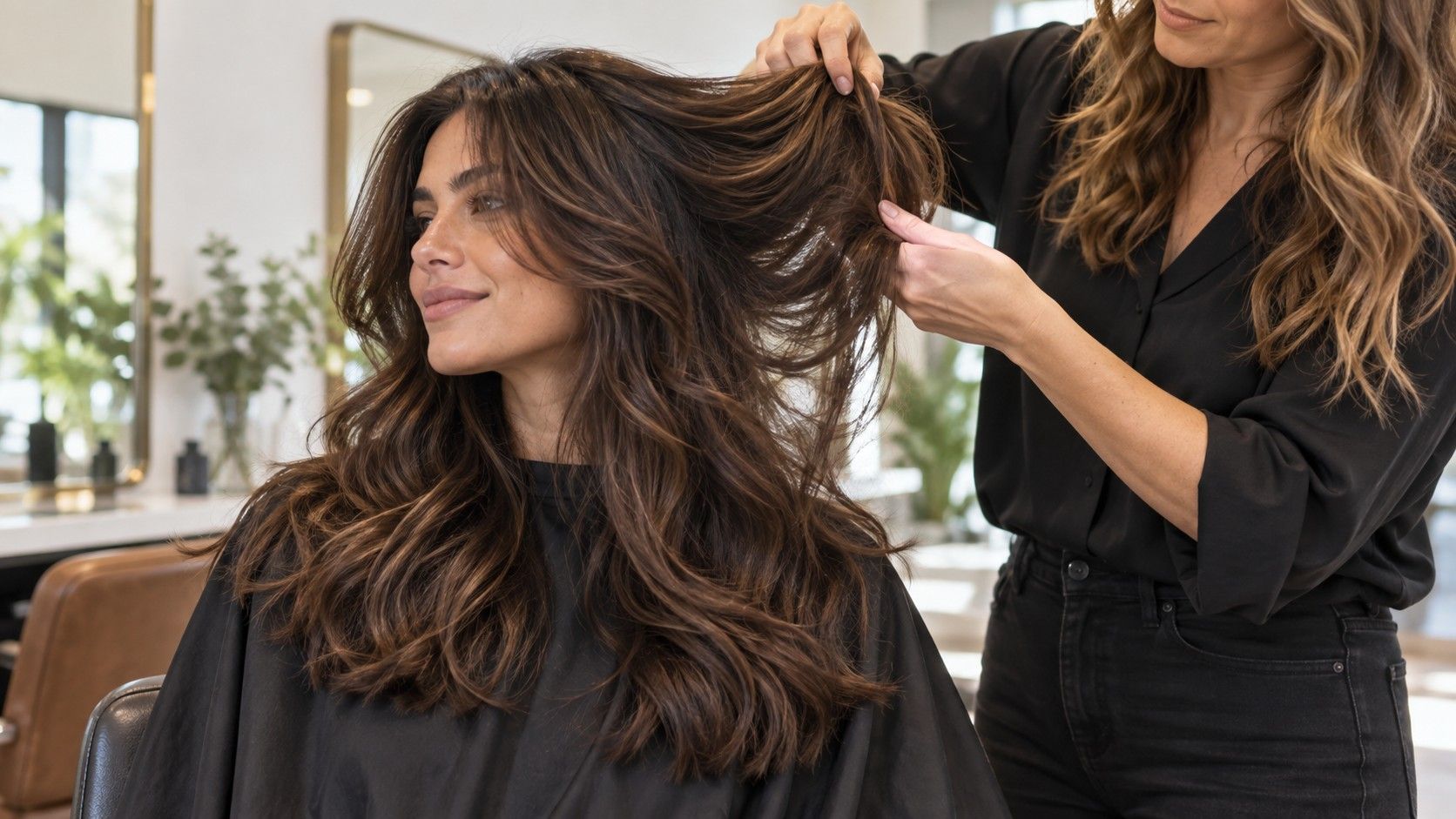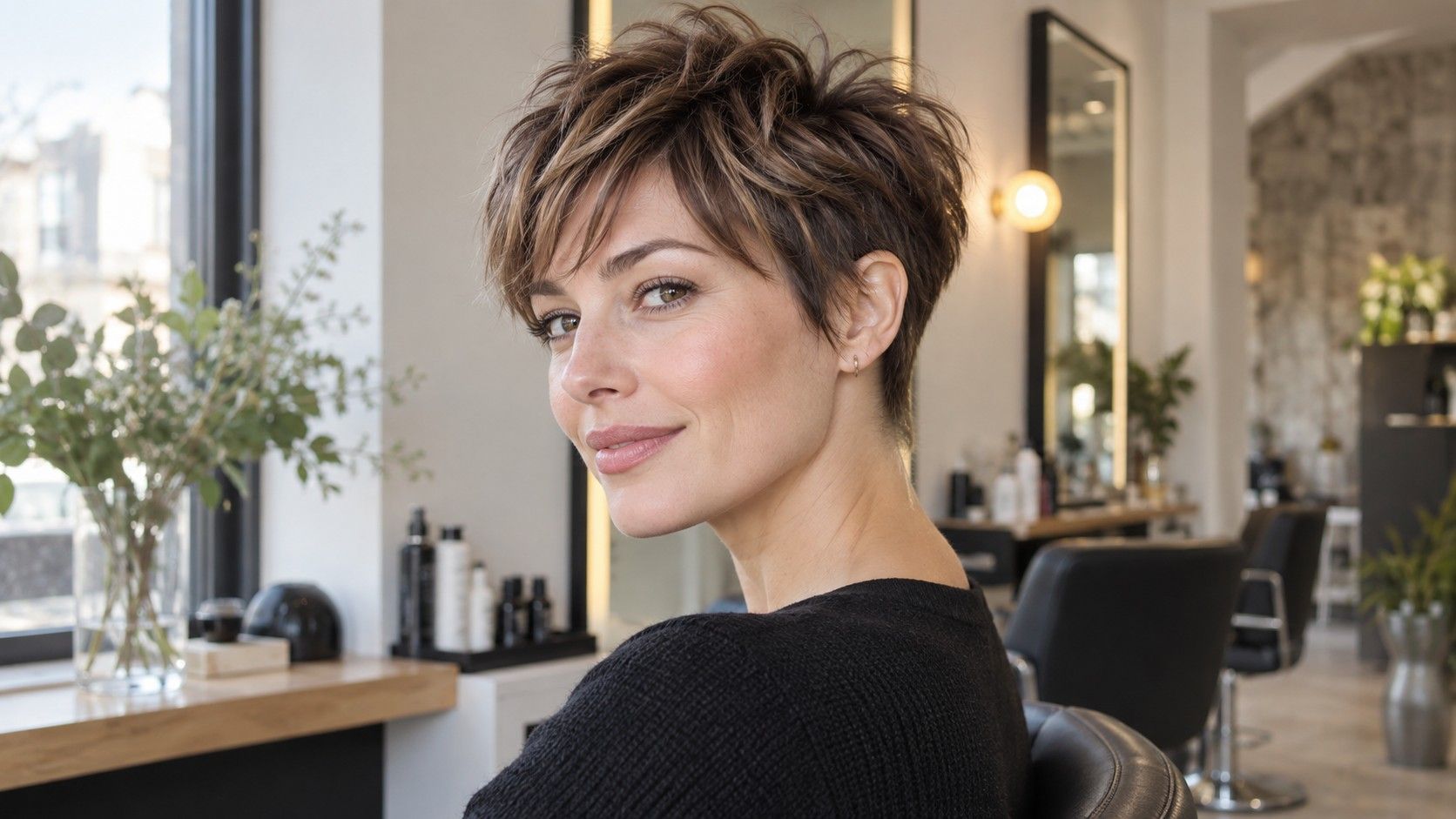
A pixie can feel like the simplest haircut in the salon book: short, neat, done. In practice, it is a collection of small decisions about the nape, the crown, the fringe and the hair left around the ears. Those decisions determine whether the cut feels sharp, soft, easy to style or strangely unlike the reference photo. The useful question is not whether you can pull off a pixie haircut, but which short shape fits your hair and your ordinary morning.
What makes a cut a pixie haircut?
A pixie haircut is a short cut with a close or softly tapered nape and sides, plus more length through the top and crown. That contrast is the pixie haircut definition worth remembering. A cropped bob can be short all over, while a pixie normally has a visible relationship between the shorter perimeter and the longer, movable top. It may be polished and close to the head, piecey and textured, or long enough at the front to sweep into a fringe.
The labels overlap in salons. A long pixie can look like a very short bob from one angle, and a bixie sits deliberately between the two. Rather than arguing over the name, look at the back view. If the nape is shaped close to the neck and the crown carries the design, you are in pixie territory. If the hair falls with a blunt, even line around the head, it is probably a bob or crop.
Length alone does not make a convincing pixie. A short cut needs a plan for direction: where the hair should lift, where it should lie flat and where the eye should land. The crown is often the hinge point. Too much weight there can make fine hair collapse into a helmet shape; too little can expose a cowlick that needs five minutes of blow-drying every day. A good stylist reads the way hair separates before reaching for thinning shears.
Choose the length by routine, not by a face-shape rule
Face shape can help with proportion, but it is a poor reason to copy a two-inch crop from a photo. Your routine matters more. A close pixie with a clipped nape usually needs a trim every three to five weeks if you want the outline to stay intentional. A longer pixie can often go six to eight weeks, because the sides and back have room to soften before they start looking bulky.
Hair density changes the calculation. Dense hair can support a compact silhouette, but it may need internal weight removed so the sides do not widen at the temples. Fine hair often benefits from a slightly longer top with clean but not severe sides; that gives the crown something to overlap. Coarse or curly hair can make a beautiful pixie, yet the shrinkage needs to be cut dry or at least discussed honestly. A fringe that lands at the eyebrow when wet may spring well above it after the first wash.
| Pixie shape | Usually suits | Maintenance reality |
|---|---|---|
| Close crop | People who like the ears and nape exposed | Frequent perimeter trims; little daily styling |
| Classic tapered pixie | Straight to wavy hair with a natural crown direction | Dry the crown into place; trim about every month |
| Long pixie | Anyone wanting movement or a softer transition from a bob | More styling options; usually easier to stretch between cuts |
| Curly pixie | Defined curls with a known shrinkage pattern | Needs a curl-aware shape and occasional reshaping at the crown |
A round, square, oval or heart-shaped face does not come with a banned haircut list. What changes the visual balance is placement. Height at the crown lengthens the impression of the face; a soft fringe breaks up a broad forehead; a little length in front of the ear can soften a strong jaw. These are adjustable details, not rules. If you dislike having hair in your eyes, a face-framing fringe is not a clever solution even if it looks flattering in a still photograph.
Fringe and crown choices decide whether it feels soft or graphic
The fringe is the most visible commitment in many pixie cuts. A micro fringe reads graphic and exposes the brow, but it needs confidence and regular tidying. A soft fringe can be brushed forward, pushed to one side or broken into small pieces with styling paste. It is often the safer option for someone trying short hair for the first time because it leaves more room to change the mood without changing the cut.
Ask where your front hair naturally parts before deciding on a side-swept fringe. A strong centre part can resist being forced diagonally all day, especially in humid weather. The same goes for a cowlick at the hairline: it is not a flaw, but it should be incorporated into the design. A stylist who lifts that section, watches it fall, then cuts around its direction is more likely to give you a fringe that behaves without a battle.
At the crown, the choice is between visible lift and a quieter, close shape. Fine hair usually gains more from a few purposeful layers than from aggressive texturising. Dense hair may need weight removed underneath while leaving enough surface hair to cover the scalp. Be wary of asking for lots of layers as a universal shortcut. On some hair types that creates fuzzy ends and a crown that expands by lunchtime. A reference image from the side and back is more useful than a front-facing celebrity photo.
How a pixie behaves with straight, wavy and curly hair
Straight hair shows every line. That can make a precise pixie look elegant, but it also reveals a blunt cut at the nape or an uneven fringe immediately. A small amount of root lift and a pea-sized amount of matte paste are often enough. Heavy wax can turn clean strands into separated spikes, so start with less product than you think you need and warm it between your palms first.
Wavy hair has a helpful amount of movement, although it is the most likely to look different from day one to day ten. The shorter layers may bend out while longer pieces settle inward. Let the stylist know whether you air-dry, diffuse or blow-dry; all three produce a different crown. For an air-dried pixie, a slightly longer, softer perimeter is usually kinder than a hard geometric edge that only works after a brush and dryer.
With curls, the question is not whether a pixie is possible but where each curl will live. Tight curls often need enough length at the crown to form a recognisable pattern, while the nape can be tapered for a clean outline. The consultation should include your usual curl routine, whether you wear wash-and-go styles and how much shrinkage you see. Cutting a curly pixie as if it were straight hair can leave unexpected gaps around the temples after the first home wash.
The grow-out is a sequence, not one awkward phase
The grow-out is the part people underestimate. A pixie does not simply become a bob; it passes through several uneven stages because the nape and fringe grow into useful lengths at different speeds. Around six to eight weeks, the back often starts to feel heavier while the top still looks short. This is the moment for a shaping appointment, not necessarily another full pixie. Cleaning the nape, moving weight away from the occipital bone and preserving some length at the front can keep the cut deliberate.
By the three- to five-month mark, a long pixie can be redirected toward a bixie or short bob. The goal is usually to build a perimeter slowly while preventing a triangle shape at the sides. You may need the crown left alone for one appointment while the area around the ears is softened. That feels counterintuitive if you are used to requesting an all-over tidy-up, but cutting every section equally often restarts the problem.
Plan the exit route before the initial cut if you know you eventually want shoulder-length hair. A long pixie with a soft fringe and a less aggressively clipped nape is easier to grow than a very tight undercut. That does not mean avoiding the short cut you actually want; it means knowing that a dramatic crop trades low washing time for more frequent shape decisions later. Hair accessories, a changed part and a little texture spray can help during the in-between months, but they cannot replace a strategic trim.
What to say in the consultation
Bring two or three images that show a consistent idea, ideally including a side or back view. Then explain what you like in plain terms: I like the exposed nape, but I want some softness around my temples, or I want the top to move, not stand straight up. Say how often you are willing to return, whether you use heat tools and whether you want to tuck hair behind your ears. Those details are more actionable than asking for a pixie haircut without a shape attached to it.
It also helps to name what has failed before. Perhaps a short fringe separated in the middle, a cropped side puffed over glasses, or a crown lost volume after sleeping. A competent consultation includes looking at your growth patterns, hairline, density and the way your hair behaves without product. If the stylist suggests a slightly longer first cut, ask what they are protecting: a cowlick, a strong wave, a future grow-out or simply your ability to change your mind after a week.
Before the cape comes off, ask for a quick styling lesson. Find out whether the hair should be dried forward, upward or in the direction of its natural part. Ask which product is optional and which one actually matters. Most pixies do not require a drawer full of products; they need a light hand, a clear direction and a trim schedule that matches the sharpness you want. That is the difference between a short haircut that feels liberating and one that feels like a daily repair job.