Straight hair is honest hair. It shows an uneven perimeter, a heavy corner, a layer that starts too high, and a fringe that was cut for a different texture. That is useful, even if it can feel unforgiving: the best haircut for straight hair is usually decided by the line and the weight distribution before a hot tool ever enters the conversation.
Why straight hair makes the cut so visible
On curly or wavy hair, small inconsistencies can disappear into texture. Straight hair lays each section beside the next, so the eye reads the outline immediately. A blunt shoulder-length cut can look expensive with almost no styling when the hemline is balanced; the same cut can look limp or oddly triangular when the interior has been removed in the wrong places.
Start with density, not just length. Fine straight hair tends to separate into narrow ribbons, especially around the ends. Very thick straight hair can form a solid curtain and push outward at the shoulders. These are opposite problems, so asking for “layers for movement” without discussing density is an easy route to disappointment. A good stylist checks the fall of the hair dry as well as wet, watches where it parts naturally, and asks whether you wear it tucked behind the ears or pinned back during the day.
Growth pattern matters too. A cowlick at the front can turn a sleek fringe into a daily negotiation, while a low crown swirl may leave a middle part looking flat even after a careful blow-dry. Bring the part you actually use to the appointment. It is more useful than a saved photograph with a different hairline, different density, and a full team of styling products behind it.
Blunt cuts and layers solve different problems
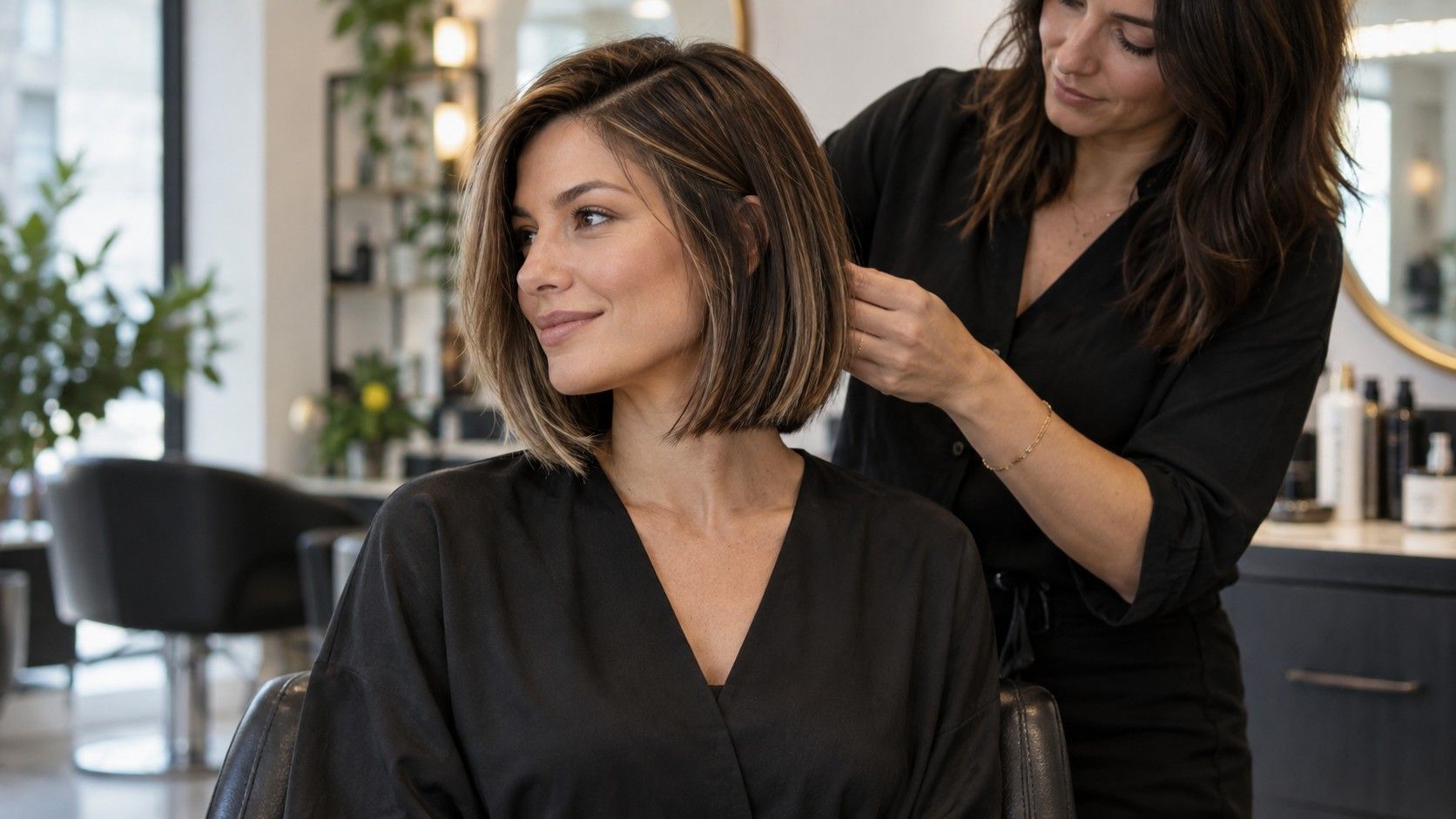
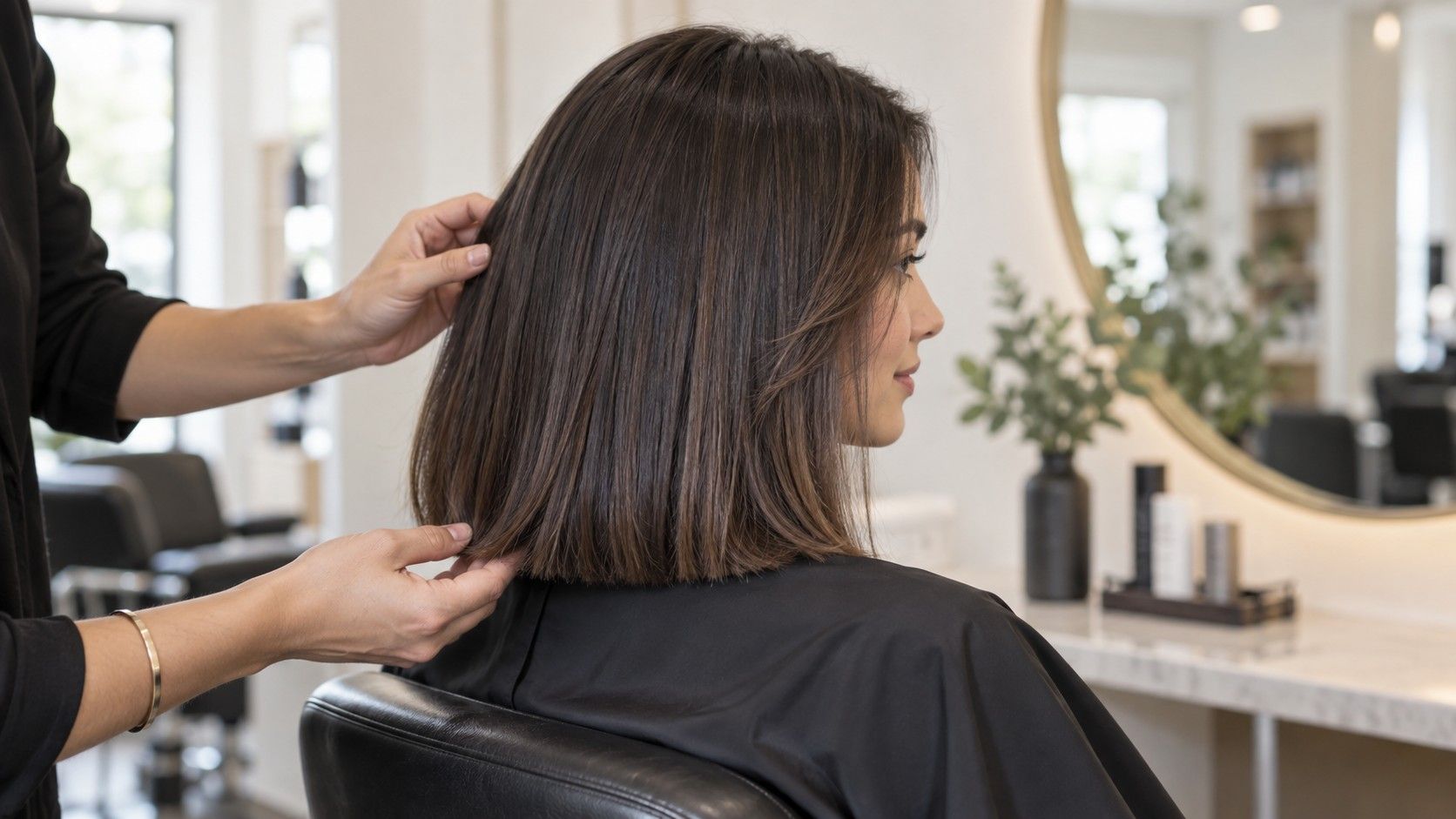
A blunt line is often the best cut for straight hair when the goal is density. The ends look fuller because they finish at one clear point, and the shape can make fine hair look less see-through. A one-length lob, a sharp bob, or long hair with a tidy baseline all use this effect. The maintenance is straightforward: a trim every eight to ten weeks keeps the line from becoming feathery, and a small amount of smoothing cream is usually enough.
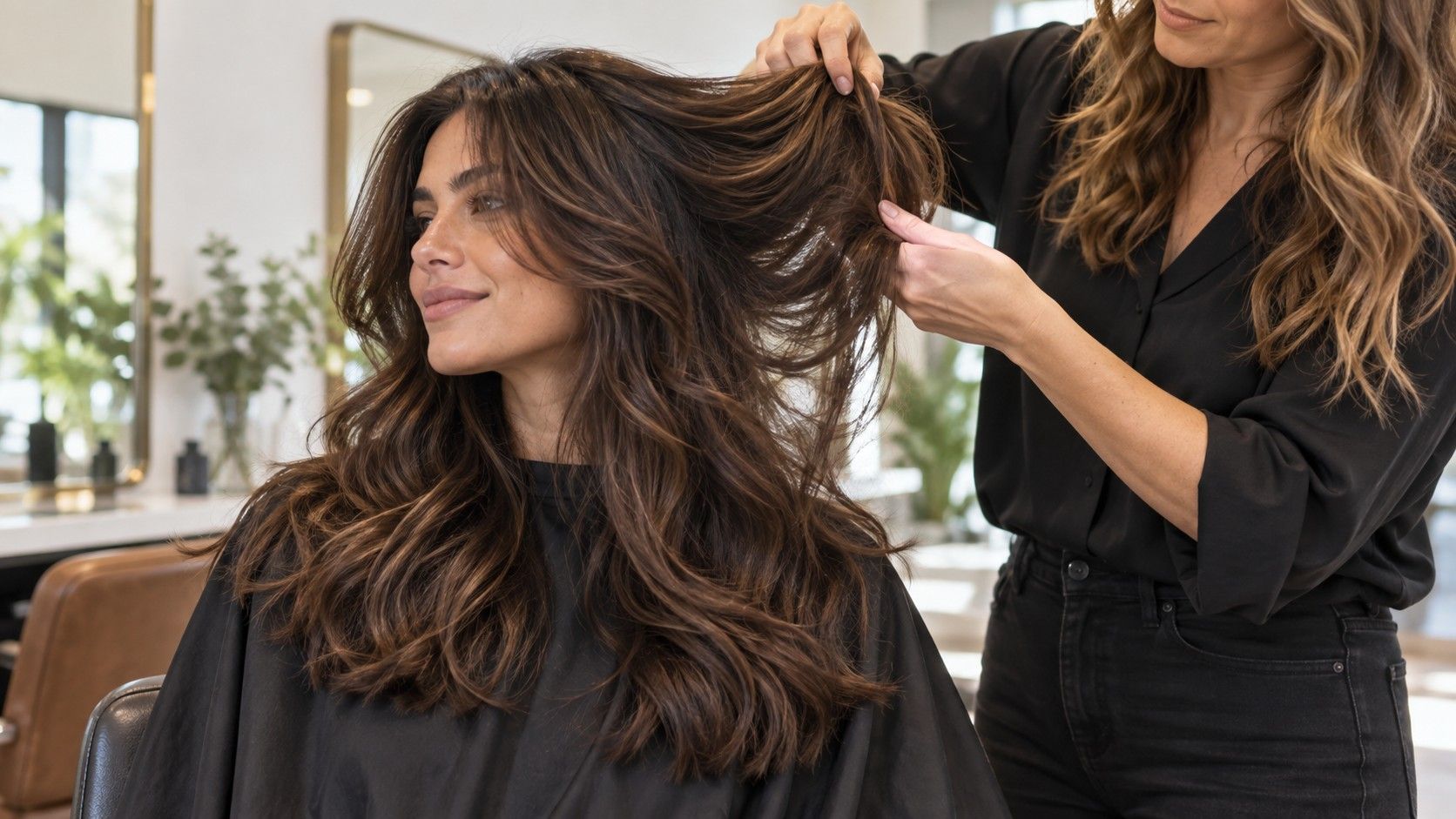
Layers are useful when hair has enough density to support them or when the silhouette needs release around the face. Long, low layers can stop heavy straight hair from hanging in one dense panel. The important word is low. If the shortest layer begins around the cheekbone on hair that is thin or very sleek, it may simply fall away from the rest and create a visible shelf. That is not movement; it is a gap that asks for a round brush every morning.
Ask a stylist to explain where the shortest layer will sit when the hair is air-dried. For many people, collarbone length is a safer starting point than chin length. Face-framing pieces can be cut independently from the rest of the layers, which gives softness near the face without sacrificing the strong line through the back. This is especially helpful if you switch between a middle part and a soft side part.
| What you notice | Cut direction to discuss | Watch for |
|---|---|---|
| Fine ends look sparse | Blunt or softly rounded baseline | Too much thinning can make the last few inches disappear |
| Thick hair sits like a triangle | Long internal layers and weight removal placed deliberately | Short surface layers can puff out instead of settling |
| Hair hangs flat at the crown | A slightly shorter perimeter or restrained crown shaping | Heavy texturising may create frizz rather than lift |
| You want a low-maintenance look | One length, lob, or long layers below the shoulders | A highly graduated shape needs regular reshaping |
Choosing a bob line that still works on Tuesday morning
Bobs are a natural match for straight hair because the geometry shows. The question is not whether a bob is flattering in a photograph; it is which line works with the neck, jaw, part, and routine you already have. A jaw-length blunt bob has impact, but it can flip outward if the ends land at the widest point of the jaw or if the hair bends naturally there. Moving that line an inch lower can make the same idea much easier to wear.
A collarbone lob is the forgiving option for people who like the clean look of a bob but put their hair up for work, exercise, or humid weather. It has enough length for a small ponytail and does not require the precision blowout that a shorter bob often does. A slightly longer front can be elegant on straight hair, provided the back is not stacked so aggressively that the grow-out becomes obvious after four weeks.
Fine hair usually benefits from a compact bob with a solid perimeter. Thick hair can handle a little invisible graduation at the nape, but the word invisible matters. If you can see obvious steps when the hair is worn straight, the cut will often feel dated sooner than expected. Bring reference images from the front, side, and back, then tell the stylist which view matters most to you. Most people see the front every day; someone who wears a short bob may care just as much about the profile and neckline.
Long straight hair without the flat, tired look
Long straight hair does not need to be layered into submission. A well-kept baseline, a few face-framing pieces, and healthy ends can look more intentional than multiple tiers of short layers. The practical issue is that length pulls weight downward. If the crown is already low-density, adding more length may make it appear flatter, even though the hair itself is healthy.
For fine hair, keep the bottom line fairly dense and place any long layers below the collarbone. A gentle U-shape can preserve fullness while avoiding the hard horizontal look of a totally blunt back. For thick hair, the stylist can remove bulk from the inside without shredding the outer edge. This is a technical distinction worth asking about. Random thinning shears near the ends can leave straight hair looking fuzzy; controlled weight removal inside the shape can make it swing without making it look chewed.
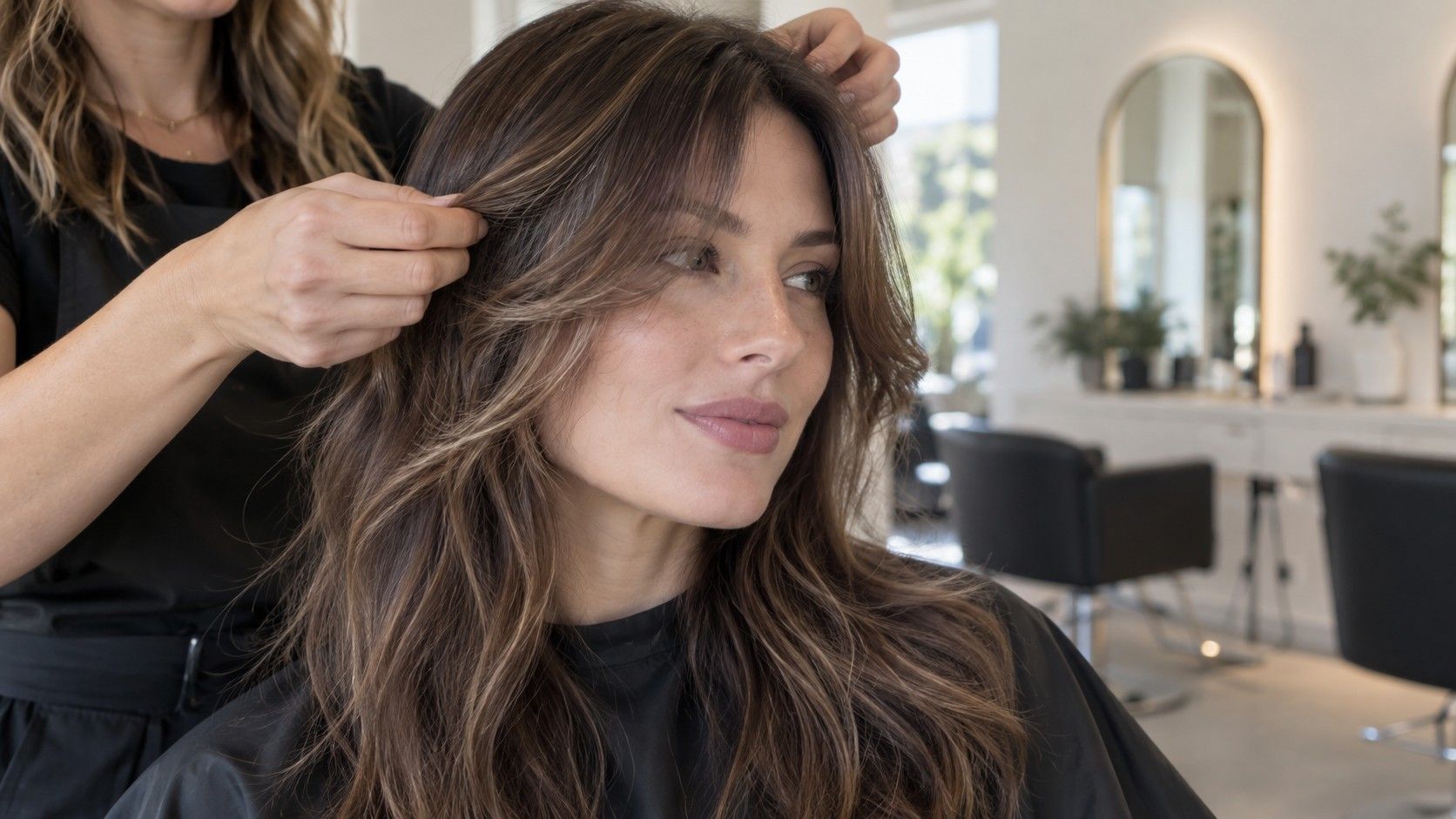
Face framing should be chosen around the way you wear your hair. Pieces beginning at the chin tend to suit people who frequently tuck hair behind the ears, because they remain visible and do not vanish into the length. Pieces beginning near the cheekbone can look softer, but they need more attention when hair is pinned back. If you do not use a round brush, say so plainly. The best straight hair haircuts should look like themselves after an ordinary air-dry, not only after a salon finish.
Fringes, centre parts, and the hairline you actually have
Straight hair can make a fringe look wonderfully graphic, but it also reveals every split in it. Before choosing one, check how the front section dries on a day when you have done nothing to it. A strong cowlick, a very low hairline, or a tendency to separate down the centre does not rule out fringe, but it changes the design. A longer curtain fringe with weight at the outer corners is usually more cooperative than a short, dense line.
A centre part brings symmetry and can make a blunt cut look deliberate. It also exposes a flat crown quickly, particularly on fine hair. A slightly off-centre part can add a little lift without turning the look into a side-swept style. Rather than asking for “volume,” ask where you want visual width: at the cheekbones, through the jaw, or near the shoulders. The answer helps decide whether face framing should angle inward, outward, or stay almost one length.
Do not let a fringe become a separate project from the haircut. It should connect to the side sections when you wear it open and still make sense when it grows past the brows. A quick fringe trim every three to five weeks is normal; if that schedule sounds annoying, choose a longer shape from the start. It is cheaper and less frustrating than forcing a blunt fringe to behave like curtain bangs halfway through the month.
Set styling expectations before you leave the chair
A cut can be technically good and still be wrong for your routine. Straight hair makes this clear fast. If your hair has a slight bend at the ends, a razor-sharp bob may require a blow-dry or flat iron to keep its intended line. If you wash at night and sleep on it, ask to see the cut with a rougher finish too, not only a polished salon blowout. A stylist who knows their work will not mind showing you how the shape behaves with minimal product.
For a blunt lob or long one-length cut, a light heat protectant and a paddle brush may be all you need. For long layers, use a small amount of mousse or root spray only where lift is wanted; coating the entire length often makes straight hair look stringy by afternoon. Thick hair may need a smoothing product through the mid-lengths, while fine hair usually looks better with less product and more careful drying at the roots.
Before paying, look at the hair in natural-looking light and move your head rather than standing perfectly still. Check both sides of the part, the back line in a hand mirror, and what happens when you tuck one side behind an ear. Then ask one useful final question: which part of this cut will grow out first? The answer tells you whether you are choosing an easy eight-week trim, a four-week precision bob, or a shape that needs more commitment than the inspiration photo suggested.