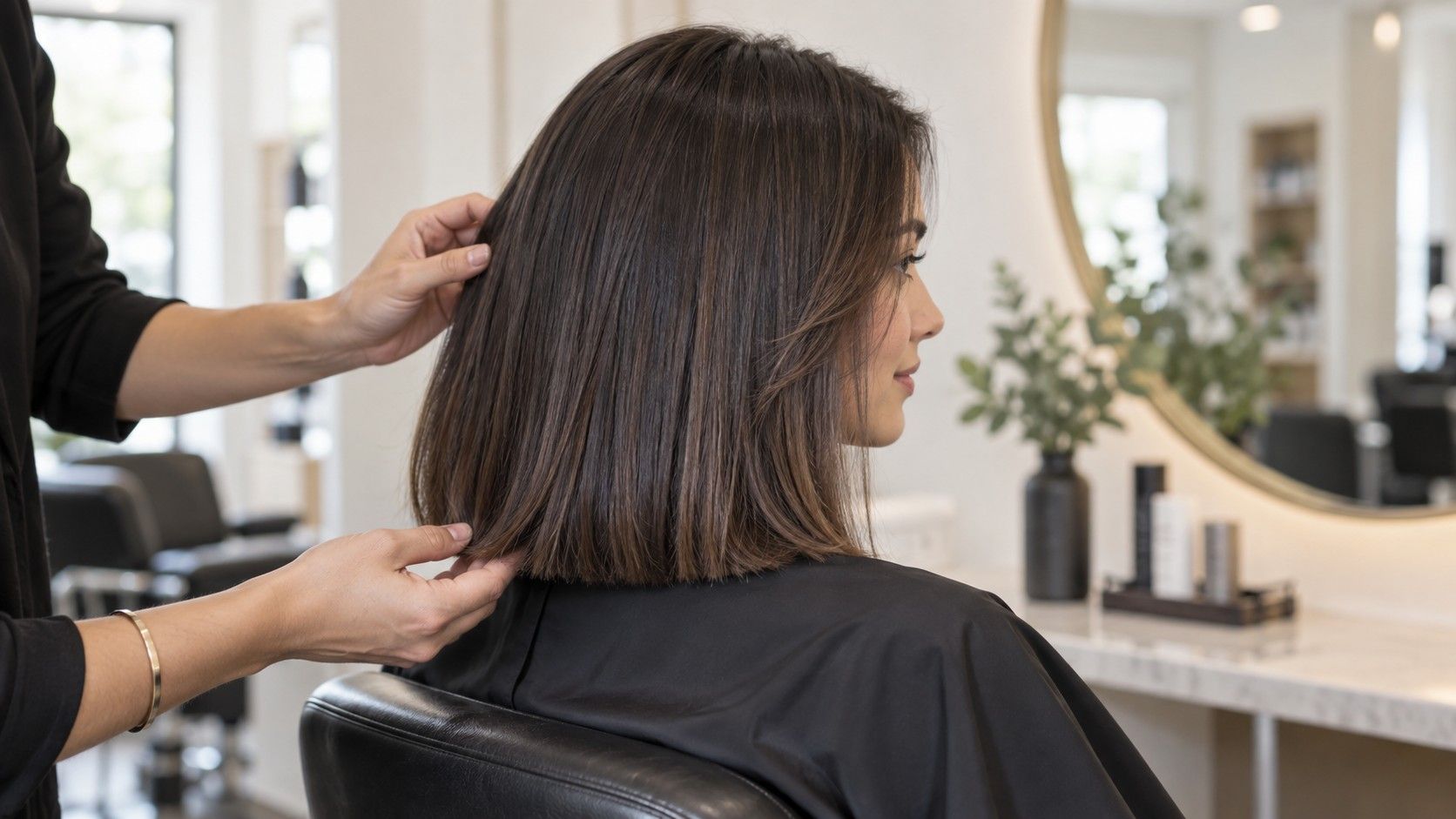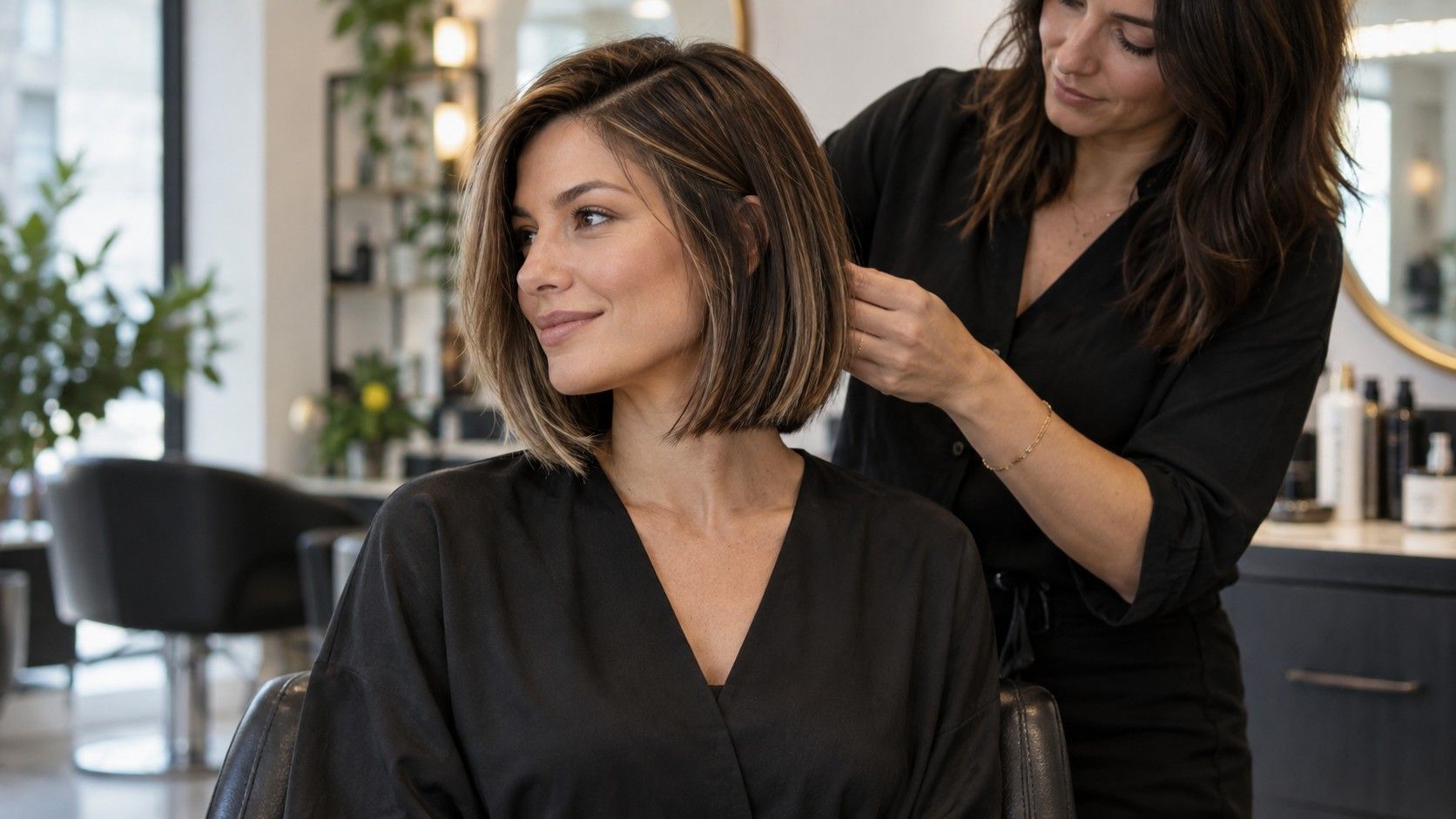
A bob can look wonderfully straightforward in a photograph, then become surprisingly complicated in the salon chair. The image does not show where the ends sit when your own hair dries, whether your part fights back, or how the line meets your jaw when you turn your head. The best bob for your face shape is not a formula for hiding features. It is a choice about length, edge and weight that makes sense with the face and routine you already have.
Make the three decisions that actually define a bob
Start with length. A French bob near the mouth, a chin bob, a jaw bob and a collarbone lob are different haircuts, not small variations of one idea. The front corner matters as much as the back. A line ending at the jaw gives that point a graphic emphasis; one landing just below it usually looks softer. If your hair bends at the ends, that bend can make a cut appear an inch shorter after the first wash. Ask your stylist to discuss the finished dry length rather than only the wet measurement.
Then decide how precise you want the perimeter to feel. A blunt edge gives fine hair welcome density and makes straight hair look intentional with little effort. A softer, lightly textured edge is often easier for waves, though it should still read as a deliberate outline. Heavy stacking at the nape is a separate choice. A little hidden graduation can prevent thick hair from forming a shelf at the back; a very stacked bob may look great for two weeks and announce its grow-out soon after.
Finally, test the part you wear naturally. A centre part makes the bob face read as symmetrical and exposes the hairline and crown. A soft side part shifts weight across the forehead and can make a compact cut feel less formal. Neither is automatically more flattering. Try both with dry hair in daylight before booking. The place your hair repeatedly separates is a more useful guide than a dramatic side part on someone with a completely different growth pattern.
Choose a stopping point before adding layers
Face-shape advice becomes useful when it helps place the ends. A jaw-length bob has impact, but dense straight hair can make it feel wide if the perimeter stops at the broadest lower-face point. Moving the line a centimetre or two lower often changes the entire mood without turning it into a long cut. Check the profile as well as the front. A bob that looks polished head-on can gather too much bulk behind the jaw or kick outward where it meets a collar.
A chin bob is a flexible middle ground. It gives the lower face an outline without sitting precisely on the jaw, and it often leaves enough length to tuck one side behind an ear. Tell the stylist whether you air-dry, use a round brush or wash your hair at night. The same chin-length bob can dry inward, straight or outward depending on texture and the direction of the last inch. A salon blowout is useful, but it should not be the only version used to judge the length.
A collarbone bob, often called a lob, is the practical answer when you like a clear shape but need a ponytail for work, exercise or humid weather. It is not simply long hair with a trim. Fine hair usually benefits from a solid baseline so the ends do not look thin. Thick hair often needs quiet weight removal underneath, not short choppy layers all over the surface. The goal is a shape that moves at the shoulders rather than a triangle that sits there.
| Length | What it can emphasise | Useful check |
|---|---|---|
| French bob | Eyes, cheekbones and neck | Hairline, cowlicks and fringe upkeep |
| Jaw bob | A strong jawline and profile | Where ends land once dry |
| Chin bob | A balanced lower outline | Whether it tucks comfortably behind an ear |
| Collarbone lob | Neck and shoulders with more flexibility | Ponytail needs and coat-collar flipping |
Use face shape to decide where you want visual width
An oval face has room for almost every bob length, which makes texture and lifestyle more important than a flattering chart. A sharp chin bob can look clean and modern; a lob gives more styling options. Keep fine hair relatively blunt if fullness matters, and ask for internal shaping rather than visible short layers if thick hair tends to expand. Versatility does not mean every cut will be equally easy to live with.
For a round face, a little length or movement near the front can keep a bob open without resorting to an extreme angled cut. A softly longer front corner, an off-centre part or a bend starting below the cheekbone are all modest adjustments. Avoid treating volume as a mistake. Natural lift at the crown can look excellent. The less helpful combination is a thick inward-curled edge ending at the cheeks, which can make the hair feel like a helmet instead of a frame.
A square face can carry a blunt jaw bob if you enjoy the contrast of a crisp line beside a defined jaw. If you want a softer result, choose a length below the jaw, a slight bend through the ends, or face-framing pieces that begin lower than the cheekbones. A side part can interrupt very straight horizontal and vertical lines, but only if your hair cooperates with it. Do not force a deep side part over a stubborn front cowlick and expect it to behave without heat every morning.
Heart-shaped faces often have more width around the forehead and upper cheek with a narrower chin. A bob with some presence around the jaw can feel balanced, especially when the ends are not curled tightly inward. A relaxed side part or a longer fringe may soften an exposed forehead, but neither is compulsory. Keep enough hair through the sides that the cut connects the upper and lower face rather than narrowing abruptly at the chin.
For an oblong face, pay attention to height and to the long vertical panels a sleek centre-parted cut can create. A bob haircut for an oblong face often feels better with breadth through the sides: a chin-to-collarbone length, a soft wave, a fuller fringe or an off-centre part. This is not about trying to disguise a face. It is a way to avoid adding more length visually when the haircut could create a more relaxed, horizontal silhouette.
Let parting and fringe adjust the same cut
Parting is the easiest low-risk experiment. A centre part gives a blunt bob its most architectural version and can look excellent when the crown has enough density. It also reveals flat roots quickly. Moving the part only a finger-width away from centre can add lift without changing the haircut's identity. A soft side part is useful when you like a little asymmetry at the forehead or when one front section naturally falls better than the other.
Fringe deserves its own decision. A short French bob with a dense blunt fringe is a complete look, not simply a bob with extra hair in front. It needs regular trims and usually a few minutes of attention after washing. For an oblong face, a fuller fringe can interrupt vertical length. For a heart-shaped face, a longer curtain fringe can make the forehead feel less open while still allowing lightness around the eyes. If you have a cowlick, have the fringe assessed dry; wet hair disguises the direction it will take at home.
Match the edge to texture and the time you have
Fine straight hair often benefits from a blunt or gently rounded edge because the compact line makes the ends look denser. Be cautious with aggressive thinning near the last inch: it can make a fresh bob look wispy before it has had time to settle. Thick hair needs a more specific conversation. Internal layers can release bulk while preserving a clean outside perimeter. Ask where weight will be removed and where it will stay. “Take out weight” is vague enough to produce fuzzy short pieces that become obvious as they grow.
Wavy hair makes a bob less geometric, which is often part of its appeal. Choose the length with shrinkage in mind. Hair that reaches the jaw while wet may spring up toward the cheek once the wave forms. A slightly longer shape with an edge that can bend in different directions is usually easier than forcing every section to turn under. With curls, the finished dry outline matters most. Different curl patterns may shrink differently at the nape, temples and front, so a bob should be checked section by section rather than cut to one wet baseline.
Bring useful references and honest constraints to the salon
Bring two or three pictures that do different jobs: one for the side length, one for the texture or edge, and one for parting or fringe. A front-facing image alone is not enough for a bob because the side and back determine how it sits against the neck. Add one ordinary photo of your own air-dried hair if you can. It tells a stylist about density, wave pattern, hairline and the part you really wear, which a model photograph cannot do.
Say what the cut needs to survive: a helmet, a shift where your hair must be tied up, a quick wash at night, or ten humid minutes between home and work. Ask where the shortest piece will sit dry, whether the cut is designed for your normal part, and how often it needs reshaping. A precision short bob may need attention in four to six weeks; a lob can often wait eight to ten. Before leaving, move your head, tuck one side, shift the part and look at the nape in a hand mirror. The successful bob is not identical from every angle. It is the one that still makes sense in the angles, texture and level of effort you actually live with.