Thick hair can look enviably full in a salon mirror and feel like an unruly coat by the time you have walked home in damp weather. The problem is rarely that there is too much hair in a simple sense. It is that its density has been given no direction: the ends form a shelf, the crown expands, or a supposedly easy cut dries into a triangle. The best haircut for thick hair keeps enough weight to make the hair look healthy, then removes it where it interferes with movement, drying time and the outline you actually want to wear.
Decide whether the problem is bulk, width or a heavy bottom line
“My hair is too thick” is useful shorthand, but it can lead to an unhelpfully aggressive thinning session. Stand in front of a mirror after your hair has dried naturally and look at the silhouette rather than the number of strands. If it grows wide around the ears and temples, you are dealing with lateral width. If the top seems fine but the final four inches sit as one dense block, the issue is a heavy weight line. If the crown rises while the ends fall flat, your density may be concentrated in a way that calls for a different layer pattern.
Texture changes the diagnosis. Dense straight hair often shows every blunt edge, particularly around shoulder length. Thick wavy hair can appear compact when wet, then double in width as it dries. Coily hair has another rhythm again: shrinkage, curl pattern and the shape of the individual curl matter more than a generic promise to take out volume. A good thick hair haircut begins with the hair dry or nearly dry enough to see its real behaviour. A smooth blowout is useful for checking a line, but it should not be the only version the stylist considers.
Bring one photograph of your hair on an ordinary wash day, not only a saved image of someone else. Notice where you reach for a claw clip, where your ponytail feels heaviest, and whether the front pieces bend under or kick outward. Those mundane details tell a stylist far more than asking for “lots of layers.” They identify where the hair is asking for space and where it needs support.
Remove weight inside the haircut, not by shredding the surface
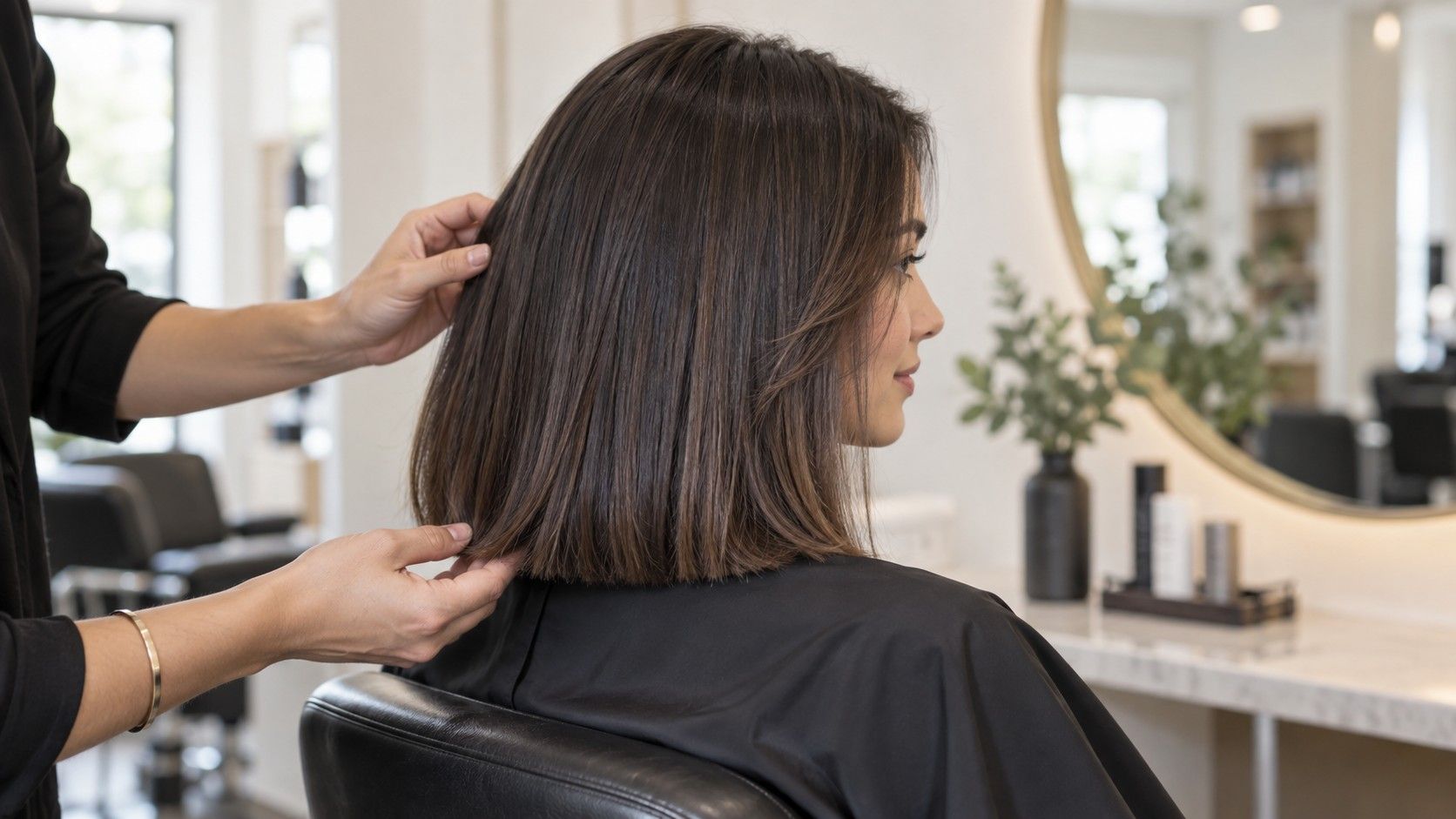
For most dense hair, internal layers are the quiet workhorse. They take bulk from sections underneath while preserving a cleaner perimeter, so the hair can move without looking chewed up. The technique is especially useful for a long bob or a shoulder-length cut that otherwise collects a thick ledge at the ends. You still see fullness, but it is not all pressing into the same horizontal line.
Texturising can help, though it is worth using precise language in the chair. Point cutting or small internal notches can soften a thick edge. Sliding a blade or shears through a section can create movement when done sparingly. What often disappoints people is repeated thinning with thinning shears close to the surface. On straight hair it can leave short, prickly pieces that stand out as the hair grows. On wavy hair it may create a cloud of frizz beneath a polished top layer. Ask where the removed weight will sit when the cut grows out, and ask to see one section before the same technique is used across the head.
The ends deserve protection. Thick hair is often strong enough to tolerate colour, heat and a busy routine for a while, which can hide damage until the ends become dry and blunt at the same time. A slightly softened perimeter still needs density. If you can see through the last inch in bright bathroom light, too much has probably been taken away. The aim is controlled volume, not a sparse hemline that makes the rest of the hair look even bigger.
| What you notice at home | Cut direction to discuss | Useful caution |
|---|---|---|
| A solid shelf at shoulder level | Internal layers with a softly shaped perimeter | Keep enough density at the ends so they do not look stringy |
| Hair expands outward after air drying | Longer layers placed for the natural wave pattern | Do not judge the result only while the hair is blown smooth |
| Crown feels bulky but ends are already fine | Targeted removal through the crown and underneath | Avoid thinning every section equally |
| Front pieces turn into a helmet shape | Face-framing layers that start below the cheekbone | Check the placement with your normal part and glasses if you wear them |
Short and medium cuts work when the outline has room to breathe
A short haircut for thick hair can be liberating, but only if the stylist has planned for the density rather than simply cutting it off. A pixie with length and texture through the top can look modern and light, while a very blunt, one-length short bob can push thick straight hair outward like a lampshade. Neither is automatically wrong; the difference is whether you enjoy a strong graphic shape and are prepared to style it. Cowlicks at the nape and hairline matter more at short lengths, because there is less weight to persuade them into place.
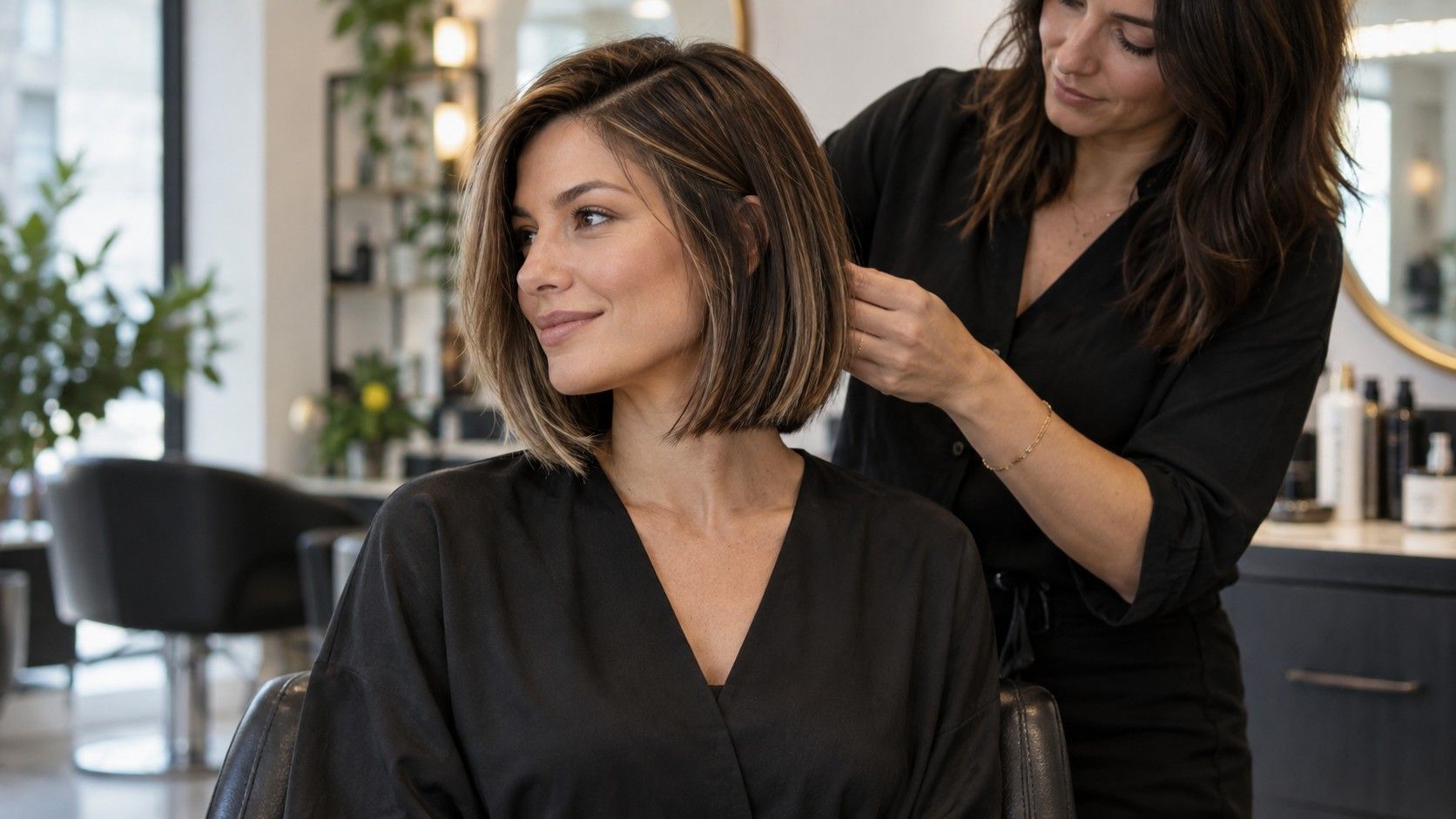
The long bob is often the most forgiving middle ground. It is long enough to tuck behind an ear or gather into a small tie, yet short enough to stop dense hair from dragging the face downward. For straight hair, a collarbone lob with invisible internal layers can give the cleanest result. For waves, a slightly broken line and a few longer face-framing pieces prevent the ends from stacking into one wide triangle. The front should be checked from the side as well as the front: a cut that looks sleek head-on may be too bulky behind the jaw.
A shag can also be one of the best haircuts for thick hair, but it is not shorthand for random short layers. It works when the hair has some wave, when you like a lived-in finish, and when the shortest pieces are placed around your actual face rather than copied from a photograph. A shag on very straight, dense hair can need a round brush or bend from a styling tool to show its intended shape. If your morning routine is a five-minute air dry, ask for a softer version with longer layers instead of a dramatic crown that depends on styling.
Long hair needs a shape that breaks the triangle
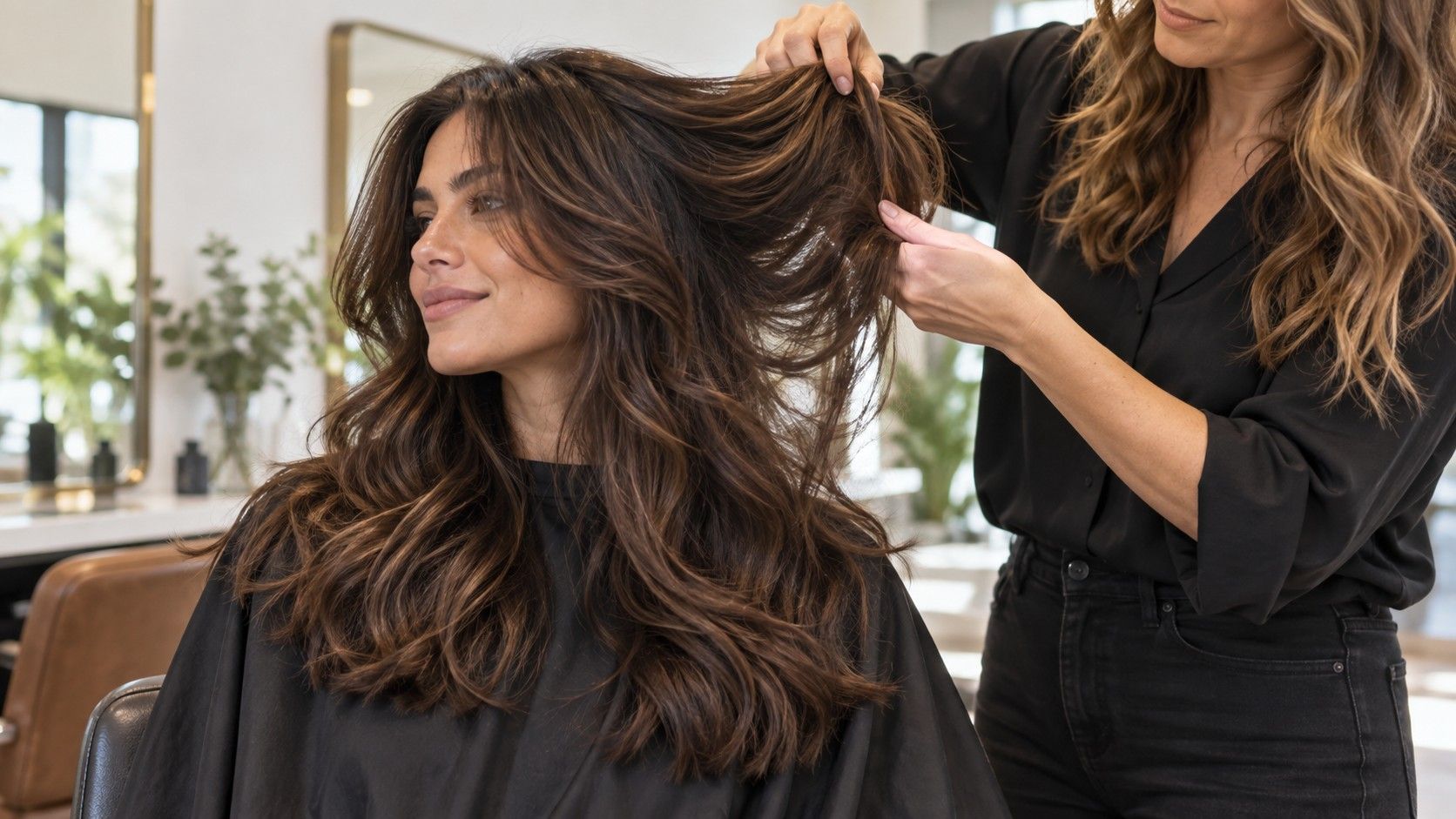
Keeping length does not mean accepting a curtain of heavy hair. The classic problem with long, thick hair is that the weight pulls the top close to the head while the lower half spreads wide, particularly when the hair reaches the chest. Cutting only a few layers at the very bottom rarely changes that. The shape usually needs movement through the middle lengths, with the first visible layers beginning where they will not puff up around the cheekbones.
A gentle U-shape or a softened V can make long hair feel deliberately finished without sacrificing much length. The choice depends on how you wear it. A U-shape gives a fuller, more balanced edge when the hair is down and tends to look natural in a low ponytail. A deeper V makes the centre feel longer, but very dense hair can make it appear more dramatic than expected from behind. Ask to see the proposed line while you are standing, because the cape and chair can hide how the hair falls against your shoulders.
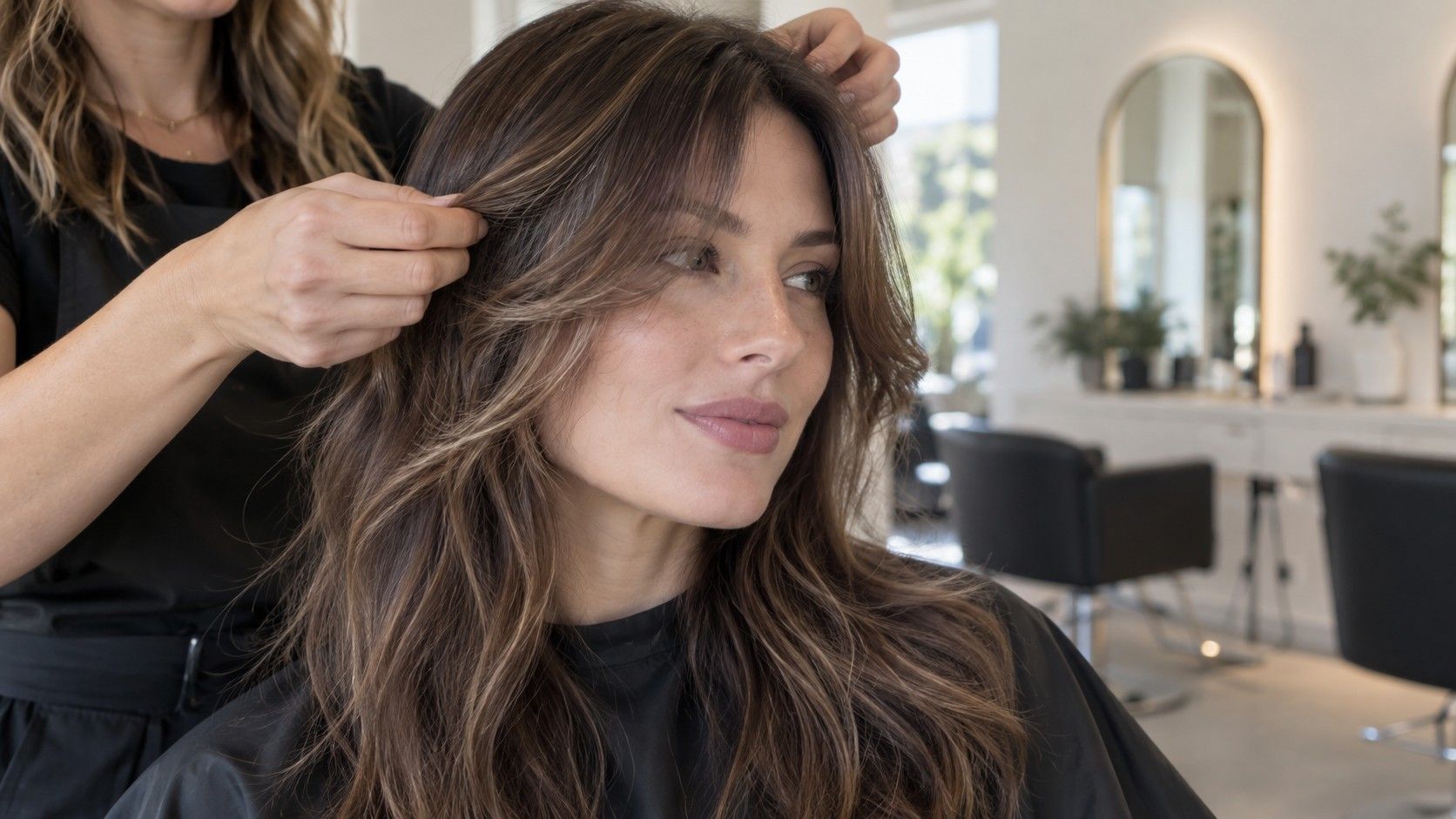
Long layers are not all interchangeable. On hair that is thick and straight, broadly spaced layers create swing and keep the ends from becoming one block. On thick waves, layers should often be cut with the spring of the wave in mind; too many short ones can push the sides wider and leave the top looking fluffy. If you mostly air dry, it is sensible to leave the salon with the hair partly dried in its natural texture. That is the version that will meet your coat collar, your commute and a humid afternoon.
Make the fringe and face-framing pieces earn their place
Dense hair gives a fringe plenty of presence. That can be lovely, but it means a full bang becomes a major design decision rather than a small change. A heavy blunt fringe can look intentional with a sleek bob, especially if you like a strong line and do not mind drying it each morning. It can also feel oppressive if your hairline has a cowlick or your forehead becomes warm easily. There is no prize for cutting a fringe short on the first appointment. A longer, softer version lets you see how your hair separates after a few washes.
Face-framing layers are usually easier to live with, but their starting point matters. Pieces cut at the cheekbone draw attention there and can flick out when thick hair is dried without a brush. Starting them closer to the jaw or just below it is often calmer, particularly if the rest of the hair has width. If you regularly tuck your hair behind one ear, test the front section that way before the final cut. A beautiful curve that springs forward the moment you move is not a practical curve.
Your part changes the whole arrangement. A centre part divides a dense head of hair into two visible panels, so it benefits from some internal movement or a subtle bend through the lengths. A slightly off-centre part can make the same cut feel less severe and may help a stubborn crown lie flatter. Switch your part for a week before changing the haircut if you are unsure. It is a free experiment, and it sometimes solves the problem you thought required several inches off.
Plan the haircut around wash day and the next eight weeks
Thick haircuts succeed at home when the maintenance matches your tolerance for effort. A sharp bob may need a smoothing pass every wash day. A layered medium cut may look better if you dry the roots first and let the ends finish in the air. A shag can be wonderfully forgiving on day two, but may need a little water and styling cream to reset the pieces around the face. None of these is high maintenance in an abstract sense; the question is whether it fits the time you actually have on a Wednesday morning.
At the appointment, ask what the cut will look like after air drying, how it will change as it grows, and which area will feel heavy first. Thick hair often remains attractive between trims, but the weight line can quietly return at the nape and around the shoulders. For many medium and long styles, an eight-to-twelve-week rhythm keeps the shape readable. Very short cuts and fringes may need attention sooner, while long layers can sometimes go longer if the ends are in good condition.
Use products as support, not camouflage. A light leave-in conditioner helps dense hair separate after washing. A small amount of cream or mousse can encourage wave without making the roots greasy. If you heat style, dry the roots before working on the lengths; otherwise you spend time fighting moisture that will make the shape expand again later. The right cut should reduce the amount of correction required. When you can wash, dry and leave the house without wrestling the same bulky section every time, the haircut has done its job.