A heart-shaped face often has a broad, expressive forehead, prominent cheekbones and a chin that comes to a neat point. That is a striking set of features, not a defect waiting to be corrected. The useful question before a haircut is simpler: where should the eye land when your hair is down, tied back, or half flattened by a rainy commute? The best hairstyle for a heart shaped face usually gives a little softness near the temples and a little presence around the jaw, while leaving room for the face to look like itself.
Start with the proportions you actually see in the mirror
People frequently call any tapered face heart-shaped, then choose a cut from a chart and wonder why it feels off. Look at a bare-faced photo taken straight on in daylight. If the forehead is visibly wider than the jaw and the chin is narrower rather than square, the heart shape is probably the useful starting point. A widow's peak can reinforce that outline, but it is not required. Your cheekbones may be high and wide, or they may sit quietly in the middle; that difference changes where a stylist should build texture.
There is also a practical test in the salon chair. Pull your hair straight back with a loose headband, then let it fall normally. Notice whether the sides already sit wide at the temples, whether they collapse below the ears, and whether your part exposes a large triangle of forehead. Those observations are more valuable than a face-shape filter. Hair for heart face shapes does not need to cover the forehead or disguise the chin. It needs an intentional outline, especially on the days when you do not have twenty minutes and a round brush.
Put weight near the jaw instead of piling it onto the crown
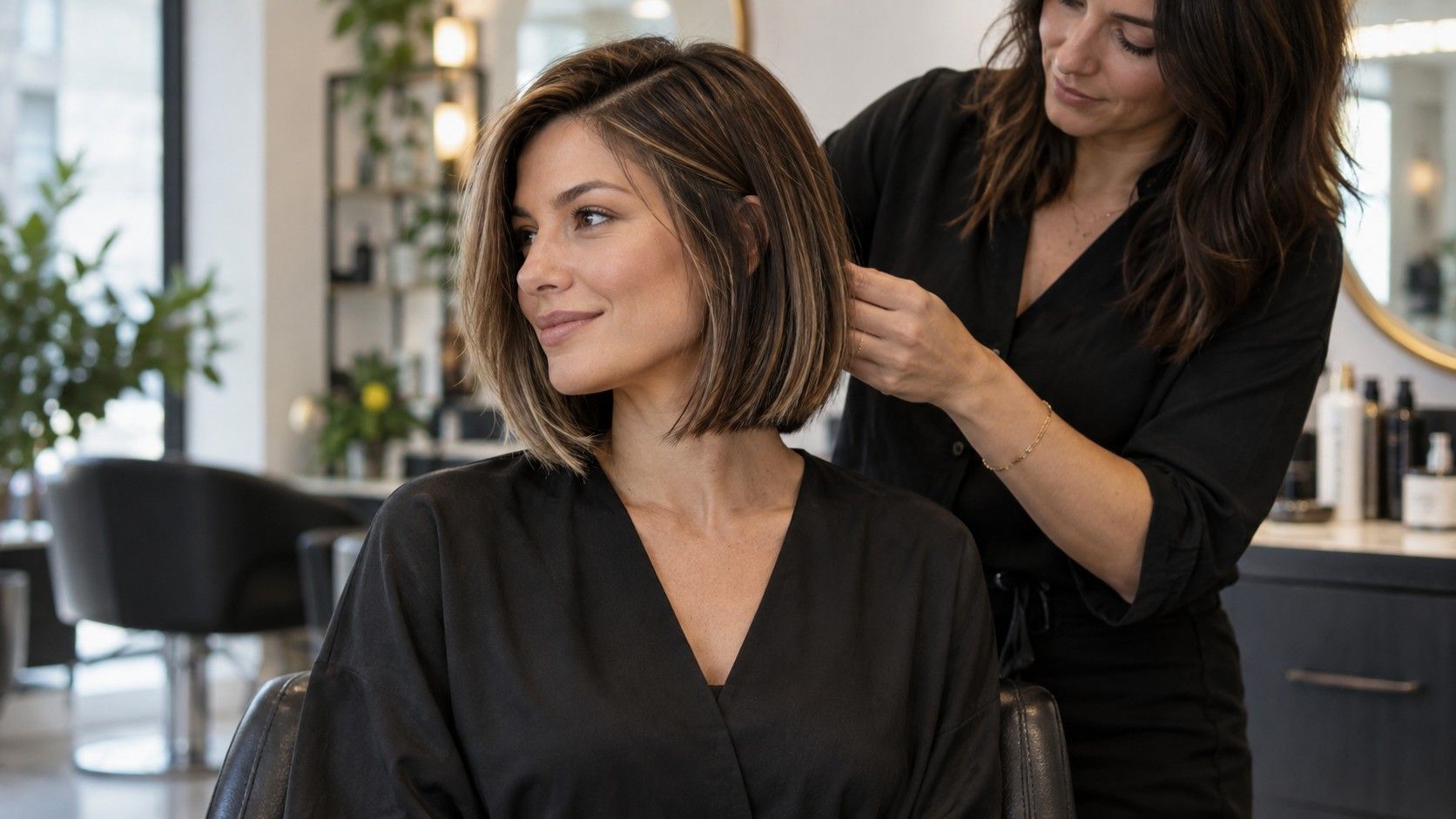
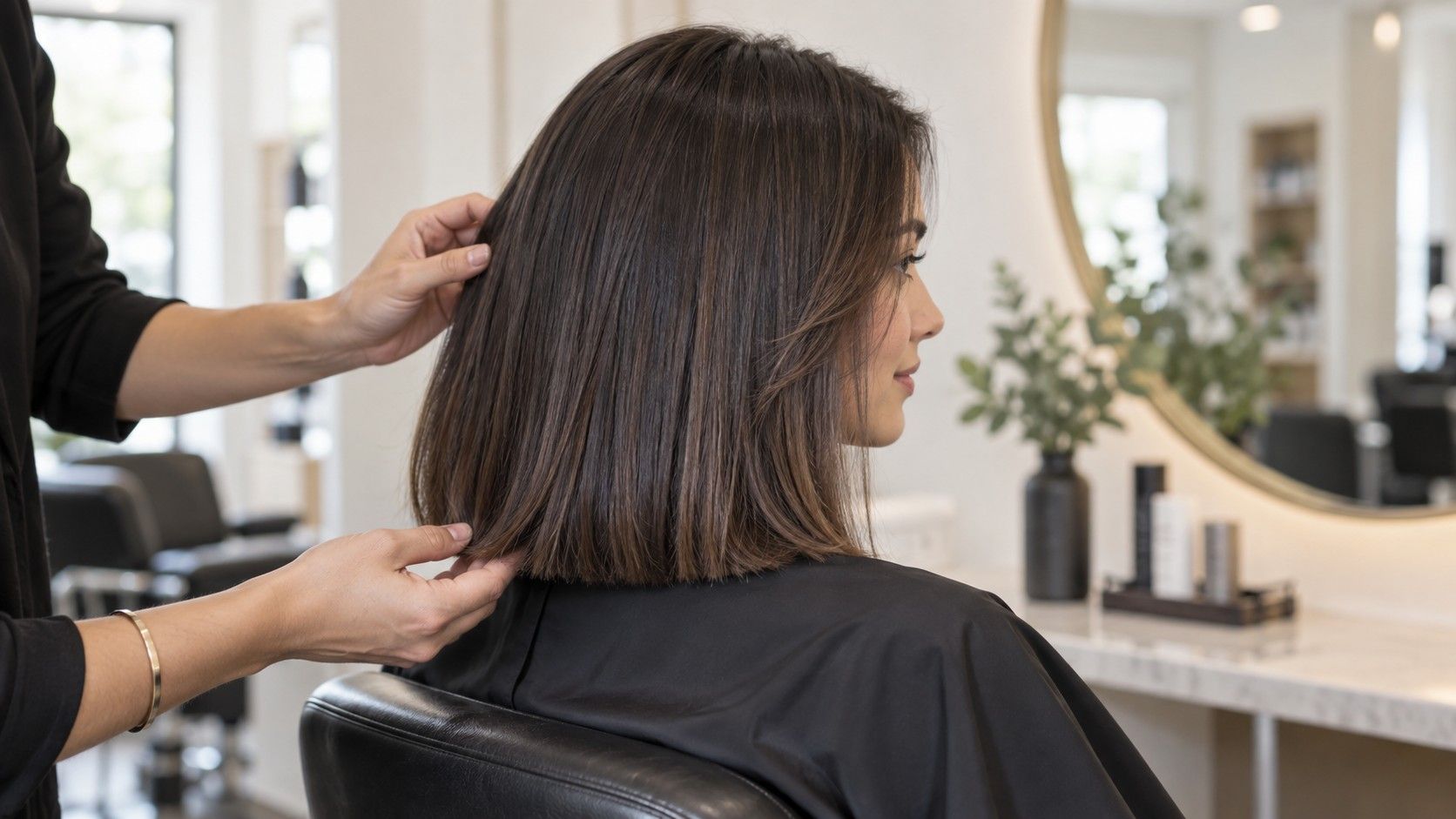
The usual balancing move is to keep the top reasonably soft and add width from about the cheekbone down. A collarbone lob with long internal layers is reliable because the ends can bend outward slightly around the jaw without looking like a costume. If your hair is fine, ask for a blunt-looking perimeter with only light internal removal. Too many short layers make fine hair airy at the crown and wispy where you wanted substance.
For naturally thick or wavy hair, chin-length layers can work beautifully, but placement matters. A layer that ends exactly at the widest point of the cheek can make that area look broader, especially when it is flicked away from the face. Moving the first obvious piece an inch lower creates a gentler line toward the chin. I would rather see a stylist show you the dry shape from both sides than promise that a dramatic crown lift will balance everything. High volume at the top is often the one thing a heart-shaped face already supplies on its own.
| Cut direction | Why it can work | Check before committing |
|---|---|---|
| Collarbone lob with soft ends | Adds movement around the jaw without a heavy curtain of hair | Make sure the front is not cut so short that it flips at the cheekbone |
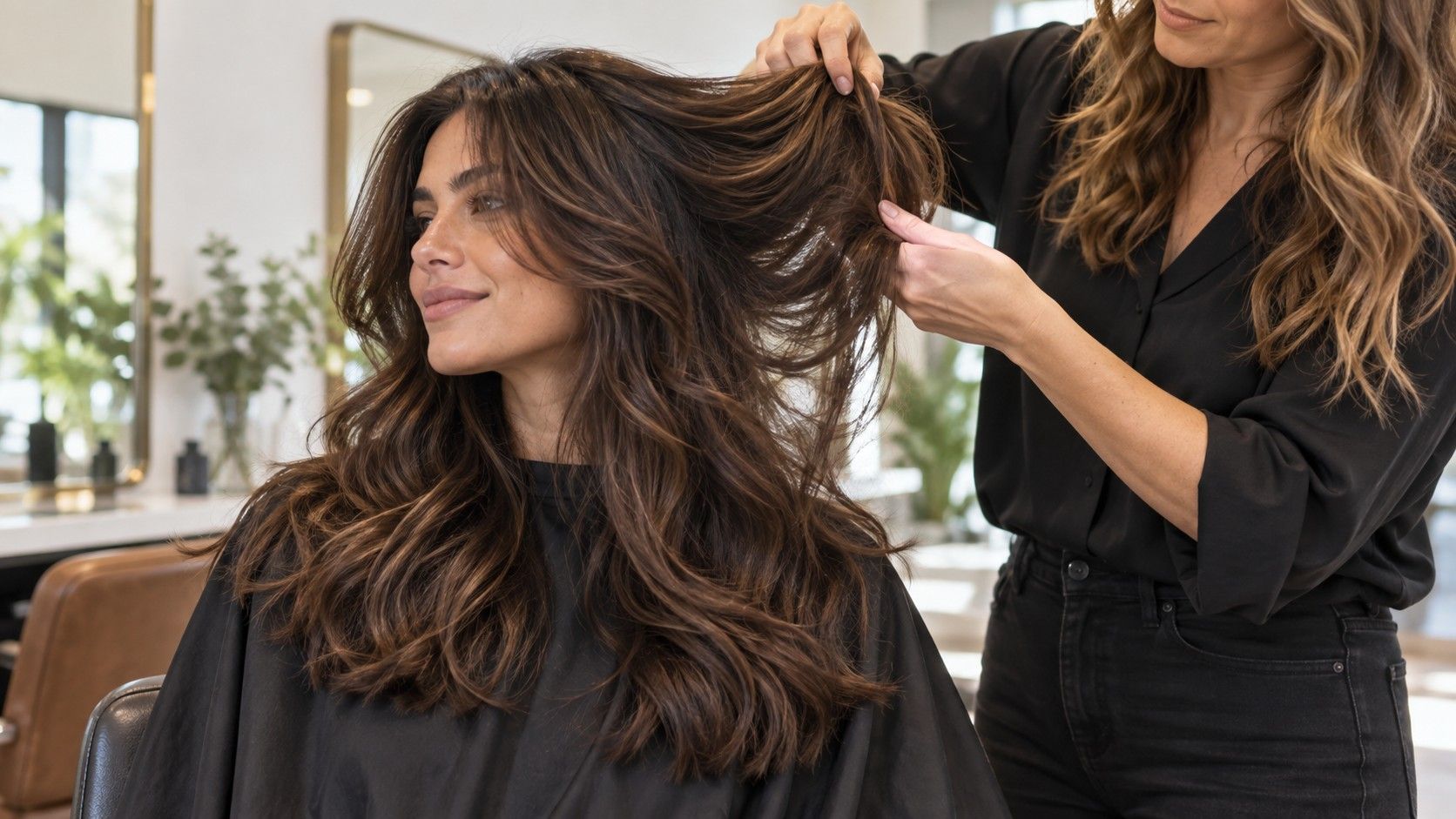
| Long layers beginning below the chin | Keeps length while shifting visual weight downward | Ask how the layers will look when air-dried, not only after a blowout |
| Textured chin-length bob | Can give the lower face a fuller, modern outline | Consider your cowlick and whether the ends will puff in humidity |
| Soft shoulder-length waves | Breaks up a wide upper face with a forgiving silhouette | Use enough length at the front to tuck behind the ear without it springing out |
Bangs should frame the forehead, not draw a hard line across it
A fringe is the part most likely to be chosen from a saved photo and regretted on Tuesday morning. Full, dense bangs can look chic on a heart-shaped face, particularly with straight hair and a high forehead, but they need a clear reason: you enjoy styling them and you like a stronger, graphic finish. They are not automatically the safer answer. A heavy horizontal block can make the upper face seem even wider if the sides are cut too short or the rest of the hair is very flat.
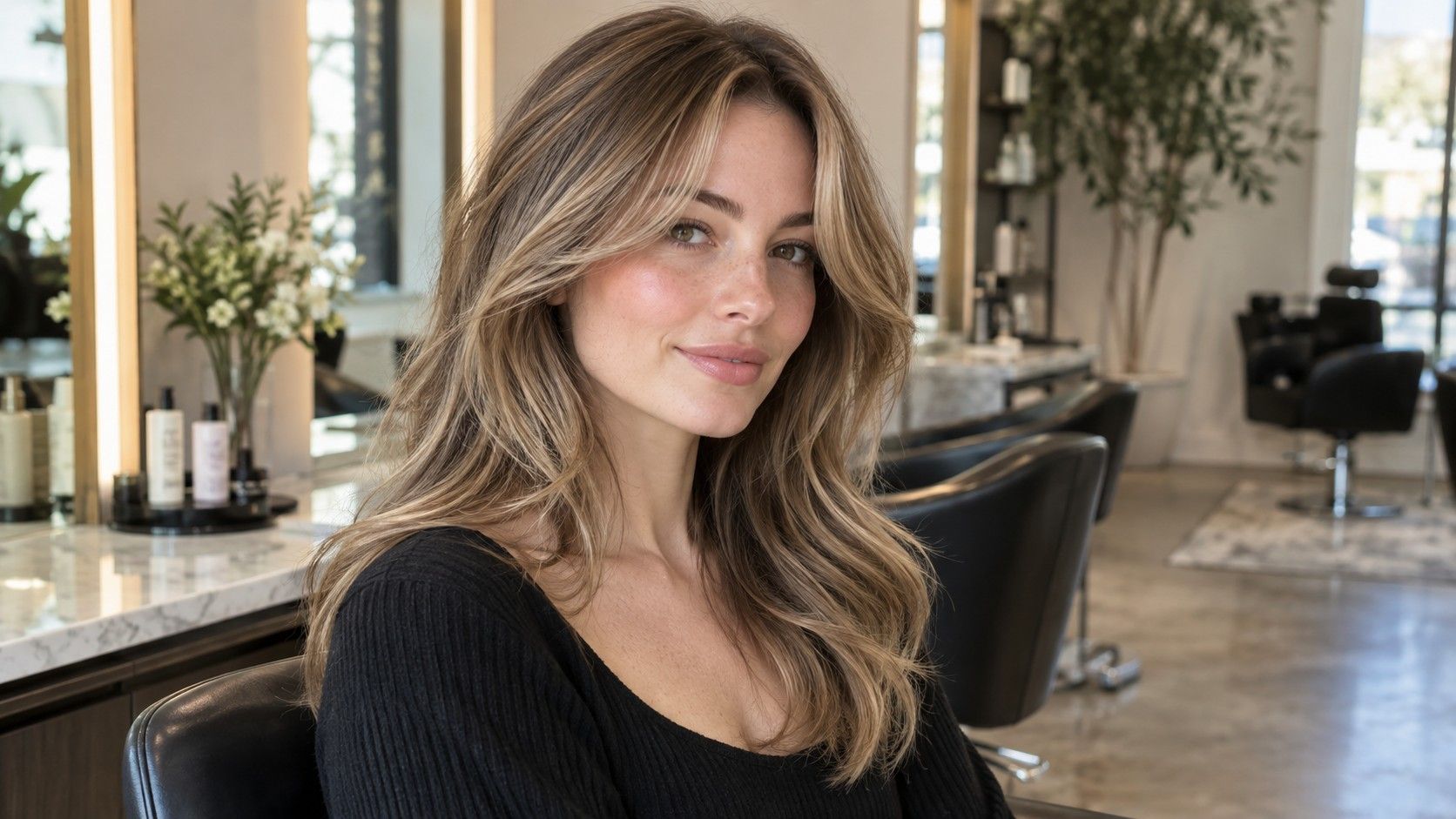
Curtain bangs are easier for many people because they open in the middle or slightly off-centre and connect to longer face-framing pieces. The useful version is not a pair of stiff wings. It is a soft fringe with enough length to sit around the outer brow or cheekbone, then melt into the rest of the cut. A stylist should check the direction of growth at your hairline before cutting. A stubborn cowlick can turn a delicate curtain shape into two separate commas unless you are willing to blow-dry it each morning.
A side-swept fringe still earns its place when you prefer a side part or wear glasses. It narrows the exposed forehead visually and introduces an uneven line, which can make a pointed chin feel less central. Keep the edge feathered rather than sharply chopped. If you cannot decide, begin with a long, movable fringe. You can always shorten it at the next appointment; putting two inches back takes considerably longer.
Choose short, medium or long length by your routine
Short hair is not forbidden for heart-shaped faces. A pixie with a longer, textured top and softness around the ears can look alert and elegant, especially when the fringe travels diagonally rather than straight up. The risk is a very tight undercut combined with height at the crown: it can leave all the visual emphasis at the forehead and temples. Keep some piecey texture at the side, or allow a small amount of width near the jawline if the cut reaches that far.
A medium length is often the least demanding compromise. A shoulder or collarbone cut offers enough hair to create a low wave, tuck one side behind the ear, or switch between a centre and side part. That flexibility matters when you are testing haircuts for heart shaped faces. You may like a centre part with loose waves but prefer a side part on days your roots are flat. The same cut can support both if the front is not over-layered.
Long hair works when it has a plan. One-length hair that ends far below the chest can pull the eye downward, but it may also sit like two narrow curtains and make the top half feel broad by comparison. Long layers, a gentle U-shaped hemline, and a few pieces that begin below the chin give it more architecture. If you usually wear a low ponytail, leave enough softness around the face. A tight, centre-parted ponytail reveals every proportion; a loose side part with a few relaxed pieces is a different picture entirely.
Parting and waves change the haircut more than people expect
Before booking a corrective cut, experiment with your part for a week. A centre part is not bad for a heart-shaped face, but it makes symmetry very visible. It tends to look best with a little bend through the mid-lengths and ends, or with curtain bangs that keep the forehead from becoming one uninterrupted field. If your hair lies poker-straight and flat, shift the part half an inch off centre. That tiny change can make the style look less severe without announcing itself.
A deep side part creates instant movement, but it has a trade-off. The fuller side should not be teased into a tall dome. Direct that volume toward the lower half with a loose S-wave or a bend just below the cheekbone. On a humid day, a low-effort method is to twist the front sections away from the face while they are damp, let them dry, then separate them with your fingers. It produces a softer wave pattern than a perfectly uniform curling wand set, which can look surprisingly formal against a delicate chin.
When you use heat, watch the direction of the ends. Curling every piece away from the face opens the cheeks and can leave the jaw area empty. Alternate directions through the lower layers, then pull the very front pieces away lightly. The result has movement without two identical wings. It is a small technical detail, but it is often the difference between a style that photographs well and one that still looks balanced by late afternoon.
Bring useful language to the consultation and leave room for your texture
Rather than asking for a haircut that will make your face look oval, describe the finish you want to live with. Say that you want softness near the forehead, visual weight around the chin, and a shape that works with your natural wave or straightness. Bring two reference photos with similar texture to yours: one showing the front and one showing the back. A glossy image of thick hair is not a useful promise for fine, dense, curly or heavily highlighted hair.
Ask where the shortest face-framing layer will land when dry, how the fringe will behave without heat, and whether the cut can still be tied back comfortably. Those are ordinary questions, but they expose whether the proposed shape has been thought through. If you colour your hair, mention that too. Bright face-framing highlights placed high around the temples can increase attention on the upper face; a softer ribbon that continues toward the jaw gives a more even effect.
Most importantly, judge the haircut after you wash and style it yourself twice. A salon blowout can make almost any silhouette look balanced for an evening. The successful style is the one that still has a calm outline after you sleep on it, walk outside, tuck it behind an ear and get on with your day. That is the standard worth taking into the chair.