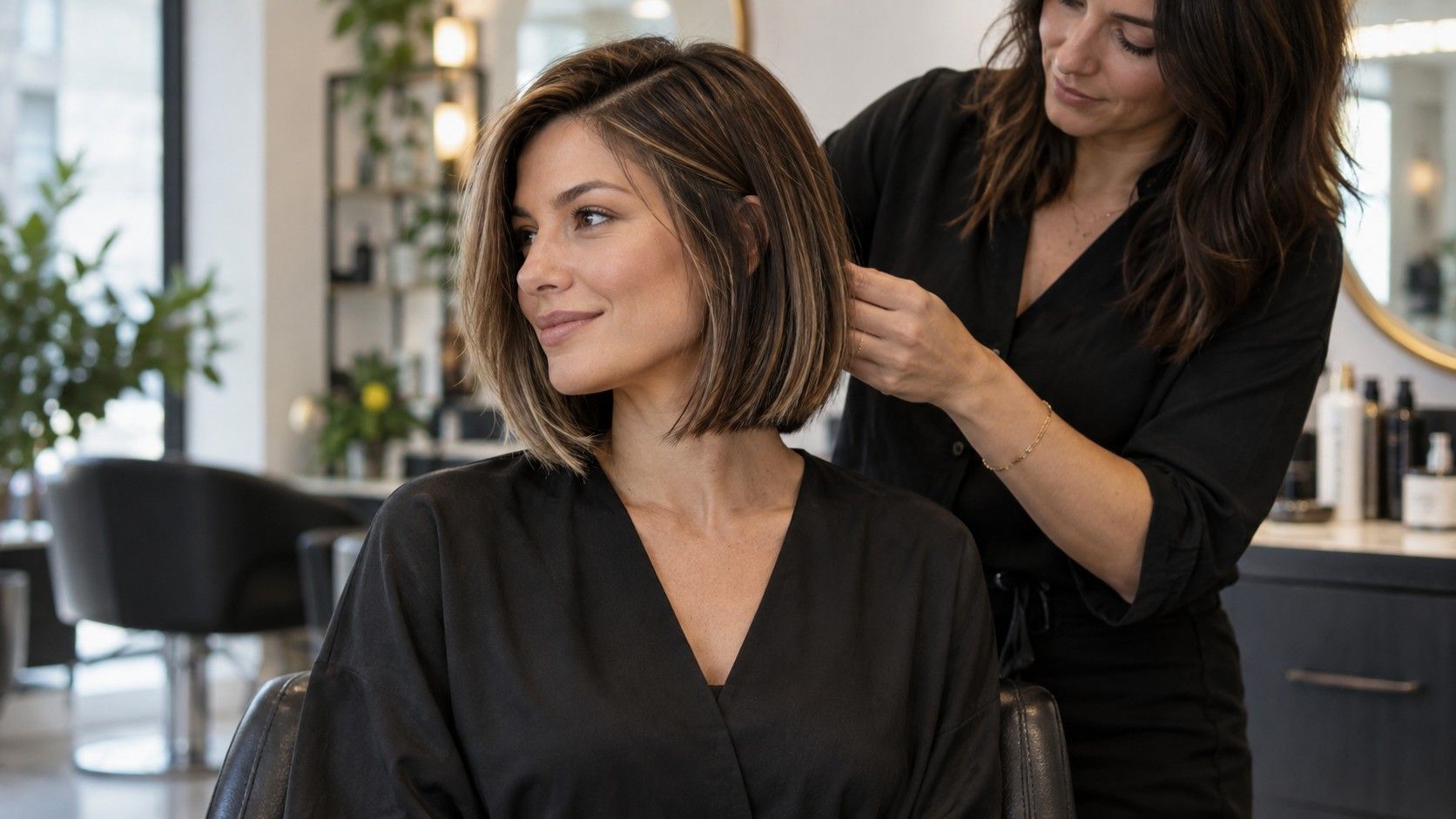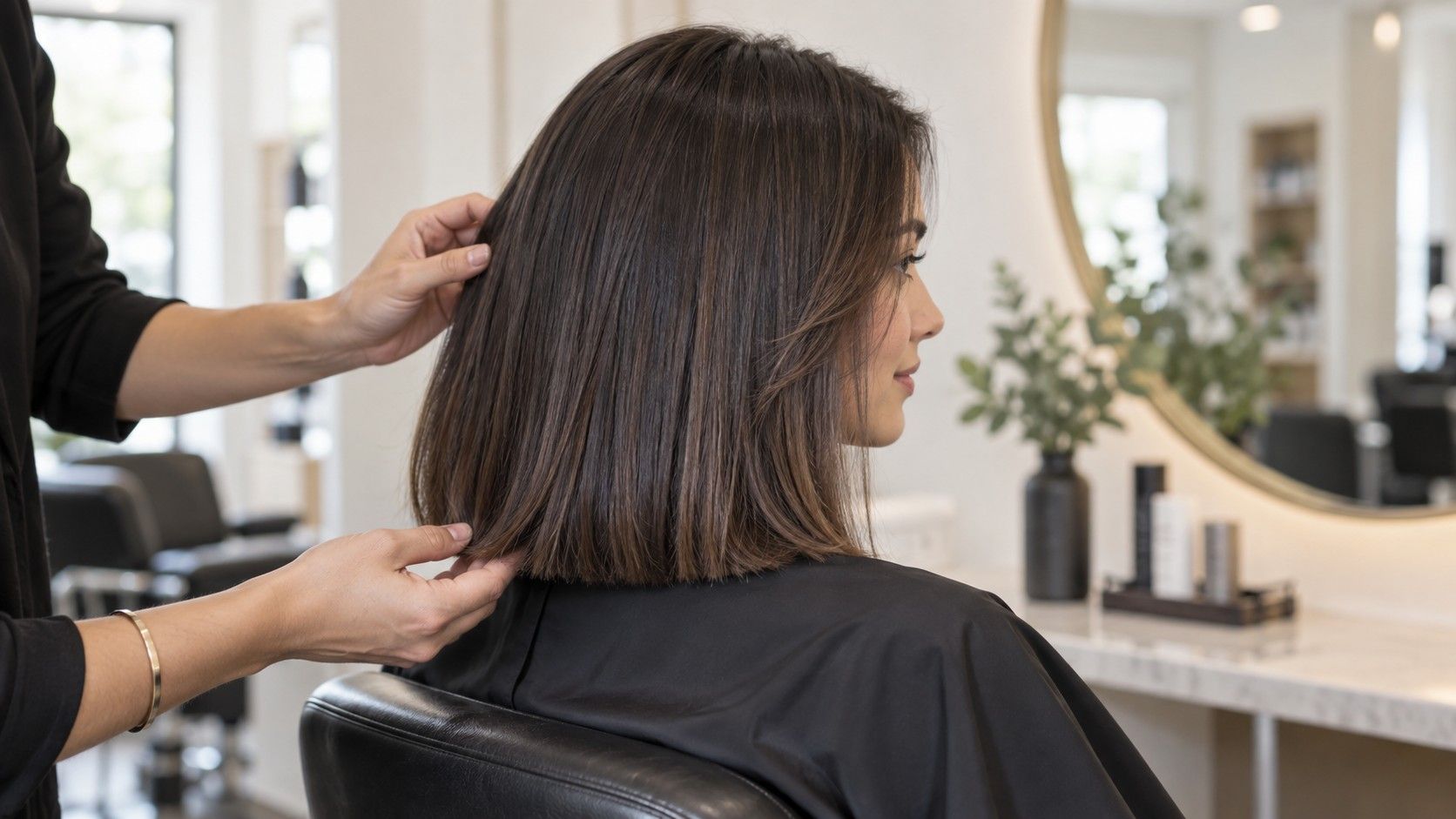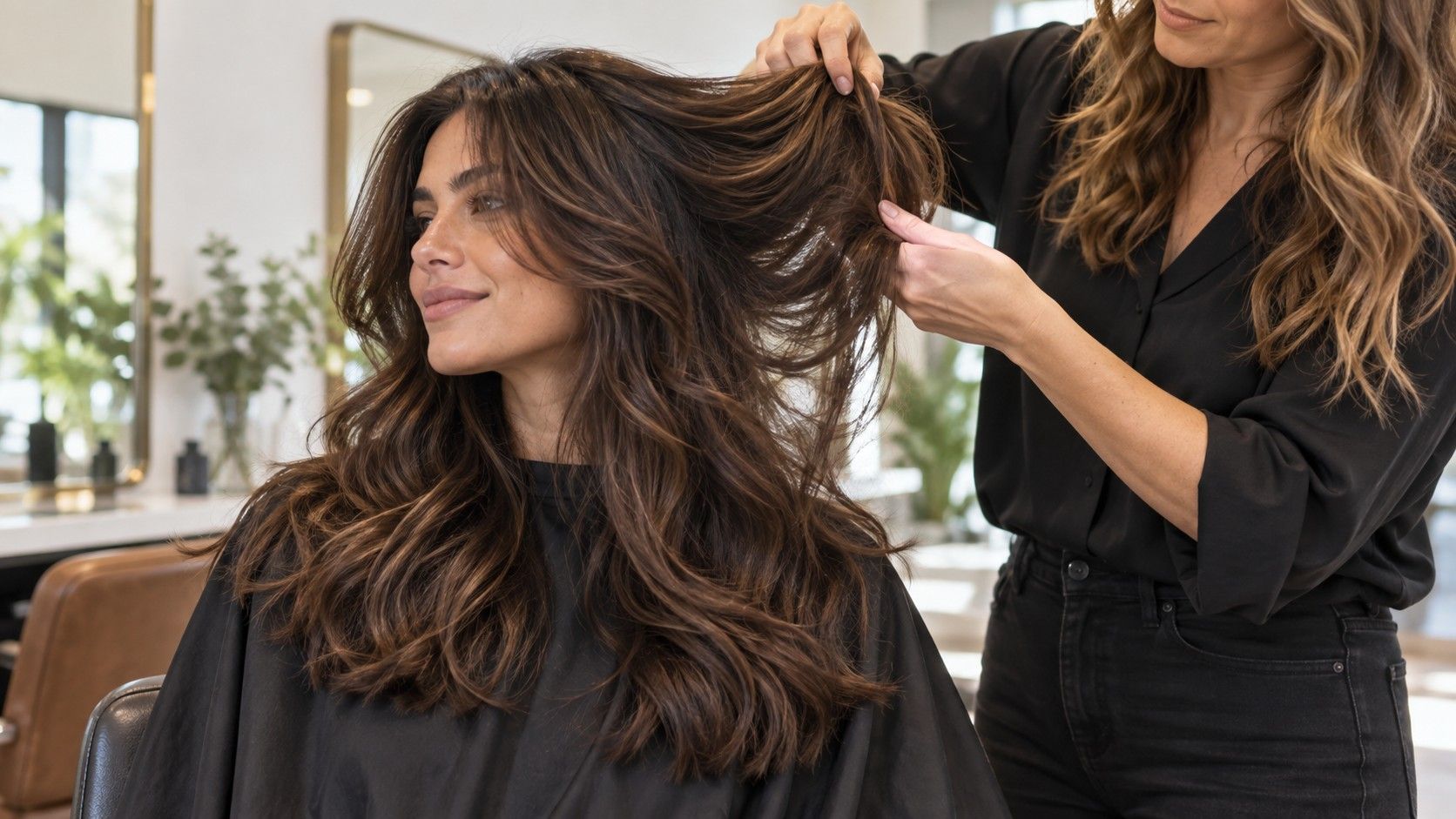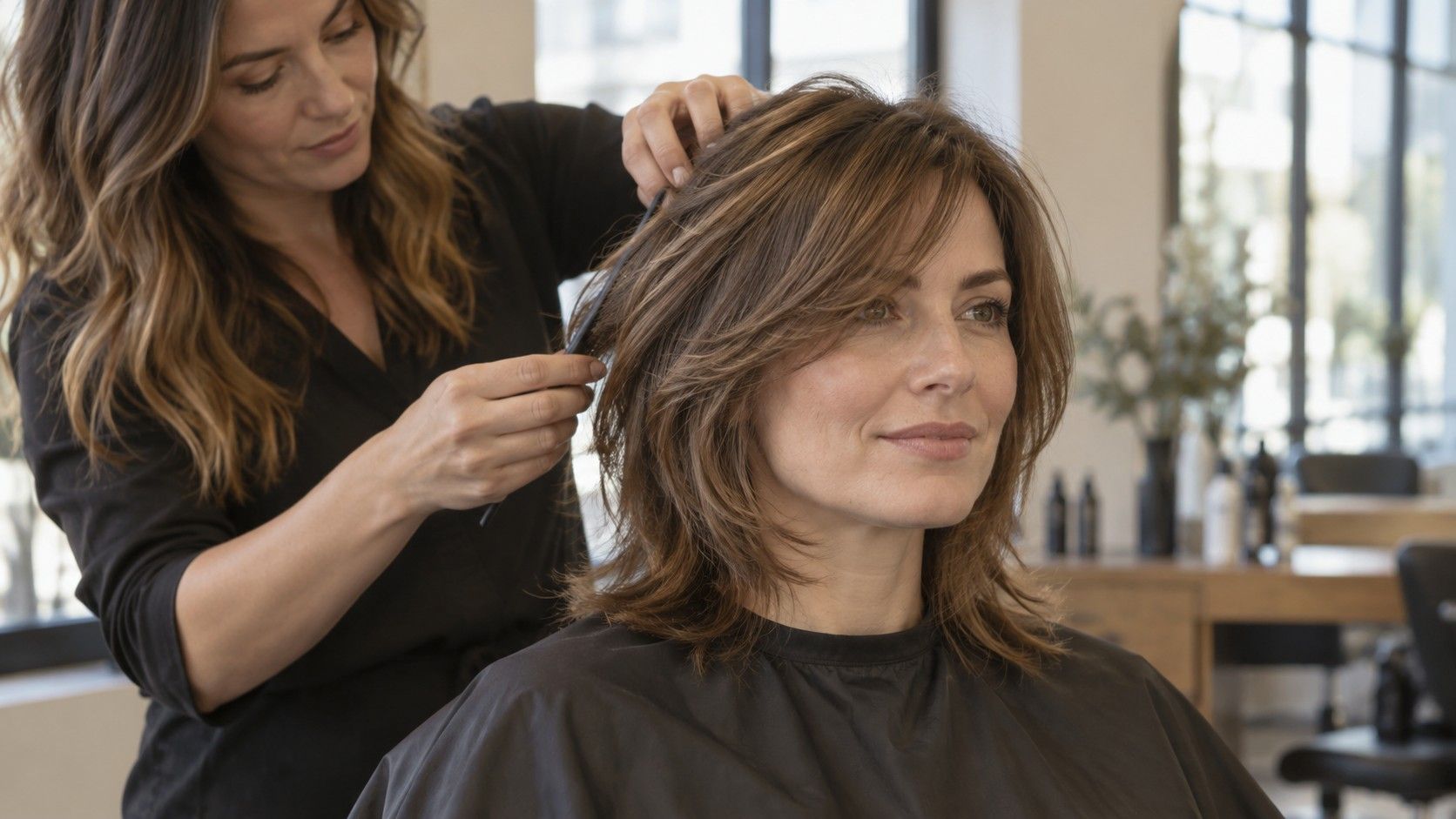
A square face is usually recognised by a strong jawline, broad cheekbones and a forehead of a similar width. That is useful information, but it is not a problem to correct. The right haircut simply decides where to put softness, movement and visual weight, so the cut feels chosen rather than sitting like a frame around the widest part of the face.
Start with where the haircut meets the jawline
Forget the blanket rule that every haircut for a square face must be long and wavy. The more useful question is where the perimeter lands. A dense, blunt line exactly at the jaw can make that horizontal area look stronger, especially when straight hair is tucked under. Moving the line slightly above or below the jaw, or breaking it with a little texture, changes the result without changing your personality.
A jaw-length bob is not automatically wrong. It can be excellent when the front is a touch longer, the ends are lightly point-cut, and the hair has enough movement to avoid becoming one solid block. A very crisp one-length bob gives a deliberately graphic effect; choose it if that is the look you want, rather than because a reference photo makes it appear effortless. Fine hair may need a stronger perimeter to look full, while thick hair often benefits from discreet internal weight removal.
Use the cheekbones as a second marker. Face framing that begins around or just below them can guide the eye upward. Ask your stylist where the pieces will sit when dry, not when they are clipped wet. A curl can spring up, and a cowlick can push one side forward, so a layer that looks balanced at the basin may finish in a surprisingly awkward place at home.
Try the parting before you change the cut
A parting is the simplest trial run for hairstyles for square faces. A middle part creates a precise vertical line and shows similar width on both sides. It can look beautiful, but paired with poker-straight hair and blunt ends it is a strong, symmetrical statement. If your existing cut already feels severe, moving the part by even a finger-width may give you the change you were hoping to buy with a major haircut.
An off-centre part gives one side a little sweep across the forehead and creates unequal volume at the crown. That asymmetry interrupts the boxy outline without making the style fussy. Test it after your normal wash day, not only after a salon blow-dry. If it collapses by lunchtime or exposes a stubborn crown swirl, a moderate shift is more practical than a dramatic deep side part.
| Choice | Likely effect | Check first |
|---|---|---|
| Middle part and blunt ends | Clean, symmetrical, graphic | Decide if you enjoy a defined jawline |
| Off-centre part | Gentle asymmetry and crown lift | Wear it on an ordinary workday |
| Deep side part | More forehead coverage and drama | See if your natural growth supports it |
| Loose bend at the front | Breaks up hard horizontal lines | Keep bends irregular, not identical |
Choose length for movement, not camouflage
Long hair can soften a square face, but only when it has a useful shape. Very long, perfectly straight hair with one heavy baseline can pull the eye down and make the lower face feel more solid. Long layers that begin below the chin keep the length while introducing movement. The best haircut for square face often comes down to internal weight: enough has been removed for hair to move, but not so much that the ends look thin.
Collarbone length is a dependable compromise. It clears the jaw, gives room for a wave, and is still long enough to tie back. On thick hair, ask about internal layers that reduce the triangle of bulk that appears at the sides after air-drying. On fine hair, ask for fewer, longer layers and a fuller edge. The same words, “soft layers,” can mean completely different cuts depending on density.
Short hair is possible too. A crop with texture around the crown and temples can look fresh and balanced. The risk is a squared-off silhouette: tight sides, a rigid fringe and a flat crown can repeat the geometry of the face. If you want softness, retain a little broken texture at the hairline and avoid making every edge identical. Bring examples with hair density close to yours; a textured crop on thick hair does not translate directly to fine hair.
For bobs, a small amount of extra length at the front or a gently rounded shape is often easier to wear than an uncompromising blunt line. It need not become a dramatic stacked bob. Watch how the ends move when you turn your head. If they swing as one heavy unit, subtle texturing may do more than adding another short layer at the crown.
When fringe helps and when it adds maintenance
A fringe changes the proportions because it changes how much forehead is visible. Curtain fringe works well for many square faces because it can open in the middle or slightly to one side and blend into face framing. The outer pieces should join the rest of the cut rather than ending abruptly at the cheek. If they stop at the widest point of the cheekbones, ask whether beginning a little lower would be more flattering.
A side-swept fringe is useful if you want coverage without a highly precise daily shape. It works naturally with an off-centre part and a medium length. Keep it long enough to bend; a fringe cut too short becomes a stiff diagonal, particularly on straight hair. Dry checks matter here, because fringe shrinkage is obvious and frustrating.
A full blunt fringe is not forbidden. It simply creates another deliberate horizontal line, which can echo a strong jawline. That can look brilliant with a polished, fashion-forward style. For a softer effect, choose a lightly broken edge or a fringe that separates naturally. Be realistic about upkeep: bangs often need washing, drying or resetting before the rest of the hair does.
Let your natural texture set the rules
Reference photos are commonly finished with a professional blow-dry, so they conceal the variable that matters most: your own texture. Wavy hair already makes irregular lines and often needs fewer layers than straight hair. Over-layering loose waves can make the ends frizz and push the shape wide at the cheeks. Longer, considered layers tend to behave better.
Curly hair should be designed from the dry silhouette outward. Curls may be looser at the crown and tighter around the temples, so a symmetrical wet cut can dry unevenly. Tell the stylist whether you diffuse, air-dry or brush it out. A little lift at the crown and face framing below the cheekbones can balance the outline without trying to flatten every side.
Straight hair reveals every cut line. Choose between precision and movement: precision means blunt edges, regular trims and a visible jawline; movement means a softer perimeter, an off-centre part and perhaps two loose bends at the front. Neither option is superior. They simply look different in normal daylight and take different amounts of time on a rushed morning.
Give your stylist useful details
Instead of requesting generic haircut square face ideas, explain what is bothering you now. Say that your bob finishes at the jaw and feels wide when straight, or that your long hair goes heavy around the cheeks after air-drying. That gives a stylist a real decision to make about the perimeter, internal weight, parting or face framing.
Bring one or two photos for shape and one for texture, then point to the exact feature you like: the lifted crown, the soft fringe, the longer front or the moving ends. Ask what needs changing for your density and styling tolerance. A worthwhile consultation also covers how often you will use heat and whether you will come back for fringe trims.
Before you leave, have the stylist show a version you can repeat. For a soft bob, that may be roots dried toward an off-centre part plus two loose bends near the front. For layers, it may be a round brush only around the face. The successful cut is the one that still looks intentional on a rushed Tuesday, without salon lighting or forty minutes to rebuild it.