An oval face gives you more room to experiment than most face shapes, but it does not make every length equally easy to wear. The useful question is not whether a pixie, bob or long cut is ‘allowed’. It is where the haircut puts its visual weight, how much styling it needs at 8am, and whether it still looks intentional after a humid walk, a workout, or a week without a salon visit.
Why an oval face is not a blank cheque
Oval faces are usually a little longer than they are wide, with a softly rounded jaw and forehead that is not dramatically wider than the cheekbones. That balance is why stylists often call the shape versatile. It is also why a haircut can look very different depending on the person’s hairline, neck, density and features. Two people can both have an oval face and find that the same blunt bob produces opposite results.
Start by looking at the full outline rather than measuring your face in isolation. A long neck can carry a chin-length cut beautifully, while a shorter neck may feel crowded by a heavy line that stops at the jaw. Strong brows, a prominent nose, a defined chin or high cheekbones are not problems to hide; they are features that a length can either frame quietly or put centre stage. The best hair length for an oval face is usually the one that makes that framing feel deliberate.
Hair texture changes the calculation. Fine, straight hair loses apparent density as it gets longer, especially below the shoulders. Dense waves expand sideways and can make a very short cut feel wider than the sketch in a salon consultation. Curly hair needs its own allowance for shrinkage: a curl that looks collarbone length while wet may sit above the jaw once dry. Bring photos of hair with a similar texture, not just a similar face shape.
Short lengths: the neck and jawline do most of the work
A pixie, bixie or cropped cut can suit an oval face because it exposes the natural balance of the forehead, cheekbones and jaw. The trade-off is visibility. There is little hair to soften an uneven hairline, cowlick, large forehead, scalp show-through or a rushed styling day. That is not a reason to avoid short hair; it is a reason to choose the cut’s shape carefully.
For a first short haircut, a longer pixie with movement around the temples is usually less startling than a very close crop. A fringe that breaks slightly to one side can reduce the feeling of vertical length without creating a hard horizontal bar across the forehead. Leave some softness at the nape if you do not want attention drawn to the neck. On fine hair, a compact shape with a little crown texture often looks fuller than long, wispy pieces around the face.
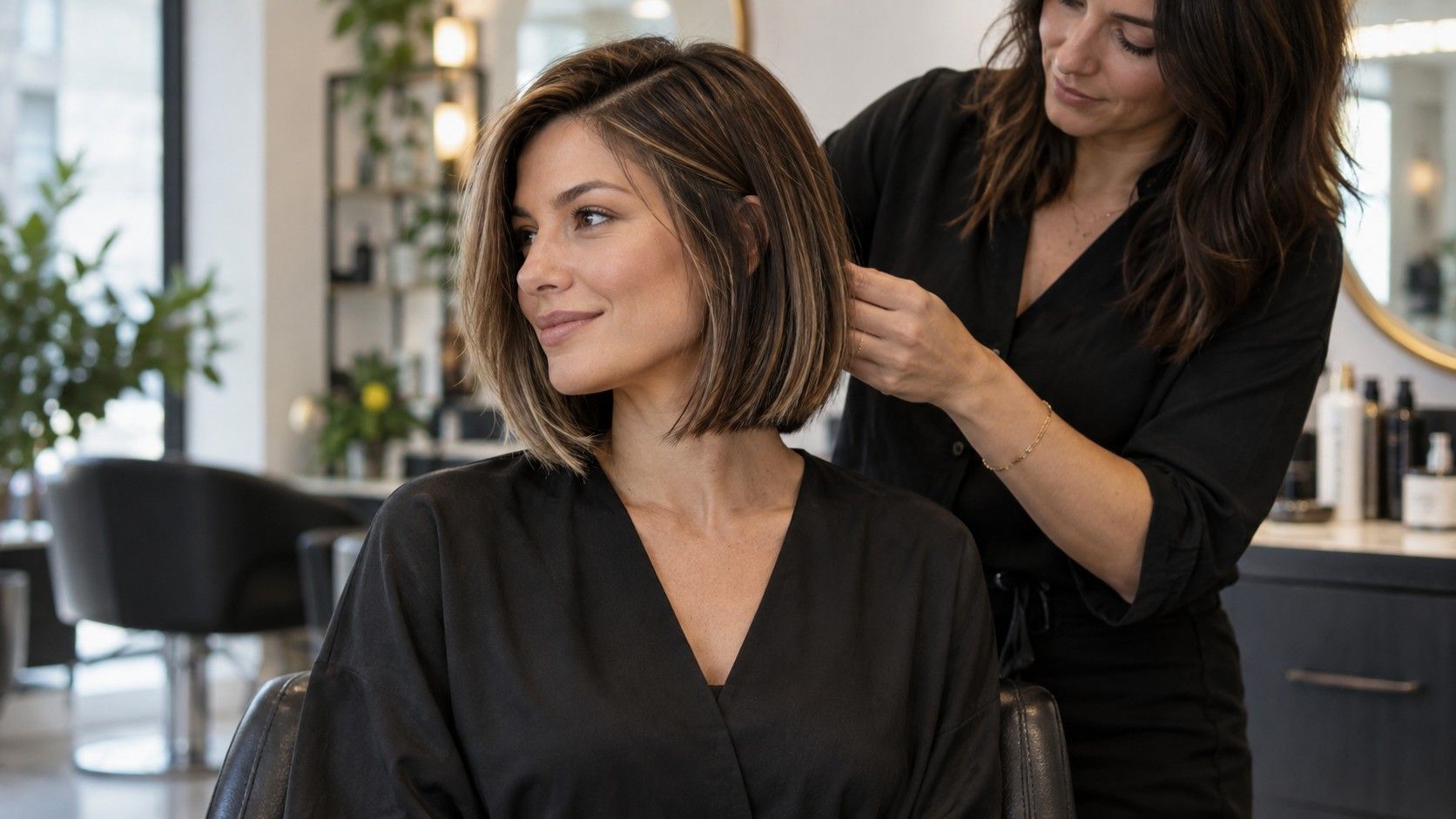
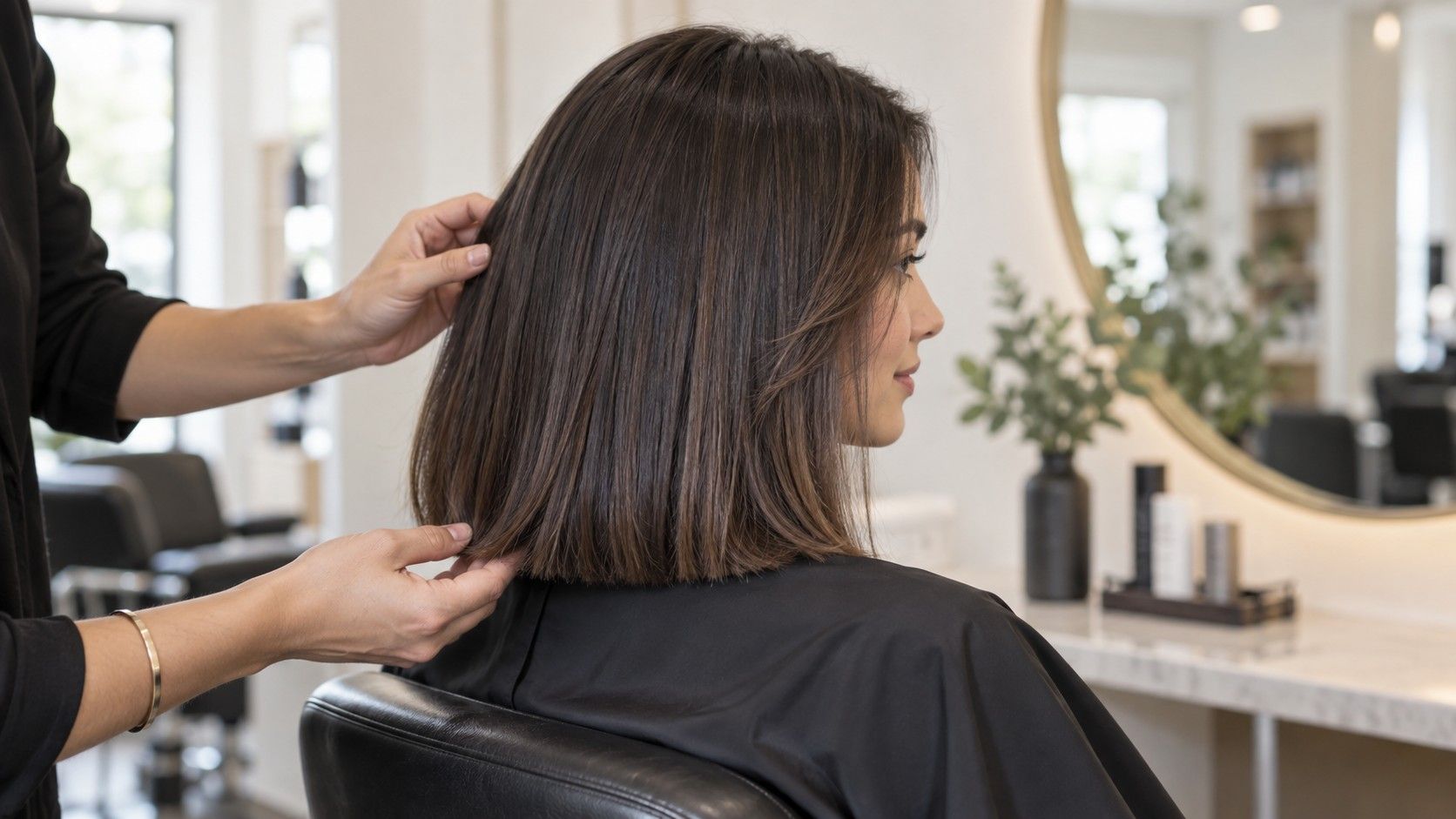
Chin length is the checkpoint where a short bob becomes highly personal. A blunt line at the exact point of the chin makes the jawline very noticeable. That can be striking when the jaw is defined, but it can also feel severe if the hair is poker straight and thick. Moving the line a centimetre or two below the chin, adding a subtle internal bevel, or keeping the front slightly longer gives the cut more breathing room. Ask to see the shape from the side before agreeing to the final length.
| Length zone | Often works well when | Watch for |
|---|---|---|
| Pixie to ear length | You enjoy regular trims and want cheekbones and eyes visible | Cowlicks, scalp visibility and a high-maintenance morning routine |
| Jaw to chin length | You want a clear outline with enough hair to tuck behind the ear | A heavy blunt edge sitting exactly at the widest point of the jaw |
| Below-chin bob | You want the graphic feel of a bob with a softer transition | Ends flipping outward at the shoulders or collar |
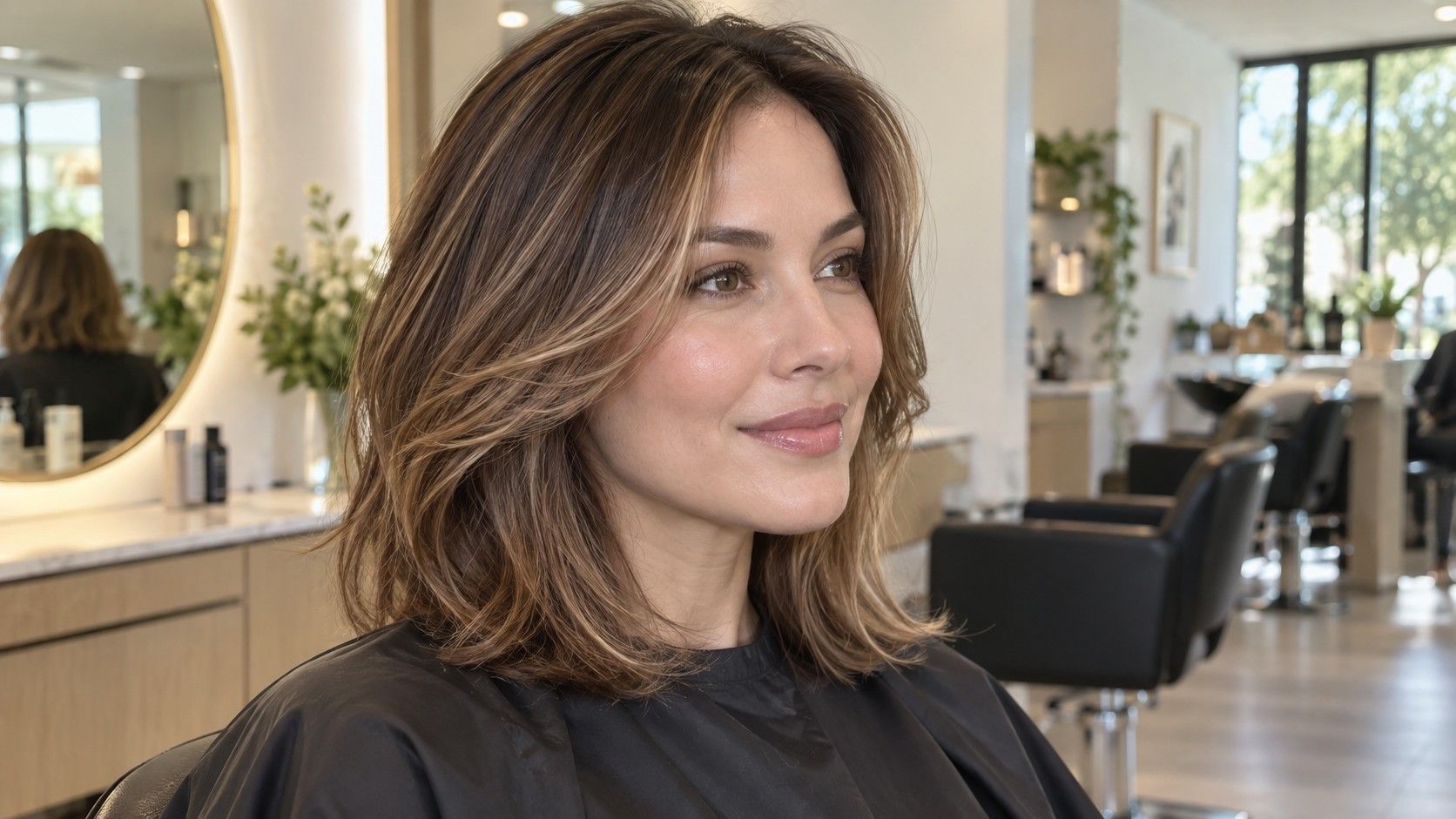
| Collarbone length | You need ponytail options and flexible styling | Too many short layers making fine hair look thin |
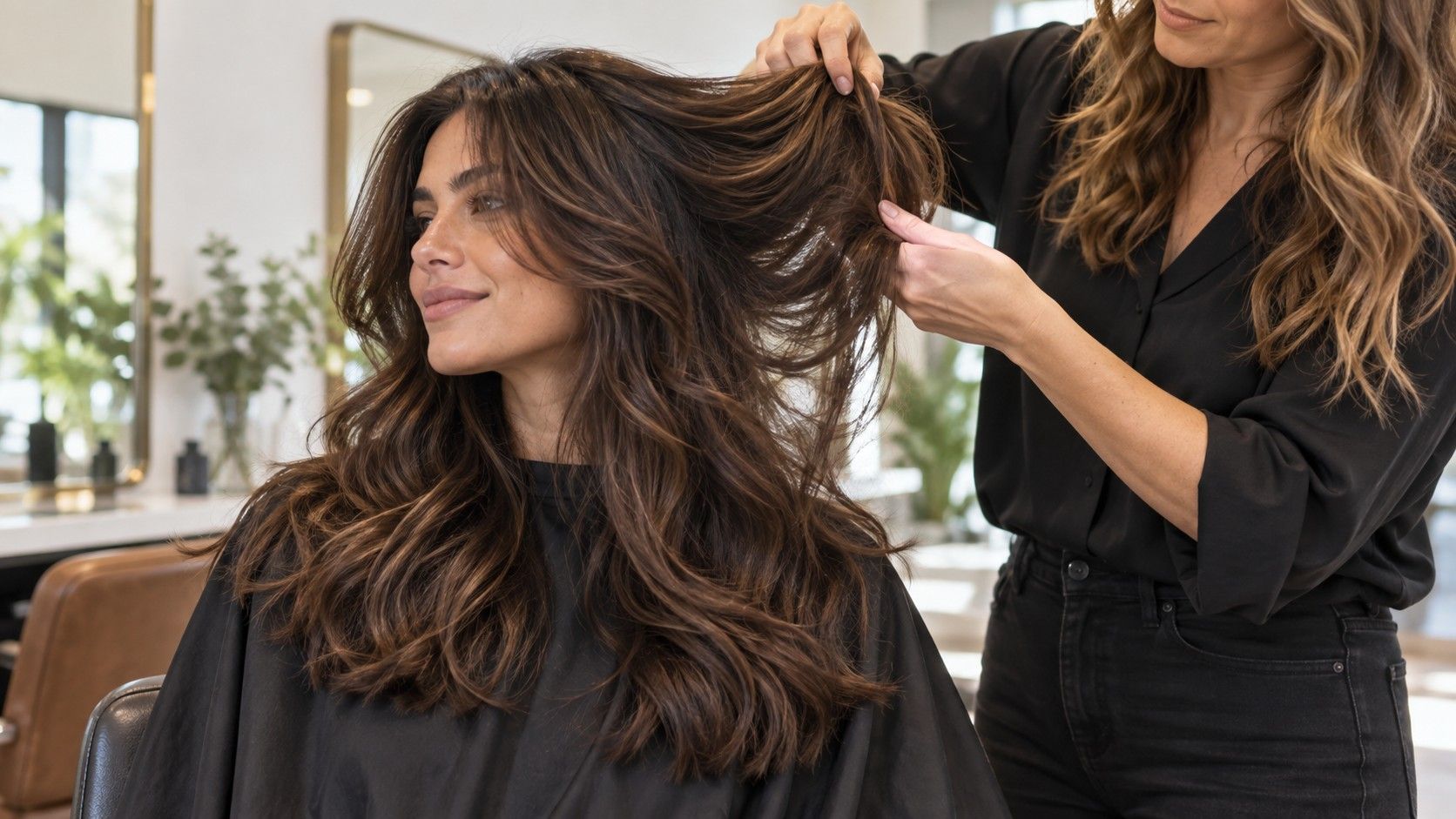
| Below the chest | Your hair is dense or you like the weight of long hair | Dry ends, flat roots and length that overwhelms the cut |
Medium lengths are usually the easiest place to experiment
For many people, shoulder and collarbone length is the most forgiving hair length for an oval face. It offers enough hair to make a ponytail, clip it up or wear a loose wave, while still allowing the cut to hold a recognisable outline. It is also the range where small changes in layers have a big effect without requiring a dramatic commitment.
A collarbone cut works particularly well when daily styling is realistic rather than aspirational. If you air-dry most mornings, ask for a shape that looks good in its natural bend, with a few face-framing pieces that do not need a round brush to behave. If you blow-dry regularly, a soft long bob can sit polished and expensive without looking rigid. The difference is often in the internal weight removal: too much can make the ends flimsy; too little can create a triangular block around the shoulders.
Medium hair is also a sensible answer when you are growing out a short cut. Instead of chasing one exact target length, use the transition points. When hair begins catching under a coat collar, it may need a small reshape rather than another round of growing untouched. When the front reaches the cheekbones, a curtain fringe or longer face frame can make the in-between stage look chosen rather than accidental.
Be specific with your stylist about what you actually do with your hair. ‘I want layers’ means very little without that context. Say whether you wear glasses, tuck hair behind both ears, put it in a low bun, use hot tools, or have only ten minutes before leaving the house. A shoulder cut that looks excellent when professionally waved may be frustrating if its front layers continually fall into your face while you work.
Long hair needs structure, not simply more inches
Long hair can be one of the best hair lengths for an oval face, especially when it has enough density to hold a soft outline. The risk is not that long hair makes an oval face look wrong. The risk is that it becomes a single heavy curtain, pulling attention downward and hiding the shape that made the length appealing in the first place.
Long layers are useful when they are placed with restraint. A few layers beginning around the chest can stop the lower half from looking solid, while longer face framing around the cheekbones gives movement without sacrificing the perimeter. On naturally wavy hair, this can create an easy, open shape. On fine straight hair, too many layers often have the opposite effect: the bottom looks see-through and the hair seems longer but less substantial.
Consider where the ends land when you are sitting, wearing a bag strap or a coat. Hair that reaches the bust can rub against clothing and split faster than hair just below the shoulders. If you love the look but dislike frequent heat styling, a blunt-ish baseline with very light internal layers is often more practical than a heavily feathered cut. The ends will look denser between appointments, and a simple trim can restore the line.
Long hair also makes colour placement more visible. Highlights around the face can brighten an oval face, but a sharp stripe at the cheek can look dated quickly as the hair grows. A softer blend, with brightness beginning a little away from the root, usually gives you more time between colour appointments. That matters if you are choosing length partly because you want a lower-maintenance routine.
Use density and texture to choose between a bob, collarbone cut and long layers
Face shape is the starting point; density tells you how the haircut will behave. Fine hair often benefits from keeping the baseline relatively full. A bob below the chin or a collarbone cut with restrained layers can make thin ends look more convincing. If you prefer long hair, it is worth accepting that the last few inches may need to be trimmed more often than you expect. Length is not helping if the ends look permanently translucent.
Medium to thick straight hair can carry a blunt bob, but it may need invisible debulking so it does not sit like a helmet. Ask for weight removal inside the cut rather than choppy layers on the surface. The outside should still look clean when you tuck one side behind your ear. For thick wavy hair, a collarbone length is often a sweet spot because the weight prevents excess puff while the length gives waves enough room to form.
With curls, choose the finished dry length, not the wet one. A stylist who cuts curly hair should be willing to discuss shrinkage and where each curl pattern sits around the face. A fringe can be lovely on an oval face, but it needs enough length to account for spring-back and enough density not to separate into three random pieces by midday. If you rarely diffuse or refresh curls, avoid a highly sculpted shape that depends on perfect definition.
Make the decision around your actual routine
Before booking, write down three things: how often you will trim it, how you style it on an ordinary weekday, and what you want to be able to do with it. Those answers often narrow the best hair lengths for an oval face faster than another hour of scrolling. A sleek jaw-length bob needs more precision and more frequent maintenance than a collarbone cut. A long layered style may need less frequent cutting, but more time for washing, drying and keeping the ends healthy.
Bring two reference photos that show the length you like from the front and side, then one photo of your own hair on an average day. The last image is surprisingly useful. It tells a stylist about your natural parting, how much your hair shrinks, where it gets flat, and whether the inspiration photo is realistic for you. Discuss a range rather than an exact millimetre: ‘between collarbone and upper chest’ leaves room for texture and posture.
There is no obligation to choose the most flattering theoretical option once a chart says you have an oval face. If you like the clean feel of a short cut and can commit to trims, that may be the right answer. If you need a ponytail for work and want to air-dry, collarbone length may be more valuable than a sharper bob. A good haircut supports your habits first; balanced proportions are the welcome result, not a rule you have to obey.