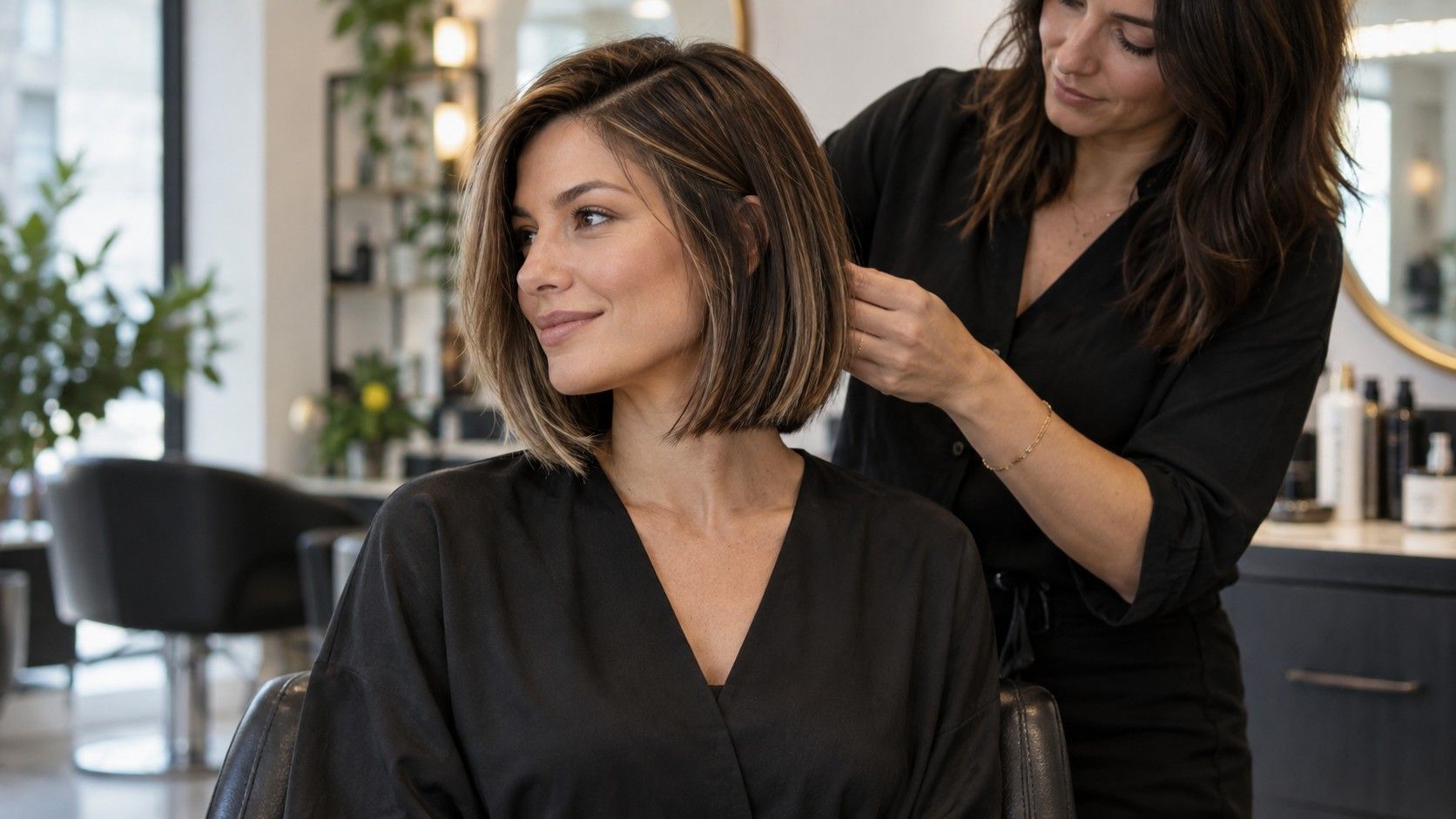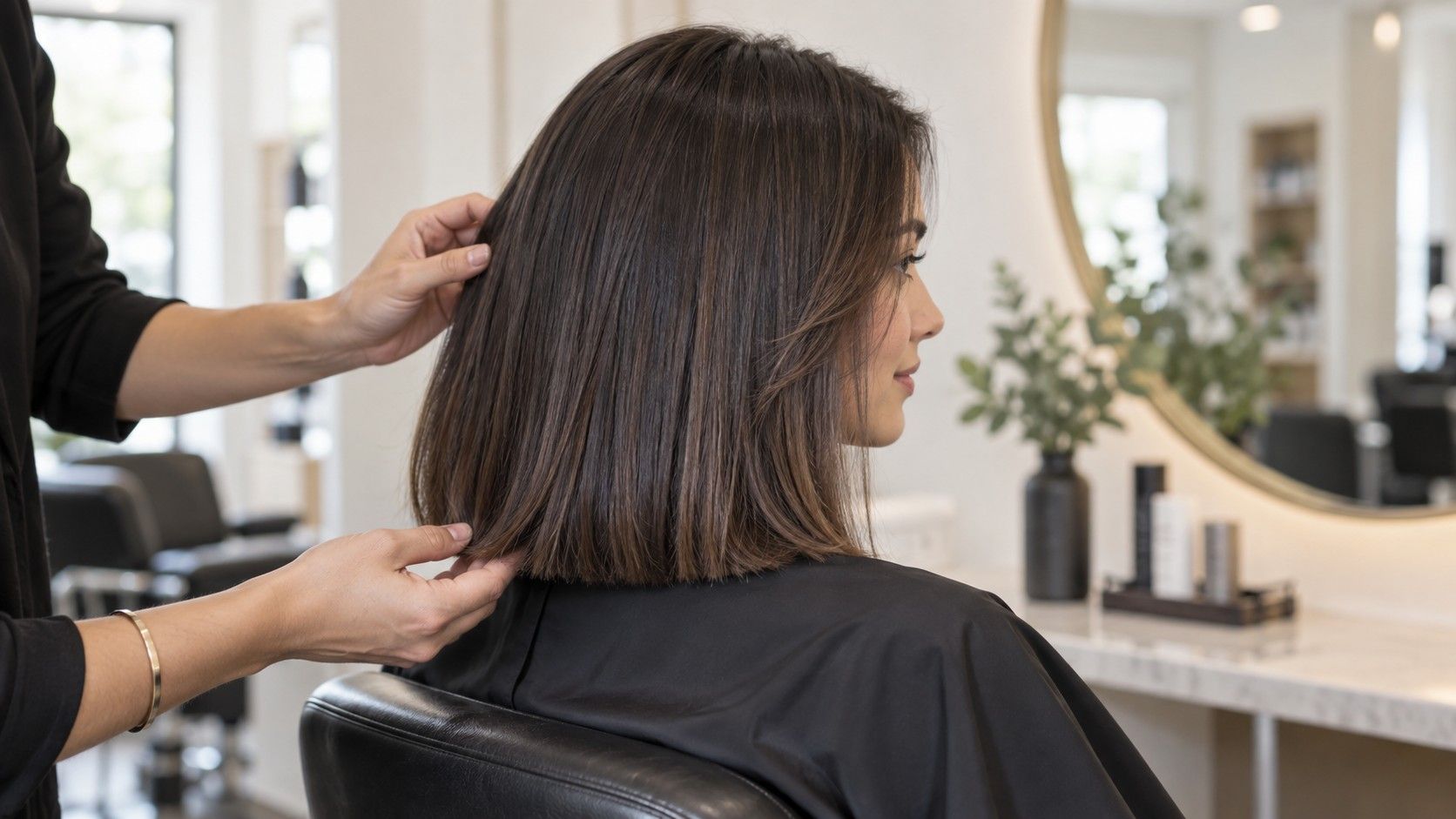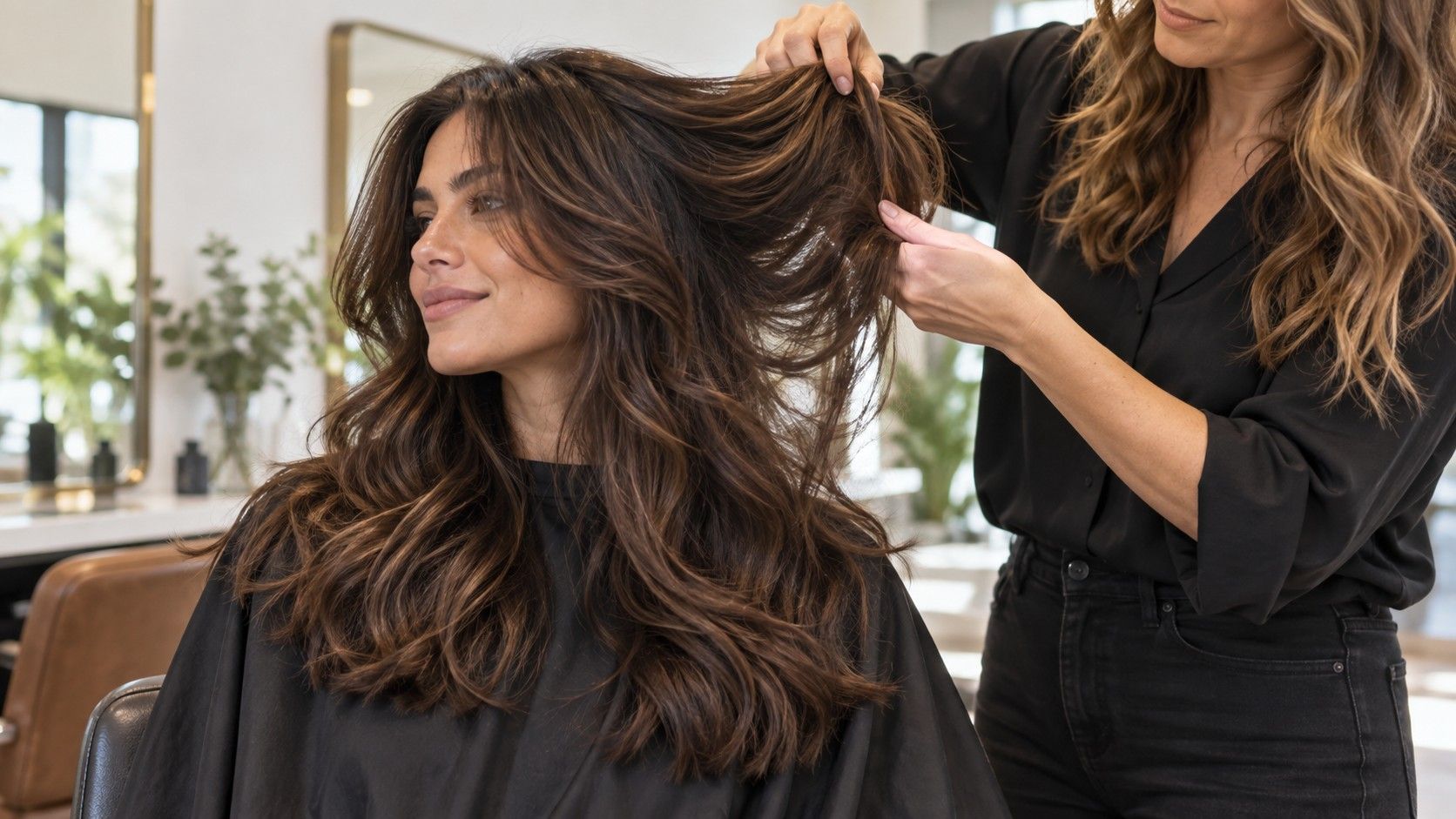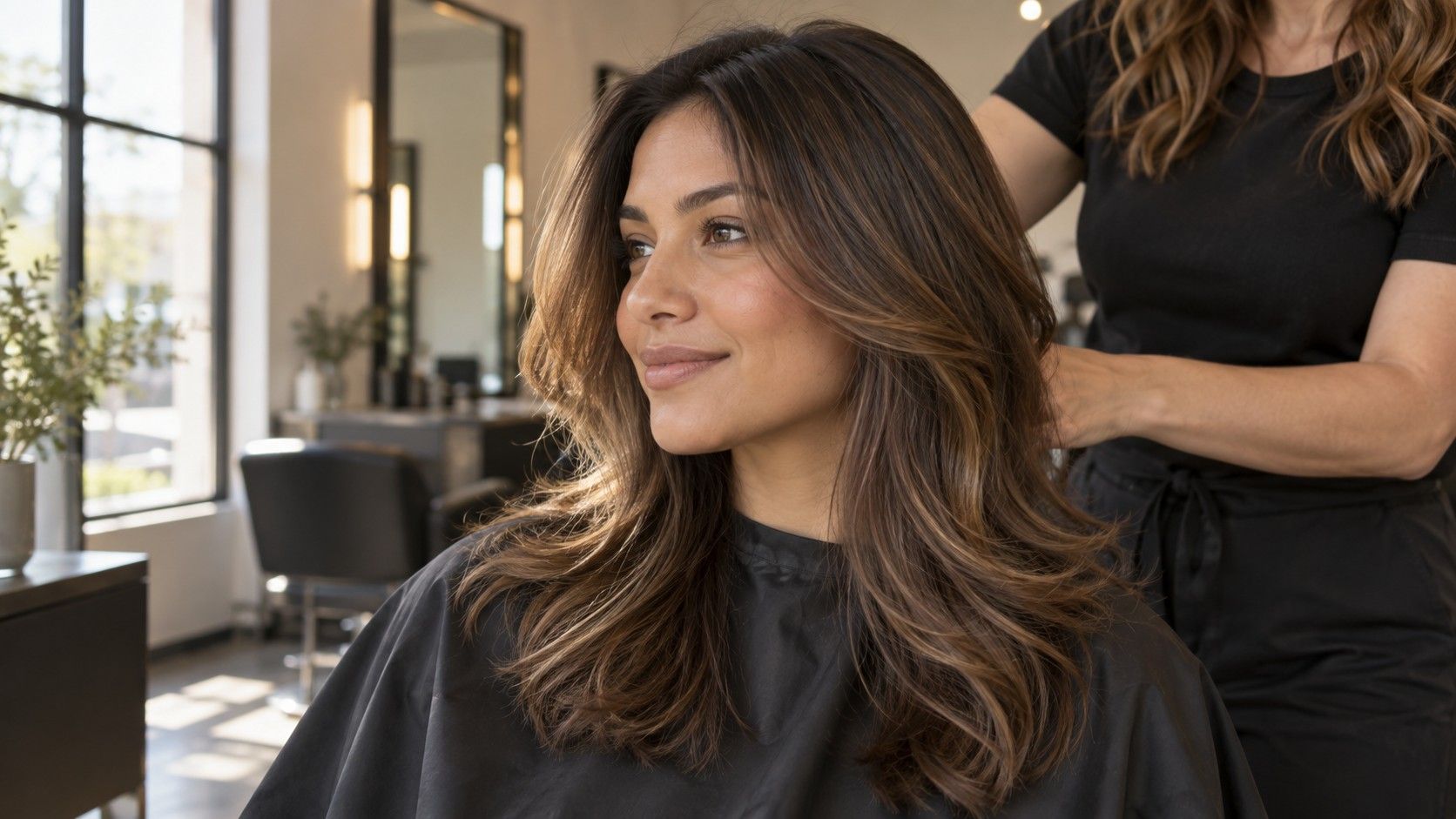
Medium skin has a useful flexibility with hair colour, but it also exposes a common salon mistake: choosing a shade from a swatch name rather than from the person wearing it. Two people can both describe themselves as medium-toned and get completely different results from the same caramel, chestnut, or ash brown. The difference is usually not a mysterious rule about skin depth. It is undertone, the natural contrast around the face, and whether the colour will still look intentional after a few washes.
Why medium skin is not one category
“Medium” describes depth, not the temperature beneath the surface. A medium complexion may lean golden, olive, neutral, peachy, or slightly cool. That is why a warm honey highlight can make one face look rested and another look suddenly yellow. It is also why an ash brown that looks polished in a colour chart can turn a muted olive complexion grey around the mouth and eyes.
Start in daylight near a window, without a coloured bathroom bulb or a phone filter. Look at the neck, jawline, and chest rather than the reddest part of the cheeks. Golden or peachy skin often has a soft yellow cast; olive skin can read green-grey or beige-gold; neutral skin does not pull strongly in either direction. None of these labels has to be perfect. The useful question is simpler: when you put a warm fabric and a cool grey fabric beside your face, which one makes your skin look clearer?
Natural hair and eye colour matter too. Medium skin with dark brows and brown eyes can usually carry depth easily, while medium skin with softer brows, hazel eyes, and lower contrast may need a gentler root or a more blended highlight. A colour that technically matches an undertone can still feel heavy if it creates an abrupt dark frame around a low-contrast face. Conversely, a very light colour can flatten a face that naturally has strong dark features.
Read warmth before trusting shade names
Shade names are inconsistent across brands. “Mocha” may be cool in one line and warm in another; “beige blonde” may hide a gold base; even “ash” can contain enough warmth to fade brassy. Ask to see the actual swatch, then ask what pigment sits underneath it and how it changes on previously coloured hair. That second question is where many disappointing appointments are avoided.
For golden medium skin, warm brown, cinnamon, honey, amber, and soft copper usually look most convincing when they are controlled rather than bright orange. A medium golden base often benefits from dimension: a darker root with ribbons of caramel near the cheekbones and ends. Solid yellow blonde is harder to maintain and can compete with the warmth already present in the skin.
Olive undertones are more adaptable than they are often given credit for. They can wear warm brown and caramel, but they often look especially good with balanced colour: mushroom brown with a subtle beige lift, espresso softened with mocha, or dark blonde that is neither aggressively ash nor aggressively gold. The caveat is overly green-toned ash. On olive skin, a flat blue-green brown can make both the hair and complexion look dull, particularly in indoor light.
Neutral medium skin has the broadest starting point, yet it still needs a decision about the effect you want. A neutral brunette can choose a warm chestnut to add liveliness, a balanced chocolate for a natural result, or an ash brown to make the overall look quieter and sharper. Rather than asking a stylist which is “best,” bring one reference that shows the warmth you want and one that shows the depth you can realistically maintain.
| Starting point | Colour directions that often work | Watch for |
|---|---|---|
| Golden or peachy medium skin | Chestnut, caramel, honey brown, soft copper, warm bronde | Very pale yellow blonde or icy grey tones that leave the face looking sallow |
| Olive medium skin | Mocha, balanced chocolate, beige balayage, espresso, neutral caramel | Flat green ash and very orange highlights without a deeper base |
| Neutral medium skin | Chocolate, mushroom brown, cinnamon, beige blonde, dark auburn | Choosing a shade only because it is fashionable rather than because the contrast suits you |
| Medium skin with high natural contrast | Deep brunette, espresso with ribbons, rich auburn, dark-rooted blonde | A single pale all-over shade that removes the definition around the eyes |
Brown and brunette directions that rarely feel like a compromise
For many people looking for the best hair color for medium skin tone, brunette is not the safe fallback; it is the option with the most room for nuance. A good brown can be made warmer, deeper, glossier, or lighter around the face without requiring a full bleach-out. It also tends to age more gracefully between appointments because a soft regrowth line is easier to disguise than a stark blonde root.
Warm brown is a strong choice when the skin has gold or warmth and the natural base is medium to dark. Think chestnut rather than orange-red, or chocolate with a small amount of caramel rather than a uniform brown curtain. Ask for the brighter pieces to sit where the sun would naturally catch: around the hairline, through the front lengths, and sparingly through the ends. If every section is lifted equally, the result can look striped by the fourth week.
Ash brown deserves a more specific request than its popularity suggests. It is useful for someone whose natural hair pulls red or orange and who wants a quieter brunette, especially with neutral or cooler medium skin. But ash is not a permanent antidote to warmth. Brown hair exposes warm pigment as it lightens, so glosses and toners fade. A stylist should explain whether your target is a cool-looking brown on day one, or a neutral brown that remains believable after six weeks. The latter is often the better investment.
Espresso and near-black can look striking on medium skin when brows, lashes, and eyes already have depth. The risk is not that dark hair is automatically harsh; it is that a one-dimensional black can erase movement. A barely lighter brown gloss through the lengths, or a soft root shadow with reflected warmth, keeps the colour from looking like a helmet. This matters most in fine hair, where an opaque dark formula can make the ends look thinner.
How to go lighter without looking washed out
Going lighter is mostly a placement problem. People often assume that “lighter hair colour” means lifting every strand to the same level, then wonder why the face loses definition. On medium skin, a darker root and selective brightness usually make the lightness look more expensive. The root preserves contrast; the brighter pieces bring light toward the eyes.
Caramel is popular because it can sit between brown and blonde, but it has to match the existing base. On dark hair, a first appointment may produce warm caramel rather than pale beige, and that is not a failure. Forcing a cooler, lighter result too quickly means stronger bleach, more fragile ends, and a colour that may need frequent toning. A realistic plan can be much prettier: lift gradually, trim porous ends, and adjust the gloss as the base becomes cleaner.
For olive or neutral medium skin, beige balayage is often more wearable than bright platinum. It gives lightness while keeping enough neutral pigment to connect the ends to the face. For golden skin, honey and butterscotch can work beautifully, provided there is a little depth behind them. The useful check is to cover the brightest ends in the mirror. If the face immediately looks more balanced, the blonde may need a root melt, lowlights, or fewer light pieces near the jaw.
Face-framing highlights are not automatically flattering. A very wide pale streak can make a medium complexion look more uneven if it is too cool or too light. Ask for a blended money piece, fine woven highlights, or a soft transition from root to front instead of a thick contrasting stripe. The first few centimetres at the hairline are where colour is most visible every day, so this is not a detail to leave vague in the consultation.
Match the colour plan to your maintenance tolerance
Hair colour for medium skin should fit the calendar as well as the mirror. A high-lift blonde, vivid copper, and very cool ash brunette all ask for regular maintenance, though in different ways. Blonde shows a dark root; copper loses brightness; ash brown reveals warmth as toner fades. None is wrong, but choosing one while hoping to visit the salon twice a year is a recipe for a colour you stop enjoying halfway through its life.
A low-maintenance approach usually means keeping the natural root close to its original depth, using balayage or fine highlights instead of a hard all-over lift, and refreshing shine with a gloss. A gloss can add warmth, neutralise unwanted brass, or deepen brunette hair without the commitment of permanent colour. It is particularly useful when the hair is porous at the ends, because permanent colour on already-lightened lengths can grab unpredictably.
At home, use colour-safe shampoo, reduce very hot water, and protect hair before heat styling. Purple or blue shampoo is not a universal repair tool. Used too often, it can leave light porous strands dull or slightly violet, while doing little for orange brunette warmth that needs a professional glaze. If your desired colour depends on a cool finish, ask the stylist which maintenance product matches your level of lightness and how often it should actually be used.
A consultation checklist that gets a more useful answer
Bring reference photos in similar daylight, and show examples with a comparable starting depth and texture. A caramel balayage on naturally light, smooth hair is not a reliable promise for dense, dark, previously dyed curls. Tell the stylist about box dye, henna, highlights, keratin treatments, chlorine exposure, and any recent colour correction. Those details affect whether a shade can be reached safely, not merely how long the appointment will take.
Instead of asking for “a hair colour for medium skin” in the abstract, say what you want the colour to change: more brightness around the face, less visible red, softer contrast, richer brown, or a move toward blonde that still looks natural at the root. Then ask three practical questions. What warmth will show as this fades? How many sessions are realistic from my current hair? What should I book next, and when? Clear answers are a better sign than a stylist promising an exact celebrity colour in one sitting.
Finally, check the colour before leaving under more than one light. Salon lighting is kind to shine and can hide a tone that reads too orange, green, or flat outside. Step near a window if possible, move the hair around the face, and look at the front pieces against the skin at the jawline. The right shade does not need to make your skin look lighter or darker. It should make the whole face look awake, with enough depth left in the brows, eyes, and natural features to feel like you.