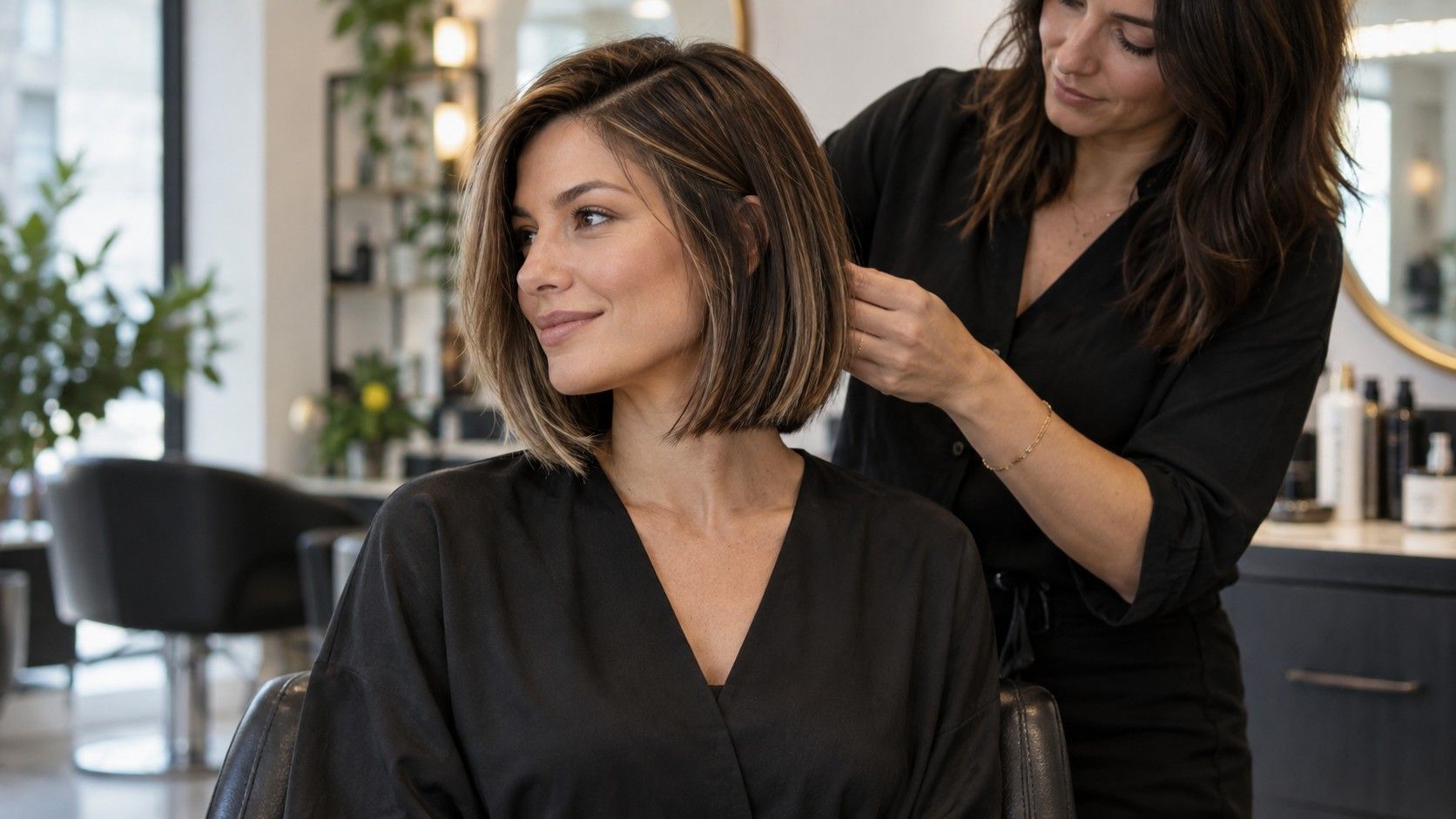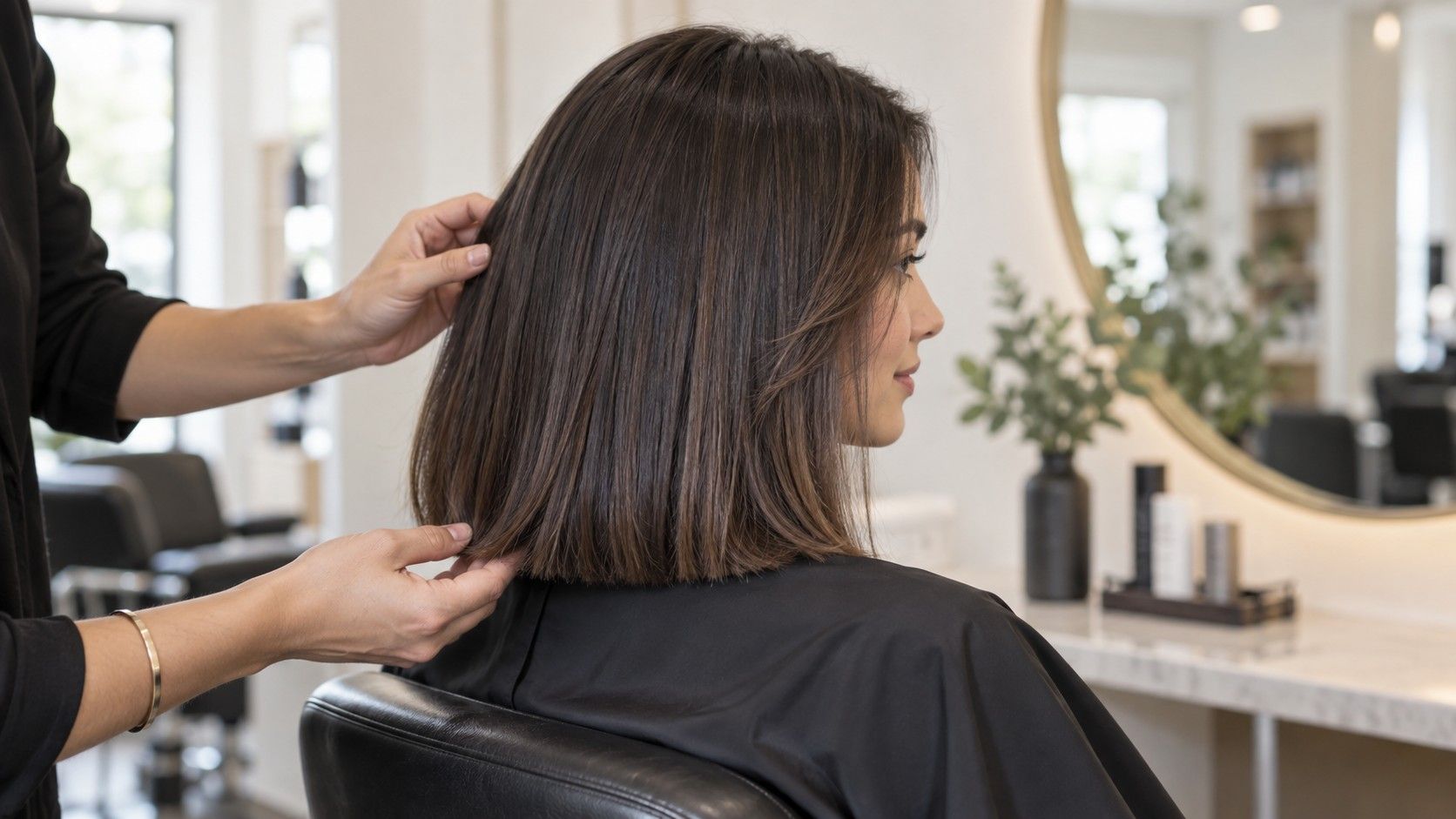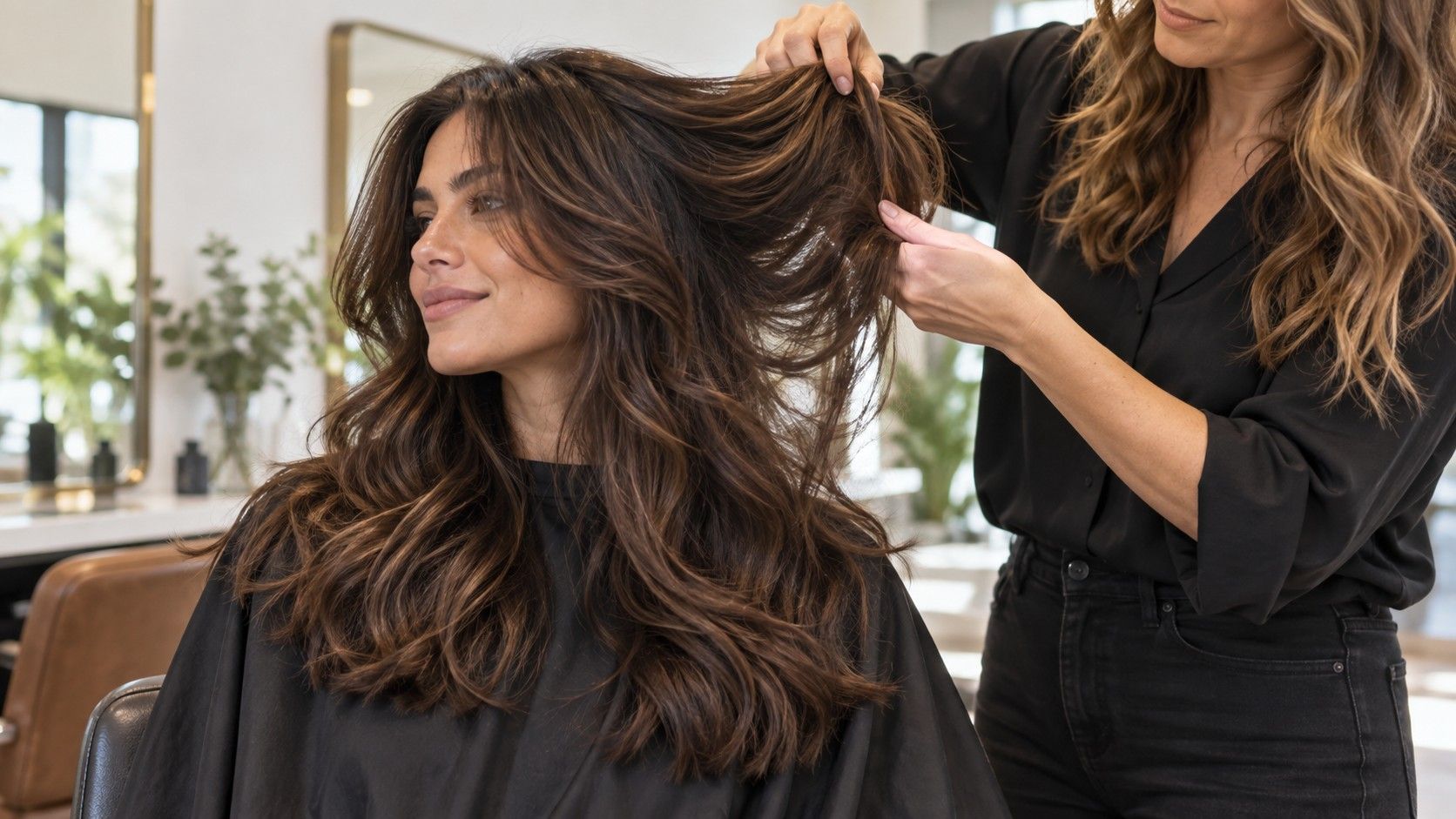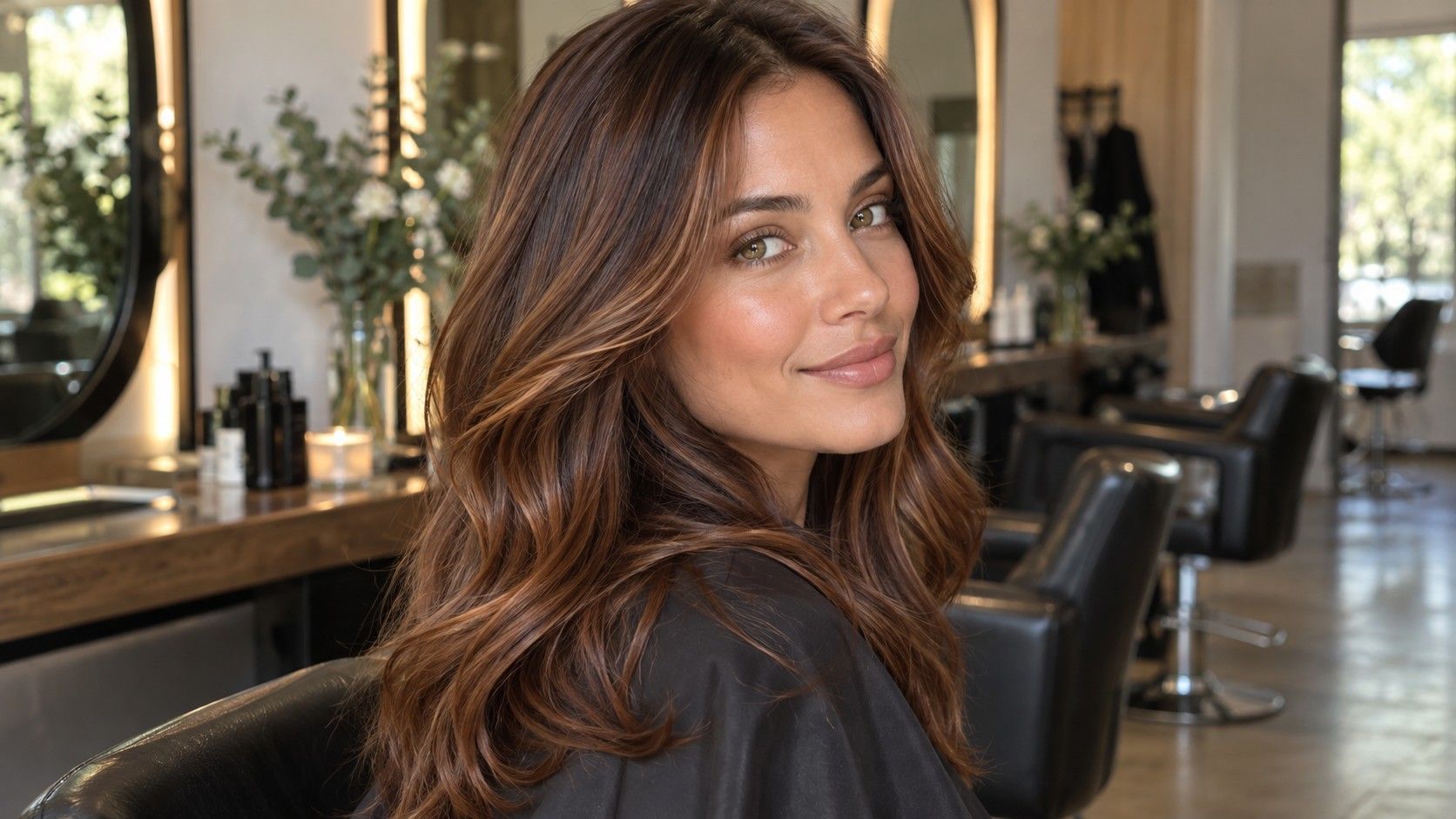
Hazel eyes are less a fixed colour than a small moving mix: green can show up by a window, gold can take over under warm indoor light, and a brown ring may be most obvious in photographs. Medium skin has a similar range, from olive-leaning to peachy or golden. The best hair color for hazel eyes and medium skin therefore is not one magic shade; it is a colour family with enough balance that it makes the eyes look brighter without making the complexion look flat.
Why hazel eyes change beside a new hair colour
A salon swatch held near the cheek tells only half the story. Hazel eyes pick up contrast from the hair around the face, especially at the temples and fringe. A cool, opaque brown can make the green flecks seem sharper, while a chestnut brown with cinnamon reflects can pull forward the amber and gold. Neither effect is better on its own. The useful question is which part of the eye you want to notice on an ordinary Tuesday, not only in a ring light.
Look closely at the iris in daylight before choosing. If the outer ring reads olive, moss or soft green, a neutral brown with a restrained golden ribbon is often more flattering than a full orange copper. If the centre has honey, whisky or amber sparks, warmer chestnut, caramel-brown and soft auburn can make those tones look deliberate rather than muddy. This is also why two people with ‘hazel eyes’ can get opposite advice from the same inspiration photo.
Depth matters as much as temperature. A solid level-four espresso can be striking, but against medium skin it can create a hard outline and leave little room for the colour shifts in the eyes. A brown that moves one or two levels lighter through the mids and ends is usually kinder. It gives the iris contrast while keeping a believable shadow at the root.
Start with the skin undertone, not the eye-colour label
Medium skin is often described as warm by default, which is too simple. Check the jaw and neck in indirect daylight, away from a bright white bathroom mirror. Skin that looks olive, slightly grey-beige or green-gold tends to handle mushroom brown, beige brown and neutral chestnut well. Skin that reads peach, golden or warm tan can carry caramel, cinnamon and copper more easily. If both descriptions sound familiar, you probably have a neutral undertone and can borrow from either side.
There is a practical warning here: a very warm colour on olive medium skin can turn sallow when the red or orange is too dense. That does not rule out warmth. It usually means placing it as a glaze, a few fine lights, or a soft copper-brown rather than bleaching the whole head to bright copper. Conversely, very ash-heavy colour on golden medium skin can look powdery. Ask for a neutral base with a little warmth left in it instead of an aggressively smoky finish.
Bring two or three references that show people with a similar depth of skin, not just the same eye colour. A good consultation should include the natural root, the amount of existing colour on the lengths, and how often you are willing to return. Those details change the answer to hair color hazel eyes medium skin far more than a single pin saved at midnight.
| What you notice first | Colour direction to try | Useful salon wording |
|---|---|---|
| Olive skin and green flecks | Neutral chestnut, beige brown, soft mocha | ‘Keep the warmth subtle and avoid orange at the hairline.’ |
| Golden medium skin and amber flecks | Caramel brown, cinnamon chestnut, soft auburn | ‘I want warmth that reads brown first, then gold in daylight.’ |
| Neutral medium skin with mixed flecks | Chocolate brown with fine honey-beige pieces | ‘Use a neutral root and a few delicate lighter ribbons.’ |
| Medium skin that tans easily | Warm brunette or muted copper-brown | ‘Please leave dimension so the colour does not become a flat block.’ |
Brown shades that make the eyes look more awake
For many people, brunette is the lowest-risk route because it can be adjusted without stripping the hair. Chestnut is particularly useful: it sits between dark brown and red, so it can catch the gold in hazel eyes without committing to a redhead maintenance schedule. A chestnut base with a few hand-painted pieces around the face looks different outdoors than it does in an office, which is exactly the point. The effect is alive, not costume-like.
Chocolate brown works when the natural hair is already medium to dark and the aim is polish rather than a visible transformation. On warm or neutral medium skin, choose chocolate with a faint mahogany or caramel undertone. On olive skin, a neutral cocoa or beige brown prevents the face from looking yellow. In either case, ask the colourist to show you the swatch beside your skin rather than describing it only as ‘rich’ or ‘luxurious’; those labels conceal more than they clarify.
Beige brown is a quiet option that deserves more attention. It is neither icy ash nor yellow caramel, and it works especially well when hazel eyes contain both green and gold. Fine beige lights placed from below the cheekbone to the ends can brighten the face without creating the striped look that broad, high-contrast highlights sometimes produce. This placement also grows out more softly than a solid money piece, which matters if six-week appointments are not realistic.
Very dark brown is possible, but it needs a mirror test in daylight. If the colour makes the white of the eyes look bright and the skin look even, it may be right. If it gives the face a severe border, lift the surface with a clear or neutral-brown gloss instead of immediately adding blonde. Often the missing ingredient is reflection, not lightness.
When copper and soft red are worth the commitment
Copper can make hazel eyes look almost green, especially where the iris has a mossy outer ring. The version that tends to work best with medium skin is softened: think copper-brown, cinnamon, terracotta or auburn rather than a neon orange. These shades still have energy, but they allow the skin to remain the focus. A bright orange copper beside medium olive skin can be beautiful, yet it is specific enough that a strand test is sensible before a full appointment.
Ask whether the colour formula will be permanent, demi-permanent or a gloss. Reds fade quickly because their pigments are small, and the fade is often warmest around the face where people shampoo most thoroughly. A demi-permanent copper gloss is a sensible first experiment: it shows whether you enjoy the warmer reflection, then gradually softens instead of leaving a dramatic regrowth line. It also gives an existing brunette base more movement with less lightening.
For a less obvious red, use warmth selectively. A chestnut base with copper micro-lights can make gold flecks visible while keeping the overall impression brunette. Another quiet option is a warm glaze over natural medium brown hair. In direct sun it reads cinnamon; indoors it settles back to brown. This is often a better answer for someone who loves copper photos but has a conservative workplace or does not want colour to dominate every outfit.
Red needs a care plan, not just a flattering formula. A colour-depositing conditioner used occasionally can restore warmth, but using it every wash may darken porous ends unevenly. Lukewarm water, a heat protectant and a gloss appointment between major services usually do more for a soft red than repeatedly applying stronger permanent dye. The aim is a clear, reflective tone, not an ever-deeper build-up.
Face-framing lights: enough contrast without a striped result
Face-framing colour is where a good idea can become too obvious. For hazel eyes and medium skin, the most believable placement starts a little below the root and becomes brighter near the cheekbones and lower eye area. That puts the light where it can echo the iris without drawing a pale band across the forehead. Fine woven pieces are usually safer than a thick money piece, particularly if your natural hair is dark.
The tone of the light matters. On golden medium skin, caramel or honey-beige can look sunlit; on olive medium skin, beige, sand or neutral toffee is often more balanced. Bleaching to a pale yellow blonde just to create contrast is rarely necessary. A lift of two or three levels, followed by a suitable toner, can offer enough dimension and leave the hair feeling more like itself.
Check the placement with your usual part and your usual glasses, if you wear them. A centre part spreads colour evenly, while a deep side part can concentrate a bright section on one side of the face. Dark tortoiseshell frames may make a warm caramel piece look richer; cool silver frames can make the same piece seem more yellow. These are small observations, but they prevent the familiar experience of loving a salon finish and then finding it odd in the mirror at home.
Keeping the finished colour believable between appointments
The most wearable hair colours for medium skin are usually built in layers: a root that resembles a plausible natural shade, a middle that has some depth, and ends that catch more light. This structure means the colour can fade and grow without looking immediately unfinished. It also makes room for seasonal changes. A few warmer pieces can be added in autumn, then cooled with a neutral gloss in summer if your skin becomes more golden.
Photograph the result outside a salon before deciding whether to alter it. Stand near a window, then step outdoors in open shade; hazel eyes and reflective colour behave differently in each setting. If the hair looks orange only under warm indoor bulbs, a small toner adjustment may be enough. If it looks orange in every light, ask for a neutral or beige gloss rather than another round of bleach. If it looks flat, add a few lowlights or a transparent shine service before chasing highlights.
Maintenance is also a budget decision. Solid high-lift blonde and vivid copper often require regular toning, while chestnut, chocolate and beige brown can be refreshed with a gloss every six to ten weeks and more substantial colour less often. Be honest about the routine you will keep. The best hair color for hazel eyes and medium skin is one that still suits your complexion when the shine has softened, the roots have grown in, and you are styling it on a normal morning rather than leaving a salon chair.