A diamond-shaped face can make a good haircut look unusually polished because the cheekbones do much of the visual work. It can also make a copied celebrity cut feel oddly severe: the temples are narrower, the chin tapers, and a little extra height in the wrong place changes the whole outline. When people look for diamond face shape hairstyles, they are usually not trying to hide those cheekbones. They want the hair to meet them with some softness, so the style still feels balanced after a real commute, a quick ponytail, and a wash day at home.
Confirm the shape before cutting for it
Diamond and heart shapes get mixed up constantly. Pull the hair away from the face, take a straight-on photo in window light, and compare the widest point with the forehead and jaw. A diamond face is typically widest through the upper cheekbones, then narrows at both the temples and the chin. A heart-shaped face tends to have more width across the forehead. This distinction matters because a fringe that settles a broad forehead can be too much on a face whose forehead is already narrow.
Check the diamond face side profile as well. Some people have pronounced cheekbones from the front but a gentle profile, while others have a strong profile and a narrow chin that becomes more obvious when hair is tucked behind both ears. Stand a step back from the mirror and look at your usual part, not a carefully centred one made for the test. If one temple collapses flat and the other side lifts, that is a styling issue worth telling a stylist; it is not a reason to force the face into a category.
Hair texture changes the reading. Dense curls create their own width, fine straight hair tends to cling at the temples, and a cowlick can make a centre part drift by lunchtime. A useful consultation starts with what your hair does unassisted. Face shape is a clue for placing weight, not a rule that overrules a natural wave pattern or the amount of styling you actually enjoy doing.
Keep the cheekbones visible, but soften what happens beside them
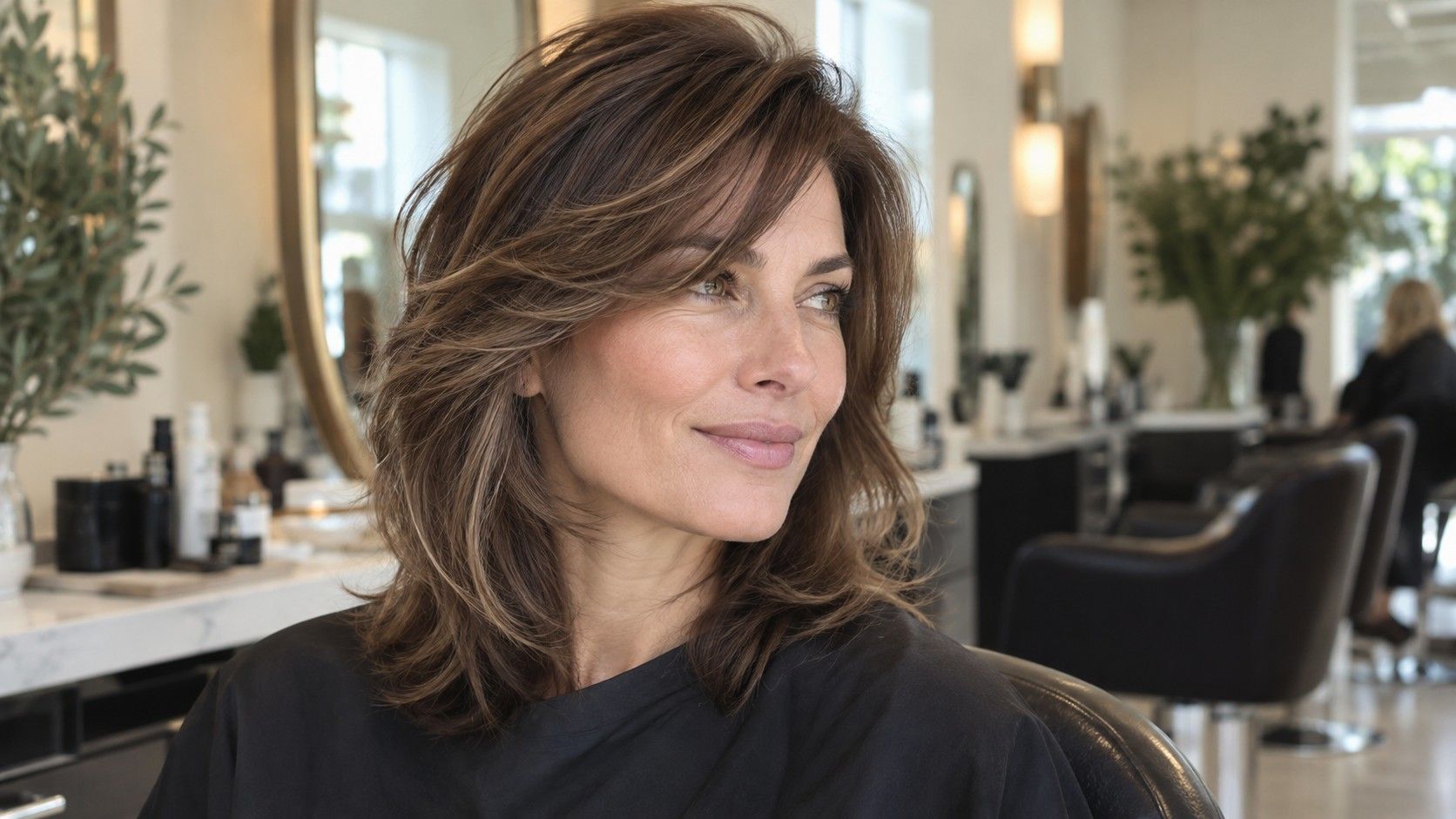
The trap with prominent cheekbones is trying to cover them completely. Two long, heavy curtains of hair can make the centre of the face seem even wider because the hair closes in at the temples and leaves a bright, exposed diamond in the middle. The better move is usually a softer transition: a few face-framing pieces that begin around the outer eye or upper cheek, then continue past the jaw. They acknowledge the cheekbone instead of drawing a hard bracket around it.
For fine hair, ask for an apparently solid perimeter and restrained layering. A razor-cut cloud around the cheekbones may look airy under salon lighting, but it often separates into thin strings outdoors. For thick hair, internal layers can remove bulk without making the ends sparse; the first obvious layer should not stop at the widest point of the face. An inch lower is often enough to let the outline taper calmly toward the chin.
Colour can shift the same balance. A very bright money piece parked at temple level brings the eye straight to the narrowest upper area and can feel disconnected from the rest of the cut. A softer highlight that travels from the cheekbone into the lower lengths is more forgiving. This is not an argument against contrast, only a practical reminder that placement matters more than the name on the colour menu.
Choose a length that gives the lower face a little company
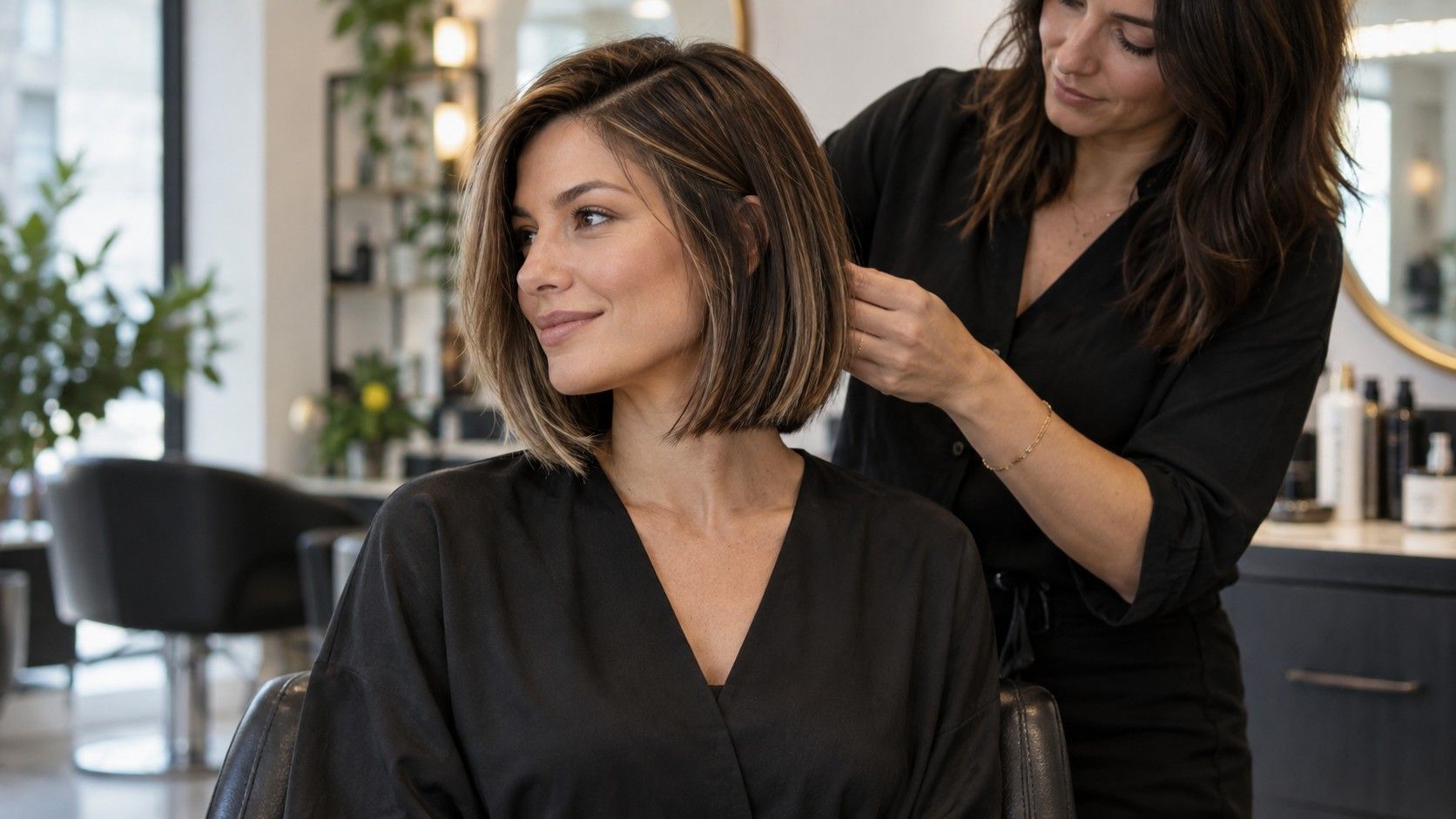
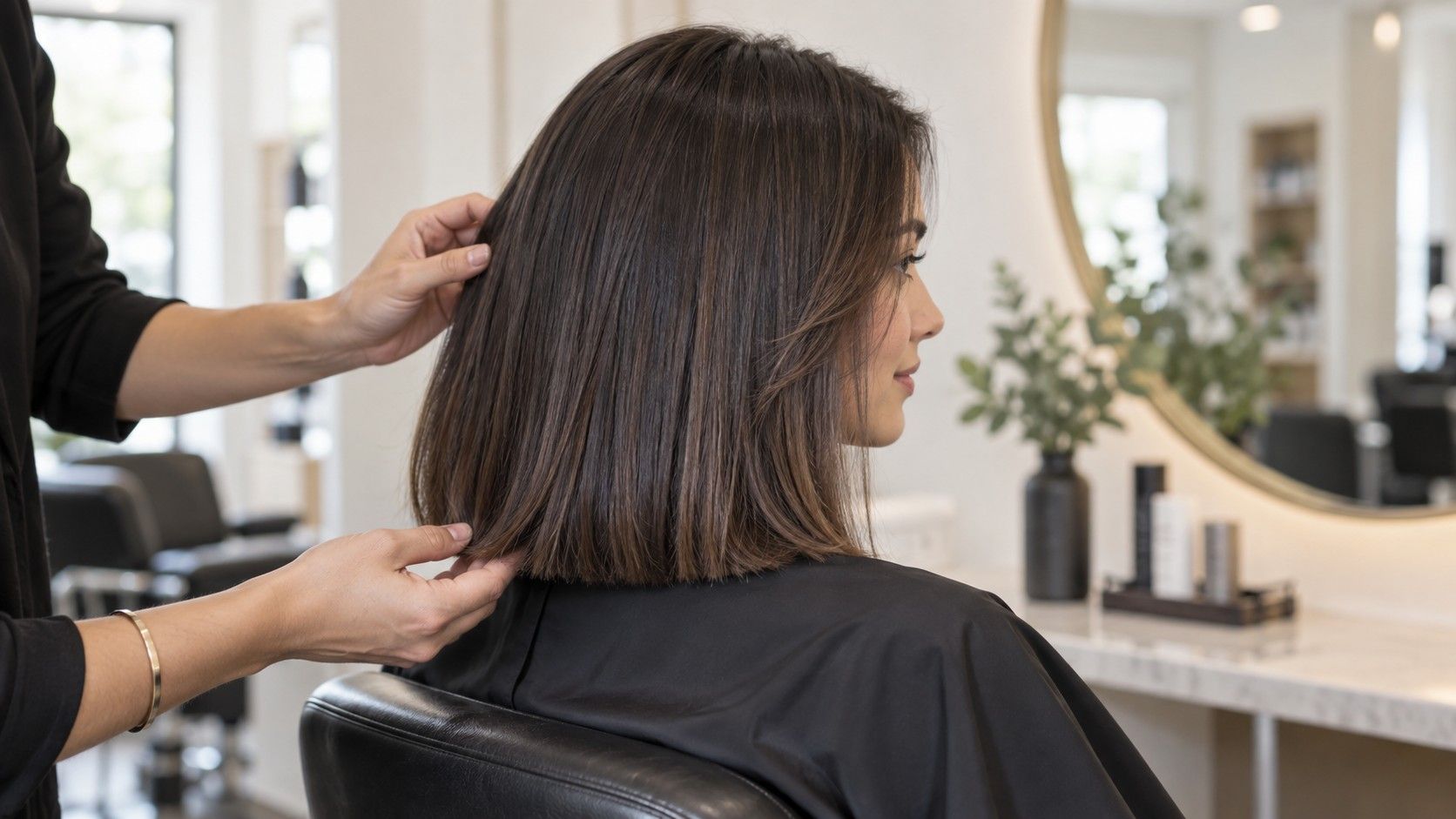
A chin-length or slightly longer bob is one of the most flexible options for a diamond face, especially when the ends have a soft bend rather than a sharp inward curl. It introduces presence near the jaw, where the face is naturally narrower. The detail to discuss is where the shortest front corner lands when dry. A blunt point exactly at the cheekbone can magnify the widest area; a line closer to the chin usually reads more settled.
Shoulder and collarbone lengths are easier to live with if you change your mind about styling from day to day. They can take a low wave, a tucked ear, or a loose half-up style without exposing every proportion. I like this range for someone who has saved a short bob but normally needs to tie their hair up for the gym or work. The cut still has shape down, yet it does not demand a full blow-dry every morning to look intentional.
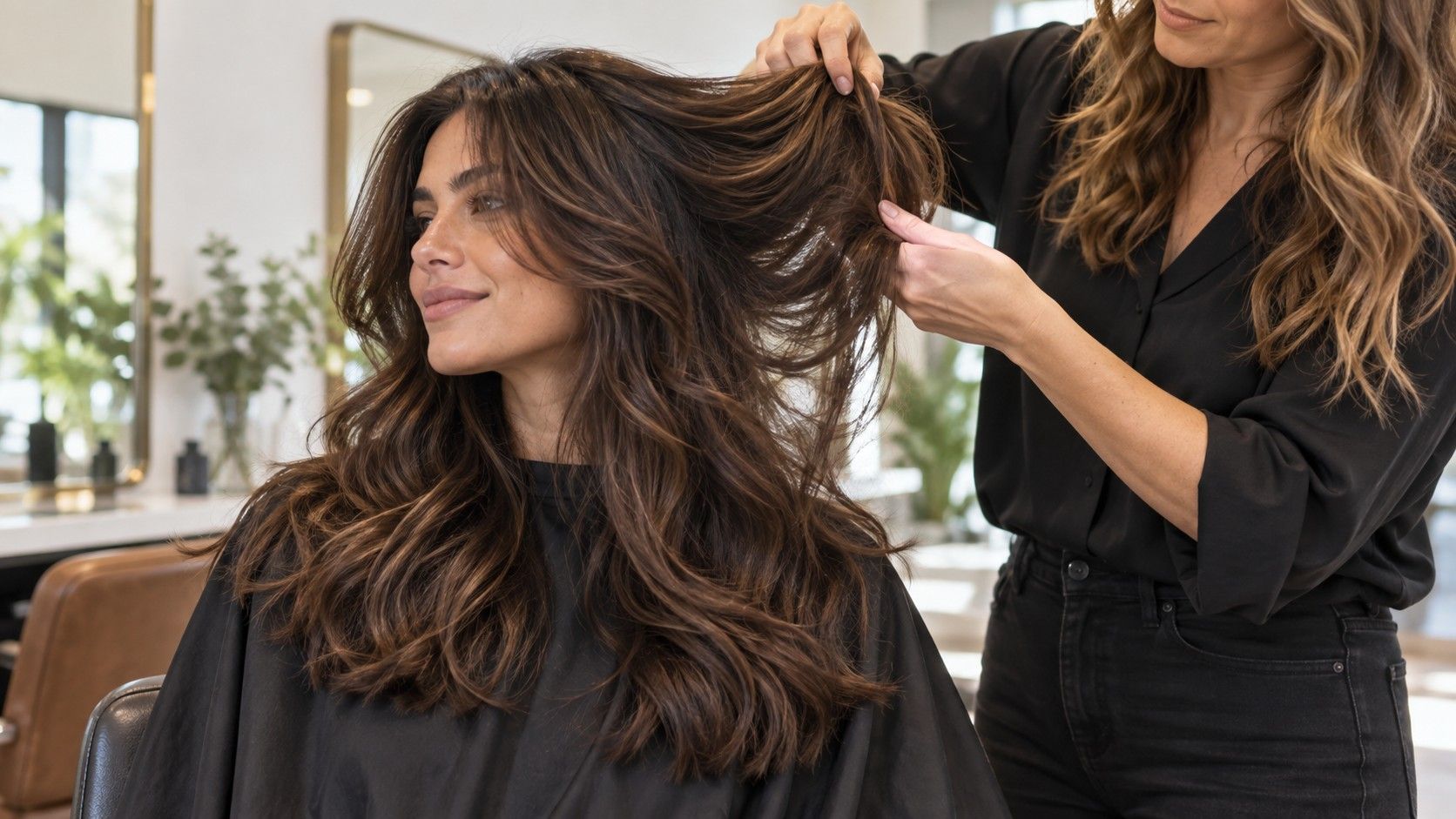
Long hair can be the best hair for diamond face proportions when it has structure. Hair that is all one length and very flat may make the cheekbones look isolated between narrow vertical panels. Long layers beginning below the chin, a gentle U-shaped hem, or broad loose waves give the eye a path toward the shoulders. Avoid chopping in many short layers just to create volume at the crown. A diamond face rarely needs a taller top; it often benefits from width lower down.
| Direction | Why it can work | Practical check |
|---|---|---|
| Chin-length textured bob | Gives the jaw area a stronger outline | Ask how it will sit after air-drying and behind one ear |
| Collarbone lob | Allows low waves and soft width below the cheekbones | Keep enough front length for a ponytail if that matters to you |
| Long layers below the chin | Preserves length while preventing a narrow curtain effect | Make sure the first layer does not end at the widest cheek point |
| Short crop with a diagonal fringe | Can frame the forehead without adding a high, rigid crown | Check your growth pattern at the hairline before committing |
Use fringe and parting as small adjustments, not camouflage
A side fringe is often kind to a diamond shape because its diagonal line interrupts symmetry and adds a little visual width near a narrow temple. The useful version is long enough to blend into the rest of the hair, not a stiff triangle cut across the brow. If you wear glasses, look at it with your usual frames before leaving the salon. The fringe should clear the lens edge naturally rather than constantly needing to be pinned back.
Curtain bangs can work too, but the centre opening needs to be considered. On a narrow forehead, a very wide opening can expose a long empty strip of skin and make the side pieces feel theatrical. A slightly off-centre split, with the pieces landing around the brow and upper cheek, is often easier. It can be moved aside on a humid day and does not require the precision of a dense straight fringe.
Parting is worth testing for a week before an appointment. A centre part can look striking with natural texture and enough fullness around the jaw, but it makes every asymmetry more visible. An off-centre part is a quiet correction for hair that falls flat at one temple. A deep side part adds drama, although it should not be paired automatically with a high teased crown. Direct the fuller side outward through the mid-lengths instead; that is where a diamond face gets the most useful softness.
Let waves widen the right part of the silhouette
The direction of a curl matters more than the number of curls. If every section is turned away from the face beginning at cheekbone height, the style opens the middle of the face and can leave the jaw looking comparatively small. Start the bend a little lower, around the jaw or mid-length, and alternate the direction through the back. Leave the front pieces softer than the rest. The result is movement rather than two matching wings.
For naturally wavy hair, product placement makes a visible difference. A heavy mousse and aggressive root lift may create a triangle of volume above the ears; that is usually the opposite of what you wanted. Try a light cream through the lower lengths, scrunch without lifting the crown too much, and diffuse until the roots are merely dry. If the sides shrink upward, ask for slightly longer face-framing pieces at the next cut instead of fighting them daily with hot tools.
Straight hair benefits from a bend that looks almost accidental. Wrap a few mid-length sections around a large barrel for a moment, brush them out, and see where they land when you move your head. You do not need uniform waves. In fact, a perfectly repeated curl pattern can make a practical haircut look too formal. The aim is a relaxed outline around the lower cheek and jaw that survives being touched, not a photograph that only works from one angle.
Be careful with height, tight sides and ultra-short shapes
Short hair is absolutely possible with a diamond face, but the silhouette deserves more thought than a front reference photo provides. A pixie with a long, piecey fringe and softness around the ears can look sharp and modern. A very tight fade with a tall quiff, on the other hand, concentrates all the attention at the upper centre of the head while leaving the temples exposed. It may be exactly the graphic look you want, but it is not the most balancing choice.
For a short cut, ask to see the side and back after the hair is dried as you would normally wear it. The question is not whether the cut makes the face look oval. It is whether the crown height, temple exposure and fringe direction form a shape you recognise as yourself. If you are uncertain, leave the fringe longer on the first appointment. A later trim is simple; growing out an abruptly short section through a cowlick is not.
The same caution applies to slicked-back styles. They can be elegant for an evening, particularly with earrings or strong makeup, but they reveal the full width of the cheekbones and the narrowness at both ends. Loosen one side, allow a small piece near the temple, or use a low bun with a gentle side part if you want a less exposed version. Those are styling choices, not fixes, and they give you more than one way to wear the same haircut.
Bring the right questions to the salon chair
Reference photos are useful only when they show hair close to yours in density, texture and willingness to hold a shape. Bring one image for the front and another for the side; the latter is especially important if you have been thinking about your diamond face side profile. Tell the stylist whether you air-dry, diffuse, straighten, wear a helmet, or need to tie your hair back. A beautiful cheekbone-skimming layer is not very useful if it springs up every time you leave the house.
Ask where the shortest piece will sit when dry, where they plan to create width, and how the cut will change after eight weeks. These questions are more revealing than asking for a universally flattering haircut. A good answer should mention your hairline, growth pattern and texture, not only a face-shape diagram. If you colour your hair, ask how the highlight placement will look with the proposed part rather than treating cut and colour as separate decisions.
Judge the result after you have washed it twice yourself. Salon styling is a helpful preview, but it can conceal a fringe that refuses to part or layers that only sit correctly with a brush. The successful diamond face hairstyle is not the one that erases your cheekbones. It is the one that lets them stay distinctive while the temples, jaw and everyday texture all look as if they belong in the same picture.