Curtain bangs are often described as a single haircut, but their length changes the whole effect. A fringe that opens near the eyebrows feels quite different from one that brushes the cheekbones or blends into the lips. The useful question is not whether curtain bangs suit you in the abstract; it is where the shortest point should sit when you wear your usual part, glasses and styling routine.
Use facial landmarks, not a vague idea of ‘long’
A good consultation starts with a few stable landmarks: the brow, the highest point of the cheekbone, the corner of the mouth and the jaw. Hairdressers use them because they remain easier to judge than a requested number of centimetres. Hair springs up when it dries, and a soft wave can make the same cut look a centimetre or two shorter than it did in the salon chair.
For curtain bangs, the centre is normally the shortest area and the sides lengthen away from the parting. That graduation is what creates the open, split shape. If the centre is cut at eyebrow length, the outer edges may arrive around the upper cheekbone. If the centre begins at the cheekbone, the sides can merge into the rest of the face-framing layers near the lips or jaw.
Look at the fringe after it has dried in the way you actually wear it. A stylist can make a wet fringe look perfectly symmetrical, then discover that a cowlick pushes one side apart or a deep side part steals hair from the other. It is worth bringing a photo of yourself with your normal parting rather than only a picture of someone else’s finished blowout.
Short curtain bangs: eyebrow length and above
Short curtain bangs usually have a centre that lands at, or just above, the eyebrows. They make the eyes the focal point and give a more deliberate, slightly retro shape than longer versions. On a forehead with a strong cowlick, though, this is the length most likely to separate before breakfast. The shorter the hair, the less weight it has to resist its natural growth direction.
This option can work especially well when the rest of the haircut has visible texture: a short bob, a shag, a cropped lob or airy layers. It is less forgiving if you want to wash and leave the house with no styling. A short fringe needs its own small blow-dry, even on days when the rest of the hair is clipped back. A round brush or a small barrel brush directed forward first, then away from the face, usually prevents the two sides from flipping into hard wings.
There is also a practical glasses test. Eyebrow-length curtain bangs can rest on the top edge of frames, so a fringe that looks light while standing still may bunch up when you look down at a laptop. Ask for the middle to be point-cut rather than cut as a dense line. That keeps the gap at the centre soft and avoids a heavy curtain sitting across the brow.
Cheekbone length is the most adaptable middle ground
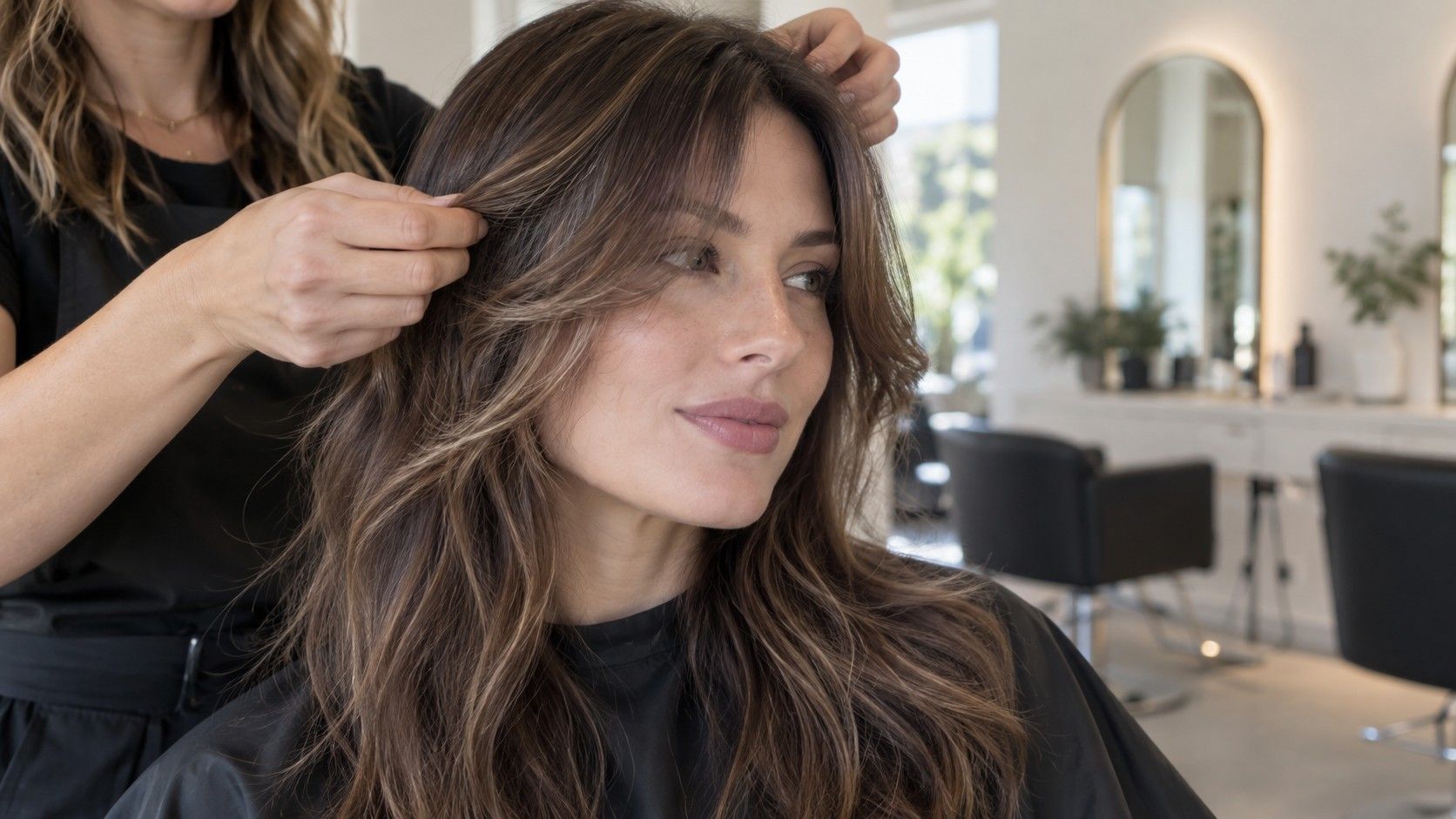
Cheekbone length curtain bangs are the version many reference photos are really showing, even when the caption just says “curtain fringe.” The shortest pieces sit somewhere between the outer eyebrow and the cheekbone, with longer pieces drifting into the haircut. They frame the eyes without covering them and usually have enough weight to settle after a quick dry.
This length is a sensible first choice for someone who is nervous about a fringe. It can be parted wider on busy days, tucked behind the ears, or blended into a ponytail without the obvious loose pieces that a brow-skimming fringe leaves behind. It is also easier to grow out: after a few trims are skipped, it reads as face-framing layers rather than an unsuccessful bang.
The phrase “cheekbone length” needs a little precision. On a round or heart-shaped face, stopping at the widest part of the cheek can emphasise width if the fringe is cut very full. Leaving the centre slightly longer and keeping the outer pieces wispy gives more vertical movement. On an oval face, a fuller cheekbone-length shape can look balanced because there is room for the curve around the eyes. The parting matters more than a face-shape chart suggests; a centred split creates symmetry, while a soft off-centre split can make the fringe feel less formal.
| Shortest point | What it tends to emphasise | Daily reality |
|---|---|---|
| Above or at the brows | Eyes and brows | Needs regular shaping and a quick blow-dry |
| Upper cheekbone | Eyes, cheekbones and soft layers | Flexible enough to tuck back or pin aside |
| Mid-cheek to lip | Cheek contour and movement around the face | Usually easier to grow out and lower-maintenance |
| Lip to jaw | Face-framing layers rather than a clear fringe | Works well with air-drying and longer cuts |
Long curtain bangs: lip length and the transition into layers
Long curtain bangs start around the cheekbone or mid-cheek and reach the lips, jaw or collarbone at their longest points. They are sometimes called bottleneck bangs because the hair narrows around the brow area before widening through the cheeks. In practice, they behave more like a shaped front layer than a traditional fringe, which is why they suit people who dislike seeing hair across their forehead.
The advantage is movement. When the hair is curled away from the face, lip-length pieces make a gentle opening without looking like two separate strips. When it is straight, the same pieces can create a clean line from the cheekbone into the perimeter of the haircut. They are useful with medium and long hair because they connect the front to the first layer instead of leaving a blunt block at the shoulders.
Longer is not automatically safer. If fine hair is cut too sparsely at lip length, the pieces can look accidental rather than intentional, especially with a centre part. Conversely, very thick hair may need internal weight removed so the front does not form two bulky shelves. The aim is a gradual transition: the shortest section should still be visible when you tuck the sides back, but it should not look detached from the layers behind it.
Match the fringe to the part you actually keep
Curtain bangs are built around a split, so the part is part of the haircut. A centre part distributes hair evenly and gives the most classic, symmetrical result. It is flattering for many people, but it exposes any uneven density at the front. If one temple is naturally thinner or one side has a persistent cowlick, a precise centre part can make that difference more noticeable.
A slightly off-centre part is often an easier answer than cutting the fringe shorter. It lets one side sweep more softly and can prevent the centre gap from opening too wide. People who wear a deep side part should tell their stylist before the first snip. A standard curtain-bang pattern cut for a middle part may disappear into the longer side when the hair is swept over, leaving one short piece with nowhere to go.
Try the part at home for a week before committing if you normally change it often. Use clips to separate two small front sections and see where they naturally fall after drying. This small test will not mimic a real cut, but it reveals whether the forehead hair wants to divide near the centre, lean to one side, or spring upward. It also shows whether your usual sunglasses, headset or gym routine will push the fringe into your face.
Texture changes the visible length
Straight hair shows every millimetre of a curtain bang, so it usually benefits from a softer edge and a little extra length at the first appointment. Wavy hair expands as it dries; a section that reaches the cheekbone while wet may sit above the eye once its bend appears. Curly hair has the greatest shrinkage variation, and its fringe should be assessed dry or nearly dry in its natural pattern. Cutting curls at a standard wet fringe length is a common route to a much shorter result than intended.
Fine hair often needs a wider triangular section to make curtain bangs visible, but taking too much hair can make the rest of the front look thin. Thick hair can use a narrower section, then be softened with point cutting or a slide-cutting technique. The detail to discuss is density, not just length. A cheekbone-length fringe with too much density can dominate the face, while the same length with airy ends can look relaxed and easy to move.
If you routinely air-dry, ask to see the fringe styled with minimal heat before you leave. A salon blowout can make almost any curtain bangs length look polished for an hour. The more honest test is whether the pieces still open nicely after they cool, are touched with dry hands and meet the humidity outside. You may prefer a slightly longer shape if you do not plan to use a brush most mornings.
Plan the upkeep before choosing the shortest point
Bang trims are not the same as full haircuts. Eyebrow-length curtain bangs often need attention every three to five weeks, depending on how quickly your hair grows and how clean you want the opening around the eyes to look. Cheekbone and lip lengths can often wait six to eight weeks because they blend with layers as they lengthen. Ask whether your salon offers fringe-only trims; many do, but the policy varies.
At home, the main habit is to dry the fringe before the rest of your hair has a chance to set. Wet it lightly if necessary, direct it from side to side with the dryer to loosen the root, then roll each side away from the face only at the end. Starting with a large brush and too much tension creates a dramatic seventies flip that is hard to calm down without re-wetting. A small amount of lightweight cream on the ends is usually enough; oil near the roots can make the fringe separate into strings.
Do not trim curtain bangs yourself after one awkward day. A fringe can sit differently after sleep, weather, a change of part or a rushed blow-dry. If the sides feel too long, pin them back for a few days and assess them when the hair is fully dry. If the centre is genuinely blocking your vision, a professional fringe trim protects the gradual curve that makes curtain bangs look intentional. The best length is the one that still works on an ordinary Tuesday, not only under salon lights.